
Downtime Procedures for Wristband Printing: What to Do When the System Fails
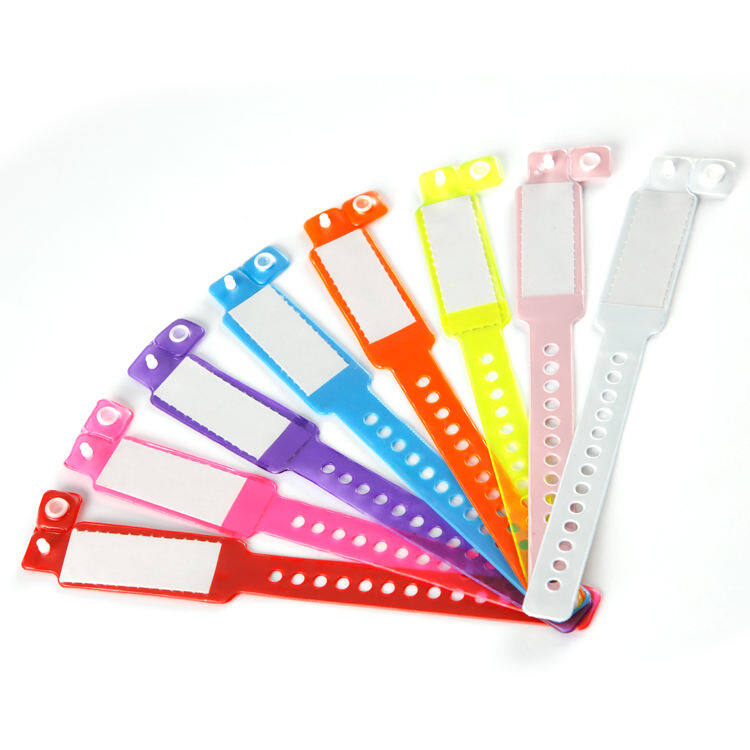
Patient identification failures are among the most preventable—yet most consequential—events in healthcare delivery. The identification wristband serves as the physical anchor for every subsequent safety check: medication administration, blood transfusion verification, specimen collection, surgical site confirmation. When wristband printing systems fail, whether due to network outages, printer hardware failure, software crashes, or supply chain interruptions, the resulting downtime creates a cascade of risk that extends far beyond the immediate inconvenience of a non-functioning printer.
For IT directors and nursing administrators, the challenge is not merely restoring the printing system. It is maintaining the integrity of the patient identification process during the gap between failure and restoration. A patient identification band is not simply a convenience item; it is a critical safety device. When that device cannot be produced through the normal automated workflow, a structured emergency wristband procedure must fill the void with equivalent safety guarantees.
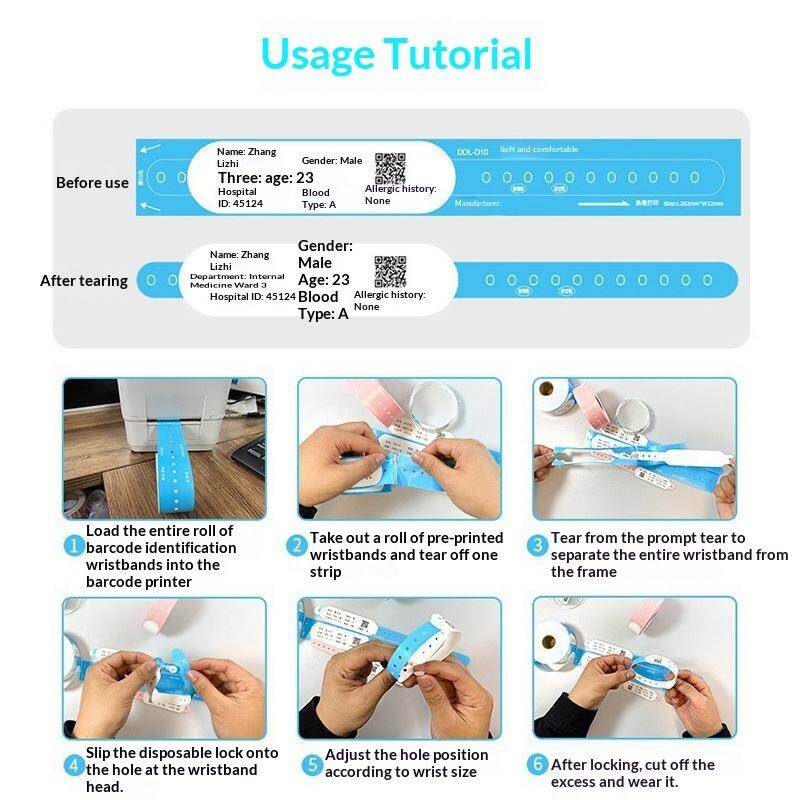
This guide examines the operational, procedural, and inventory management strategies that healthcare organizations should have in place before a wristband printing system fails. The focus is on practical implementation: what to stock, what to do in the first minutes and hours of downtime, and how to verify patient identity when the barcode scanner and printer are no longer part of the workflow.
Understanding the Failure Modes of Wristband Printing Systems
Before designing a downtime procedure, administrators must understand the specific ways wristband printing can fail. Not all downtime events are identical, and the response should match the failure mode.
Complete network or EHR outage. When the electronic health record becomes unavailable, the wristband printing workflow, which typically pulls patient demographics, medical record numbers, and encounter data from the EHR, stops entirely. This may occur during planned EMR downtime for system upgrades or unplanned server failures. During such events, the organization's business continuity plan for the EMR should activate, and wristband printing is one of several workflows requiring manual alternatives.
Printer hardware failure. Individual printer malfunction, print head degradation, ribbon or media depletion, or mechanical failure can interrupt wristband production at a single location. This is a localized event rather than an enterprise-wide crisis, but the patients in that unit still require identification bands.
Software or integration failure. The middleware connecting the EHR to the printing system, the print server, or the wristband design software may fail independently of either the EHR or the printer. Diagnosis can be difficult, and restoration timelines uncertain.
Supply chain interruption. Running out of wristband stock, whether due to inventory mismanagement, vendor delivery failure, or unexpected patient volume, constitutes a downtime event from the perspective of nursing staff, even if the printer is fully functional.
Barcode decoding failure. A more insidious failure mode: the printer produces wristbands, but the barcode cannot be reliably scanned due to print quality degradation, media incompatibility, or scanner resolution limitations. Research has documented that linear barcode technology is not failsafe; minor imperfections can generate incorrect patient identifiers, and internal data integrity checks may not detect these errors. When barcode reliability is compromised, the wristband may still function as a visual identification tool but fails as an automated verification input.
Each failure mode suggests a different operational response. The common thread is the need for a pre-established manual workflow that preserves the two-identifier verification standard regardless of technology availability.
The Regulatory and Accreditation Context
Any downtime procedure must align with the standards that govern patient identification. The Joint Commission has issued guidance emphasizing that an armband itself is not a patient identifier; rather, the person-specific information on that band is the identifier, and the band is merely the medium through which that information is conveyed. This distinction is crucial for downtime planning. When the printing system fails, what matters is not the band itself but the reliable transfer of correct patient identifiers onto whatever medium is used.
The Joint Commission further advises that healthcare organizations should use a standardized process for patient identification and capturing patient information regardless of where registration occurs, and should ensure that the information required to accurately identify the patient is clearly displayed on electronic displays, wristbands, and printouts. During downtime, the printouts may be handwritten, but the clarity and accuracy standard does not relax.
International standards from the NHS in England specify that patient identification wristbands should encode key patient identifiers into a GS1 DataMatrix 2D barcode, supporting accurate identification through automatic identification and data capture techniques. While this standard applies to the printed band itself, the underlying principle—that wristbands carry specific, standardized data elements—informs what must appear on any manual replacement.
Pre-Printed Wristband Inventory Strategy
The most effective wristband printing downtime procedure begins long before the first printer fails. A strategically managed inventory of pre-printed wristbands provides the foundation for continuity.
What to Stock
A well-designed emergency inventory includes several categories of wristband stock:
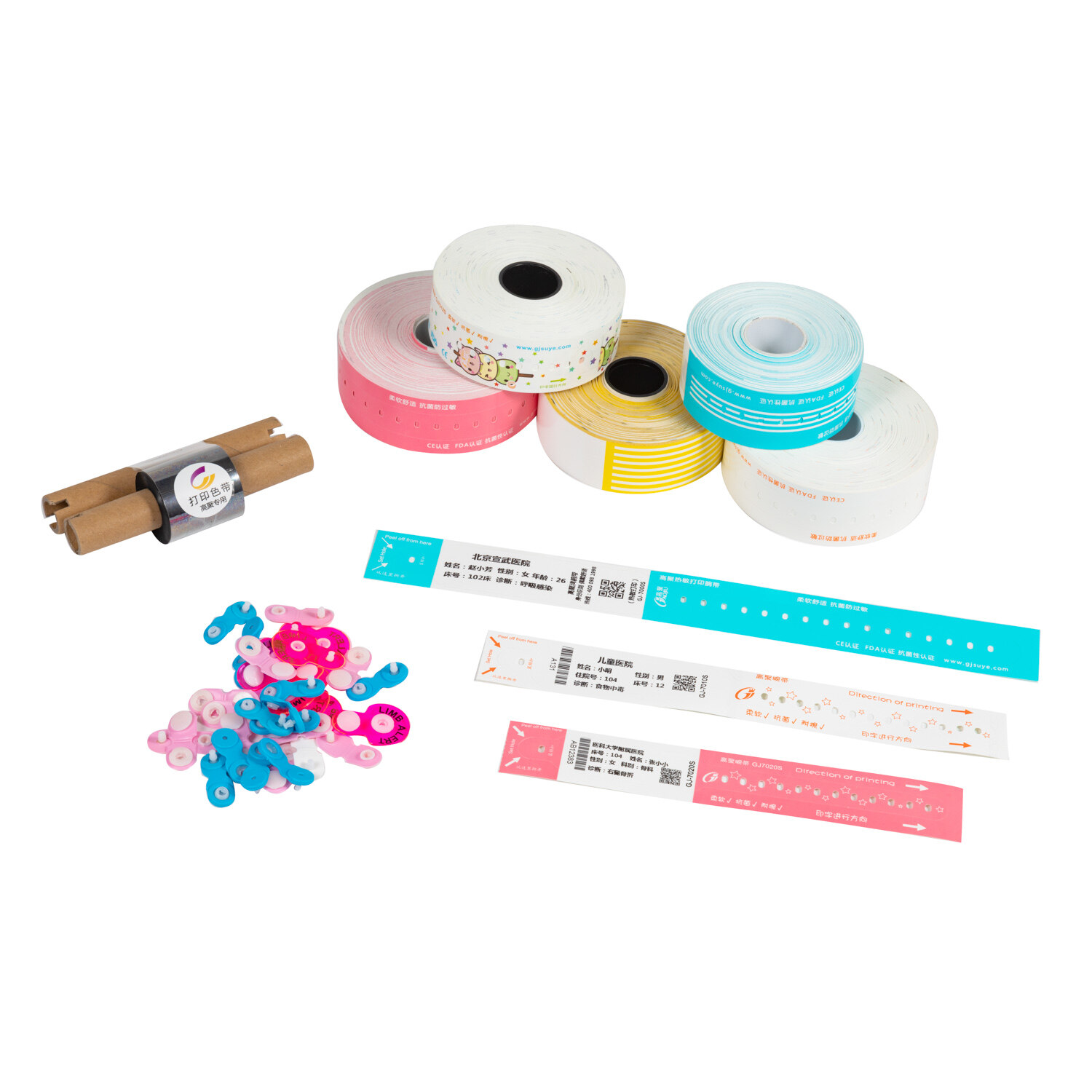
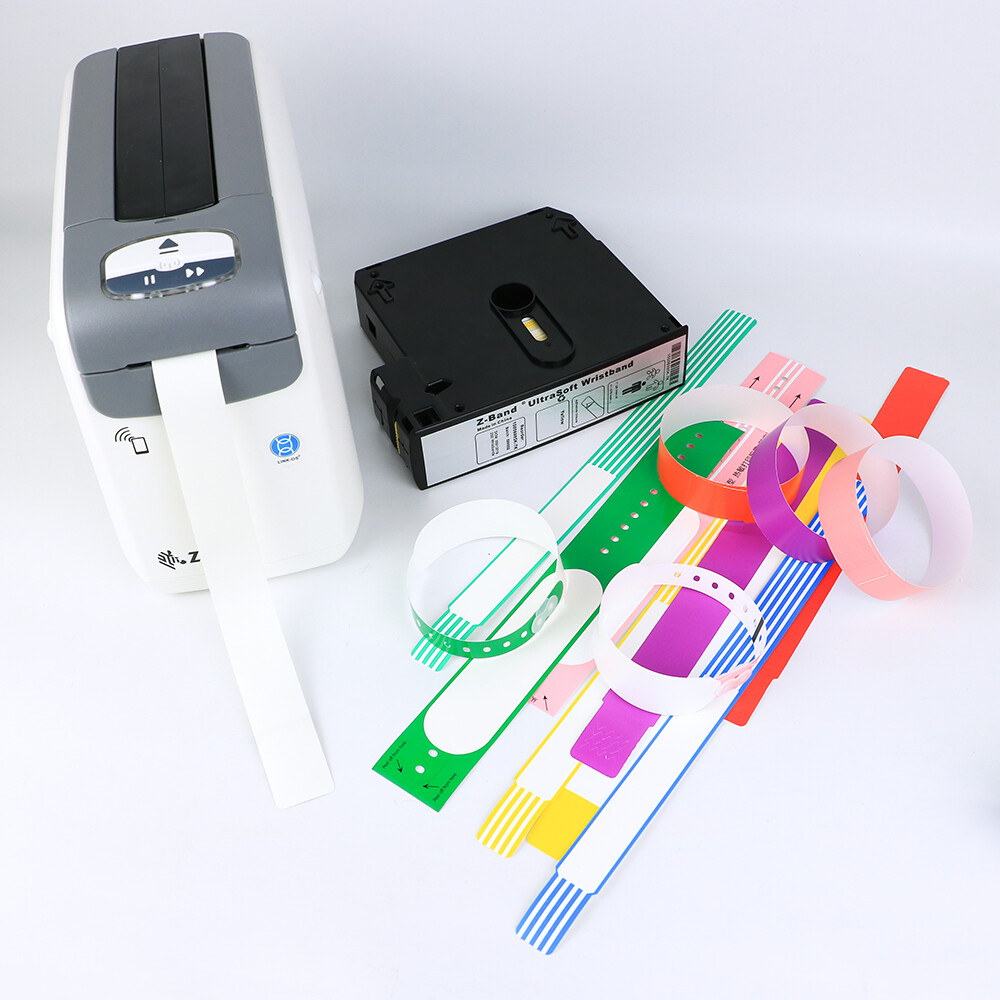
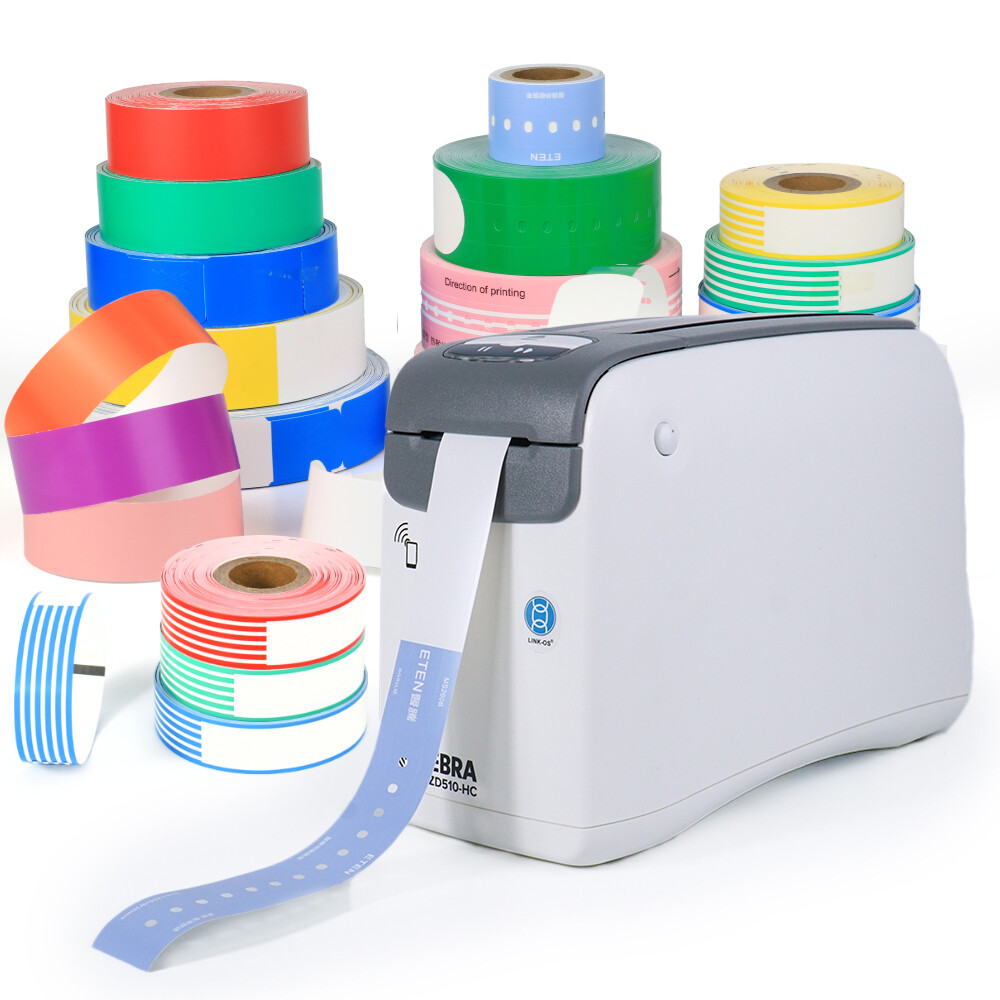
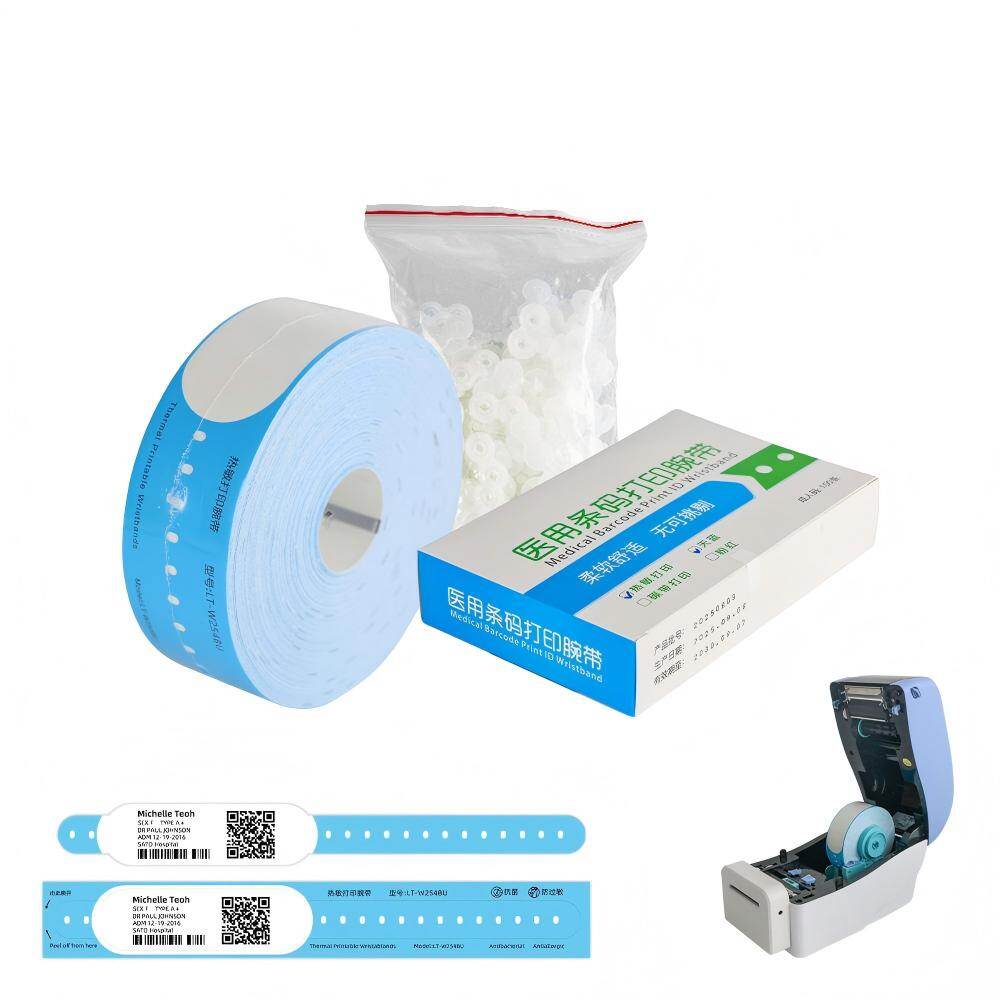
Blank printable wristbands compatible with existing printers. Even when the primary printing system is offline, having spare blank wristbands allows for manual completion if the printer can be restored quickly, or serves as the base for a manual labeling procedure. One health system's business continuity plan specifies obtaining correct colour, blank wristband from wristband printing machine and stick Bradma label to it as a replacement wristband procedure during EMR downtime. This hybrid approach—blank wristband plus pre-printed identification label—preserves the structure of the standard wristband while bypassing the electronic printing workflow.
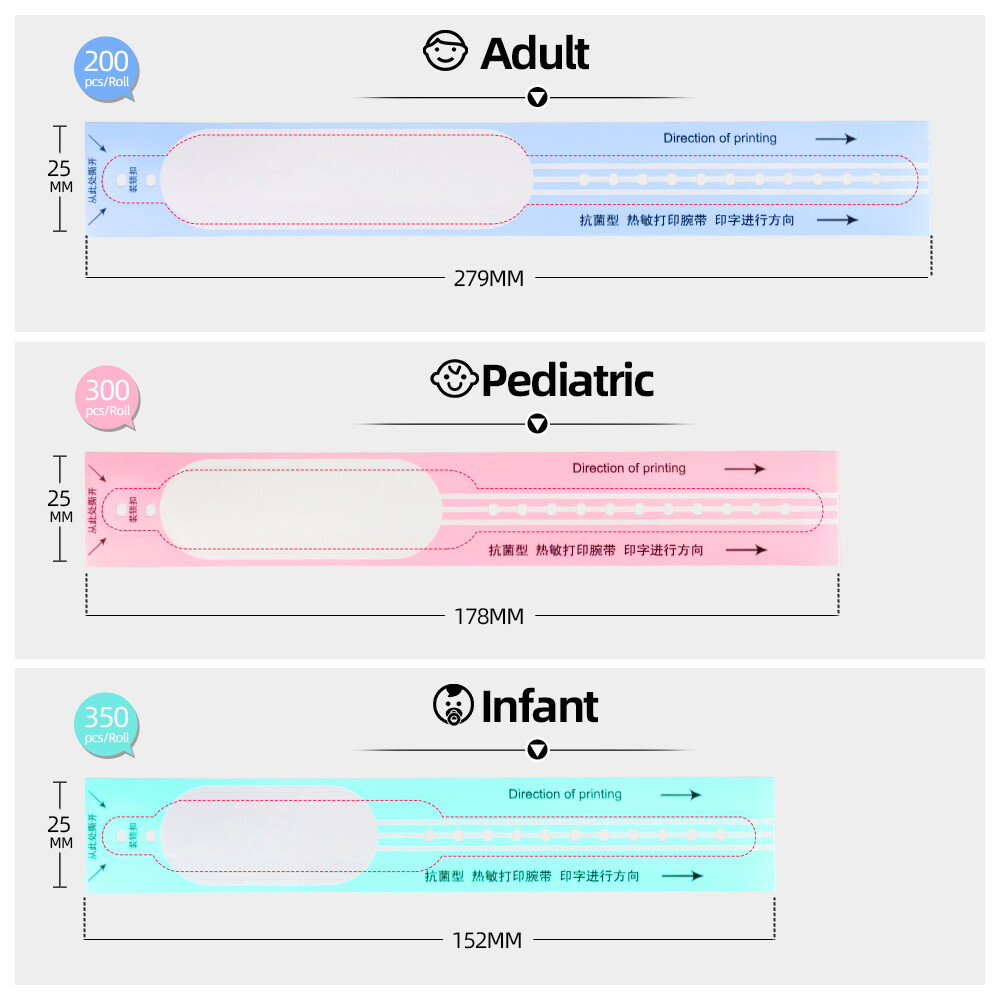
Pre-printed identification labels. These labels, which can be produced in advance during normal operations and stored securely, contain the patient's core identifiers: full name, date of birth, medical record number, and any relevant clinical alerts. When a patient is admitted during downtime, or when a wristband is damaged and requires replacement, these labels can be affixed to a blank wristband.
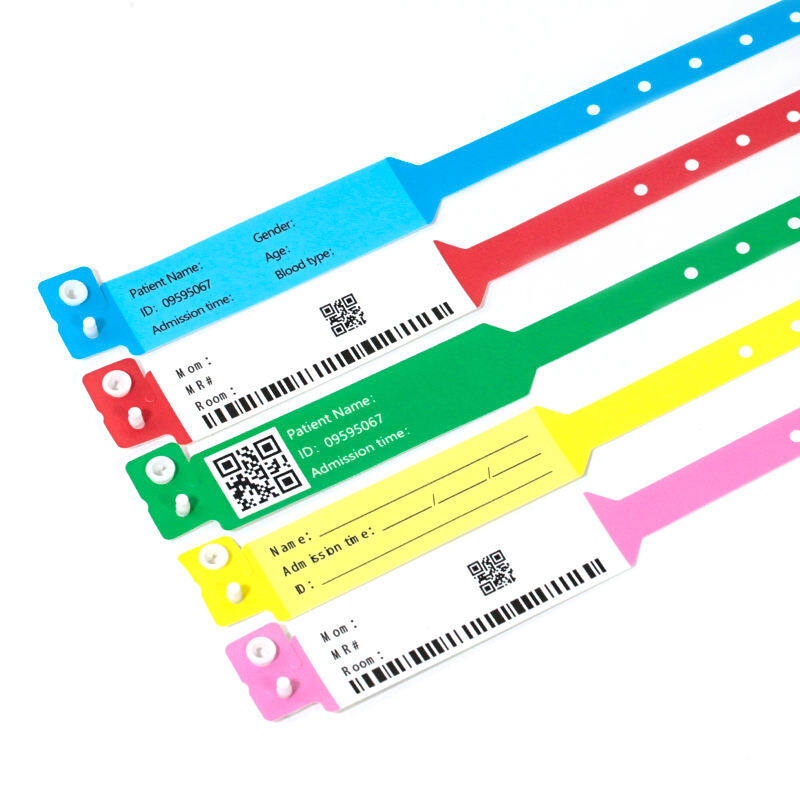
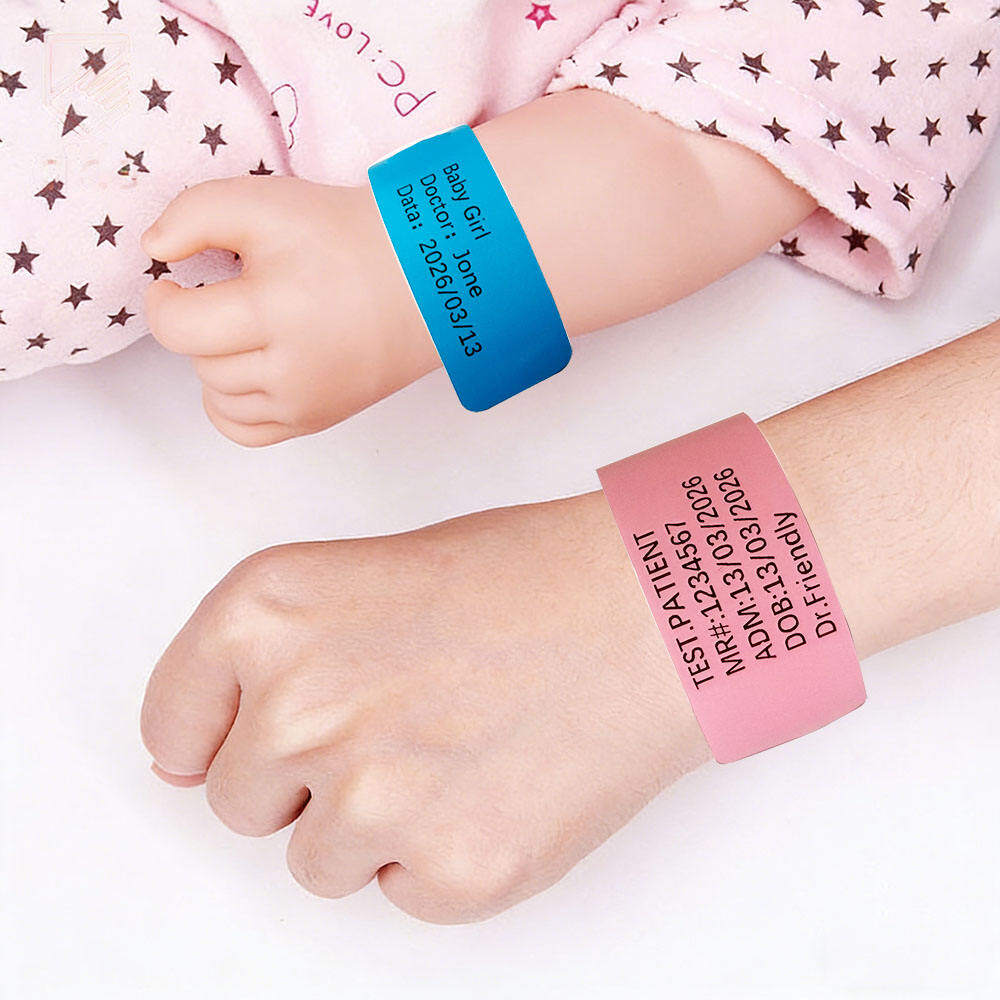
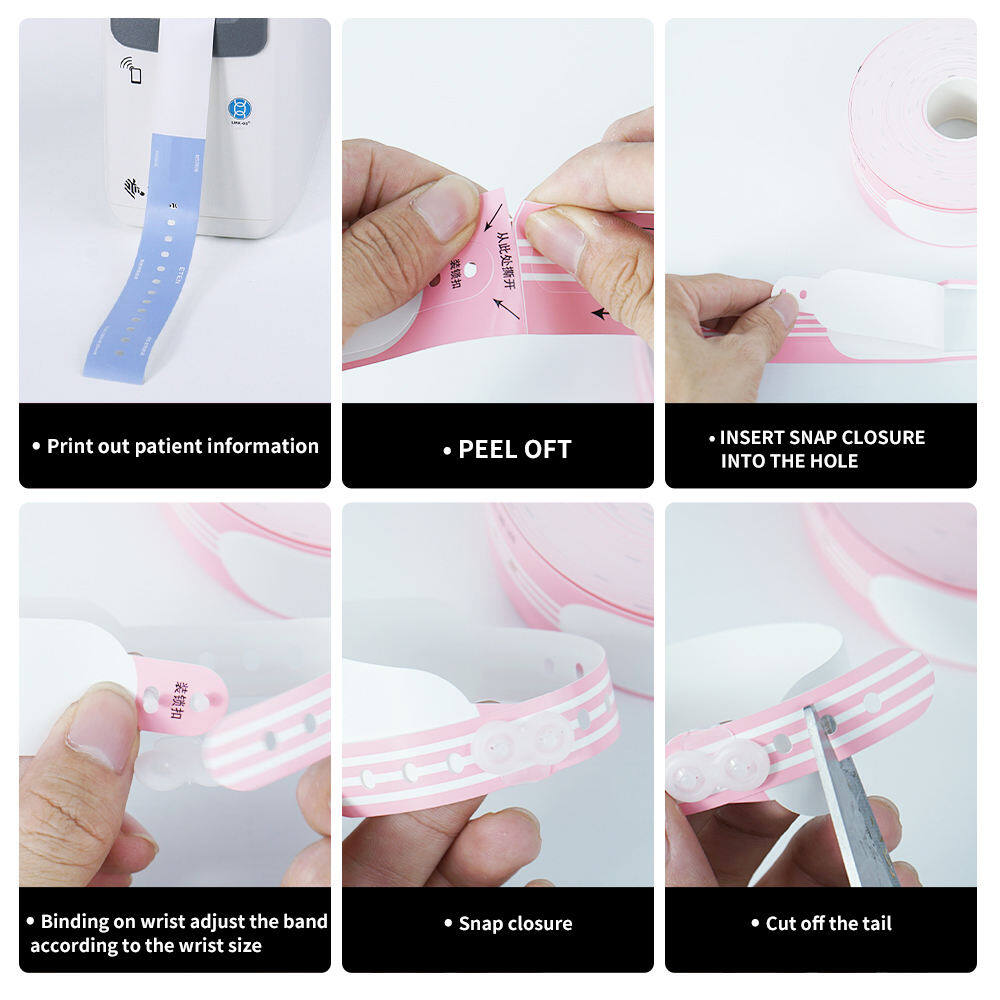
Fully pre-printed wristbands. For high-volume scenarios or extended downtime, maintaining a stock of wristbands that can be completed entirely by hand may be necessary. Write-on plastic identification bracelets with self-locking devices are available in configurations specifically designed for manual completion, with materials that are waterproof, cleanable, and resistant to information wear-off. These bands should accommodate the three core patient identifiers: name, date of birth, and medical record or identification number.
Auxiliary color-coded bands. Many organizations use colored wristbands to indicate specific risks: allergies, fall risk, restricted extremity, or do-not-resuscitate status. The emergency inventory should include these auxiliary bands in appropriate quantities, as their absence during downtime creates its own safety gap.
Inventory Quantities and Rotation
Determining appropriate stock levels requires balancing the cost of carrying inventory against the risk of depletion during an extended outage. A reasonable approach is to calculate average daily admission volume for each unit, multiply by the expected duration of a typical downtime event (often estimated at 24 to 72 hours), and add a safety margin. The inventory should be stored in a location accessible to nursing staff without requiring IT or materials management involvement.
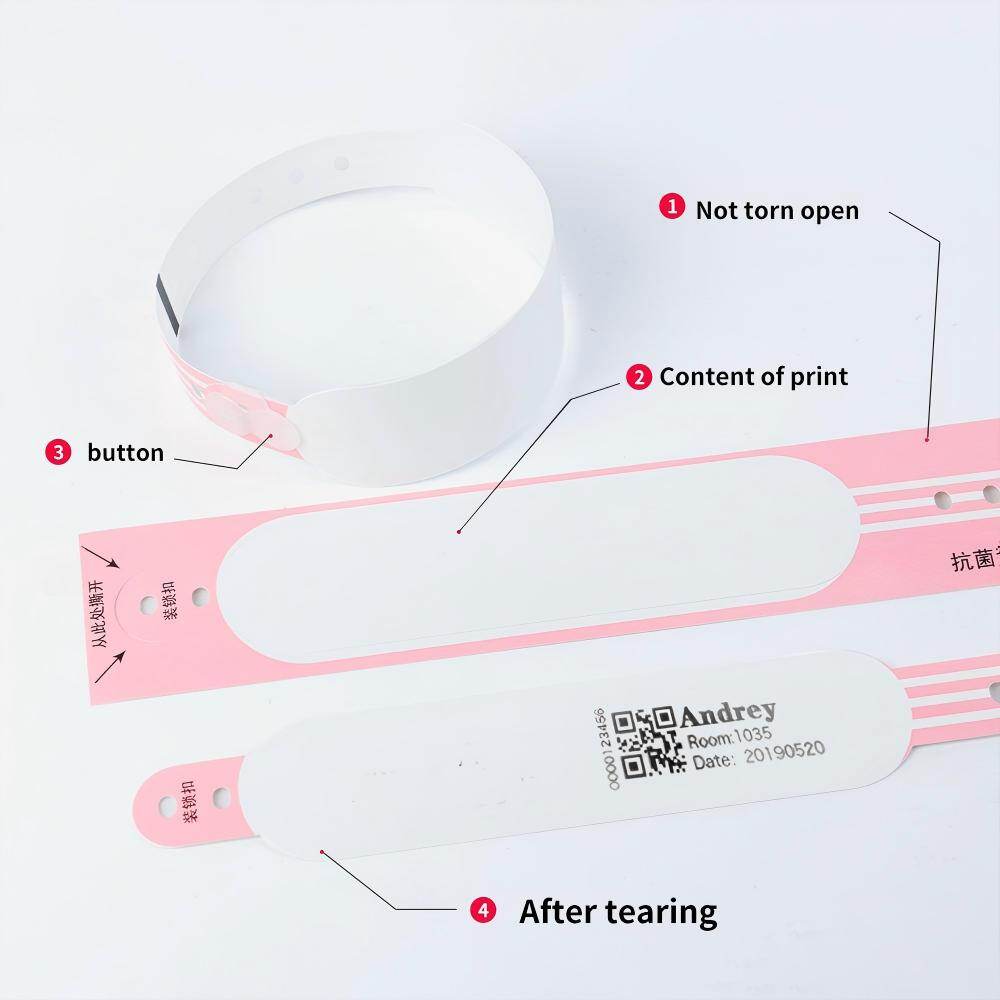
Rotation is equally important. Pre-printed materials can become outdated as form designs change, barcode standards evolve, or regulatory requirements shift. A regular rotation schedule ensures that emergency stock remains usable and compliant. Wristband materials have defined shelf lives; adhesive labels may lose tack, and thermal print media may degrade over time.
One practical strategy is to incorporate emergency stock into the routine supply rotation: use the oldest emergency stock first during normal operations, replacing it with newly received inventory. This first-in, first-out approach keeps the emergency cache fresh without requiring separate expiration tracking.
The Manual Verification Workflow During Downtime
When wristband printing is unavailable, the verification process shifts from scanner-mediated confirmation to human-mediated confirmation. The goal remains the same: confirm that the patient receiving care or medication matches the patient for whom the order was written. The method changes.
The Two-Identifier Standard Without Technology
The Joint Commission requires two patient identifiers before any procedure, medication administration, or blood transfusion. An armband is a source where identification information may be located, but the identifiers themselves—the person-specific information—must be actively confirmed. During downtime, this confirmation cannot rely on scanning.
The manual verification workflow should specify:
Which two identifiers to use. Full name and medical record number are the most common pairing. Date of birth serves as an acceptable alternative. The procedure should explicitly prohibit the use of room number, bed assignment, or physical location as an identifier, as these are prone to change and error.
How to verify when the patient cannot participate. For patients who are unconscious, confused, or preverbal (pediatric patients), verification must involve a family member or caregiver who can confirm the patient's identity. In pediatric and psychiatric units, where wristband compliance and identification rates are often lower even during normal operations, the downtime procedure should emphasize the involvement of family members and the active confirmation of identity before care delivery.
The verbal confirmation script. Standardizing the language used during verification reduces variation and error. Instead of asking "Are you John Smith?" which invites a passive affirmative response, staff should ask the patient to state their full name, then confirm it against the medical record. This active confirmation process helps match the patient and documentation, as recommended by The Joint Commission.
Writing the Emergency Wristband
When a new wristband must be created manually, the procedure should specify:
Legibility requirements. Handwriting must be clear and unambiguous. Black text on a white background provides the best contrast for legibility. If colored bands are used for alert conditions, the written information should still be in a high-contrast ink.
Information content. The wristband must contain the minimum required identifiers. Additional information such as allergy status, fall risk, or special precautions should be included if the band has space and if the organization's standard wristbands would normally carry this data.
Attachment and placement. The wristband must be attached to the patient immediately upon completion. The Joint Commission specifies that when armbands are used, the band must be attached to the patient at all times; placing it on a bedside table or taping it to the bed is not acceptable. The standard placement is the patient's right upper limb, though exceptions exist for swollen, injured, restricted, or amputated limbs.
Durability considerations. Manual wristbands should be waterproof and resistant to body fluids, cleaning agents, and alcohol-based sanitizers. The material specification for write-on identification bracelets emphasizes flexibility, smoothness, and a self-locking device that does not press into the skin. During an extended downtime, a handwritten band may be in place for days; it must survive the conditions of inpatient care.
Technology-Assisted Downtime Mitigation
While the core of a downtime procedure is necessarily manual, several technology solutions can reduce the frequency and impact of printing failures.
Hybrid Printing Approaches
The Monash Health business continuity plan during EMR downtime employs a hybrid technique: obtaining a blank wristband from the printing machine and attaching a Bradma label (a pre-printed identification label) to it. This approach leverages whatever printing capability remains available—perhaps the printer itself still functions, but the data feed from the EHR is interrupted—while providing a fallback for information transfer.
Decentralized Printing Capability
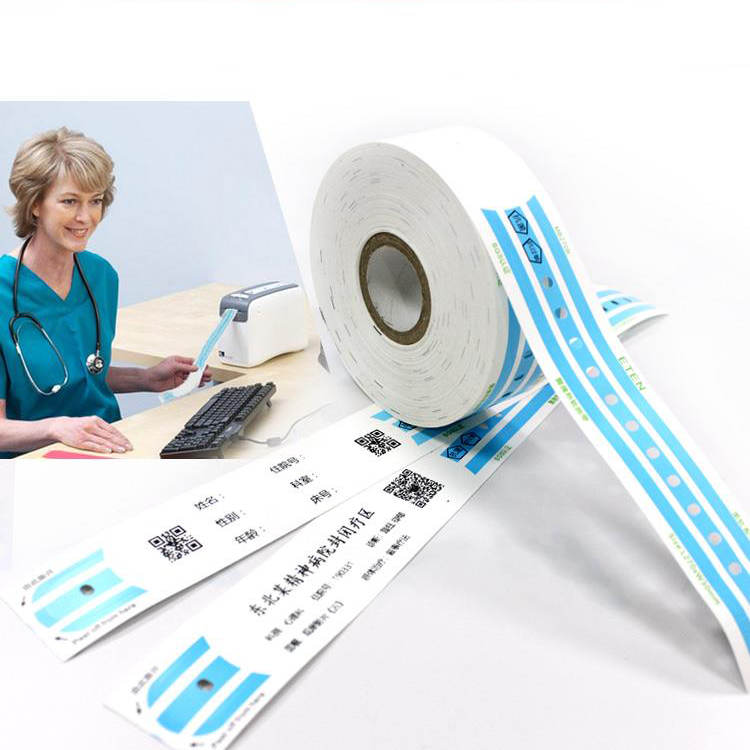
Organizations that rely on a single central printing station or a small number of network printers create single points of failure. Distributing printing capability across units, or equipping mobile nursing workstations with compact printers, reduces the blast radius of any single device failure. Modern medical-grade printers are available with wireless connectivity options including Wi-Fi and Bluetooth, enabling bedside printing during downtime if the network remains partially functional.
Barcode Redundancy and 2D Symbologies
The transition from linear barcodes to 2D symbologies such as GS1 DataMatrix improves data density and error correction capability. The NHS standard for patient identification wristbands specifies encoding key identifiers into a GS1 DataMatrix 2D barcode, which is more robust than linear barcodes and can be read even when partially damaged. Organizations planning wristband system upgrades should prioritize 2D barcode capability for this reason.
Roles and Responsibilities During Downtime
A downtime procedure fails if no one knows who is responsible for executing it. Clear role assignment is essential.
Nursing Leadership
The nurse manager or charge nurse on each unit is responsible for initiating the downtime wristband procedure when printing failure is confirmed. This includes retrieving emergency stock, communicating the manual workflow to staff, and monitoring compliance with two-identifier verification throughout the outage.
IT and Biomedical Engineering
IT is responsible for diagnosing the failure and communicating expected restoration timelines to nursing leadership. If the failure is network or EHR-related, IT coordinates with the business continuity plan activation. Biomedical engineering handles printer hardware issues, and if a spare printer can be deployed, IT ensures it is configured and functional.
Materials Management
Materials management ensures that emergency wristband stock is available and that replenishment occurs during extended outages. They also coordinate with vendors if the downtime is caused by a supply interruption.
Staff Education and Competency
The most well-stocked emergency inventory is useless if staff do not know how to use it. Periodic competency assessments should include a simulated downtime scenario: staff demonstrate the manual wristband creation process, the two-identifier verification without scanning, and the documentation of the manual process in the medical record.
Documentation and Post-Downtime Reconciliation
Every wristband created during downtime represents a temporary record that must eventually be reconciled with the electronic system.
Document the downtime event. The procedure should require that the start time, end time, and reason for the downtime be documented, along with a list of patients who received manually created wristbands.
Reconcile patient records. Once the printing system is restored, all patients who received manual wristbands should have their wristbands replaced with system-generated bands as soon as clinically feasible. The manual wristband should not simply be discarded; it should be verified against the electronic record, then removed and documented.
Review for errors. Post-downtime review should examine whether any identification discrepancies occurred during the outage. Near-misses should be captured and analyzed. The absence of reported errors does not prove the procedure worked; it may simply mean errors were not detected.
Conclusion: Building Resilience into Patient Identification
Wristband printing downtime is not a rare event. Network outages, hardware failures, and supply interruptions occur with sufficient frequency that every healthcare organization should have a tested procedure in place. The emergency wristband procedure is not a temporary workaround; it is a critical component of the patient identification safety net.
The elements of an effective procedure are straightforward: pre-printed inventory with defined quantities and rotation schedules, a clear manual verification workflow that preserves the two-identifier standard, defined roles for nursing, IT, and materials management, and a reconciliation process after restoration. The execution, however, requires sustained attention and periodic drilling.
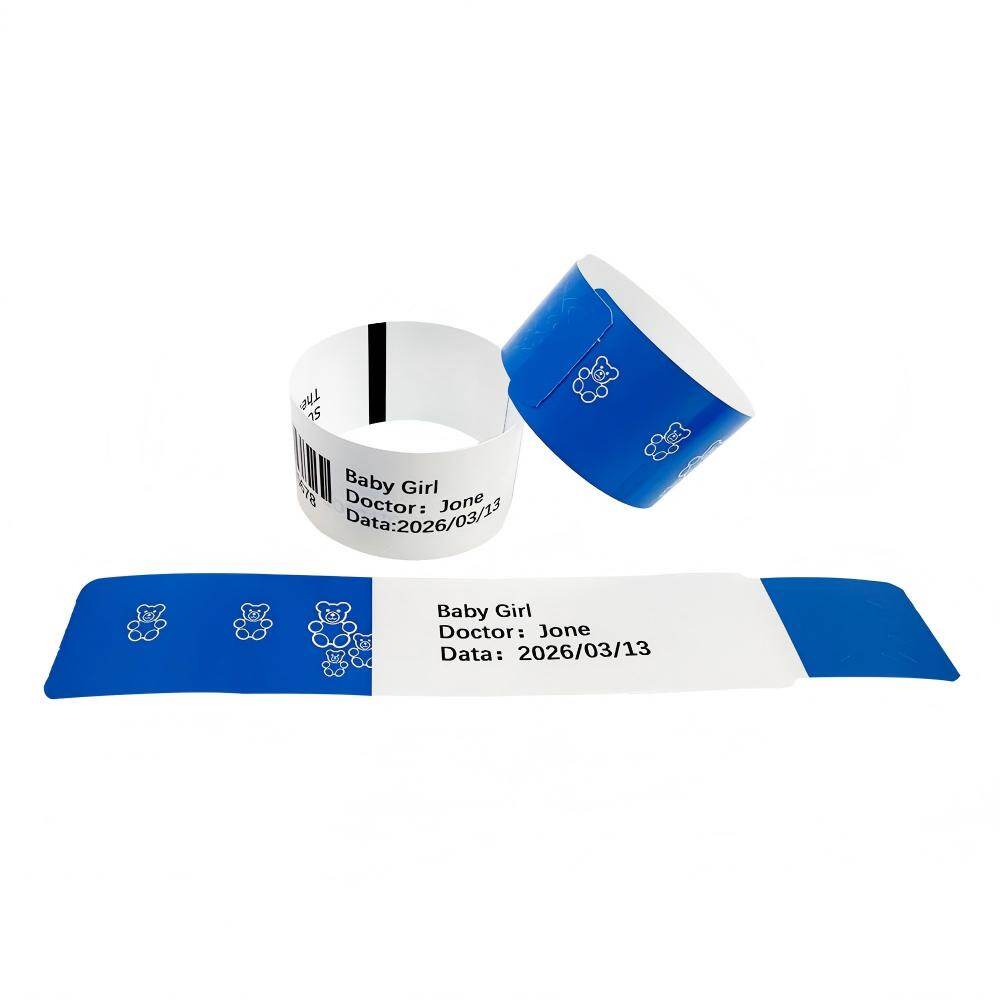
For IT and nursing administrators, the question is not whether the wristband printing system will fail, but when. The organizations that answer that question with preparation rather than improvisation will be the ones that maintain patient identification integrity when the technology is no longer available. Stocking the right mix of media matters too: bariatric patient wristbands, extended-length wristbands, and newborn ankle bands should all appear in the emergency cache in the sizes each unit actually serves, so that patient identification accuracy holds during the outage and survives post-downtime audits such as CAP Q-Probes reviews.
Continue Reading
Have Questions About Wristbands?
Our team is ready to help you find the perfect wristband solution for your needs. Contact us directly on WhatsApp for quick responses.
Contact on WhatsApp