
Color-Coded Wristband Policies: Legal Risks and Standardization Gaps

The Promise and the Problem of Color-Coded Wristbands
Color-coded patient wristbands occupy a peculiar space in modern healthcare: they are simultaneously one of the most universally adopted patient safety tools and one of the least standardized. The premise is elegant in its simplicity—assign a color to a clinical condition, apply a wristband, and allow any provider to recognize that condition at a glance. Yet this very simplicity masks a complex web of risks that emerge when color meanings are not consistent across institutions, states, or care settings. For healthcare organizations, understanding these risks is not an academic exercise. It is a prerequisite for protecting patients and mitigating legal exposure.
This article examines the current landscape of color-coded wristband policies, the legal and clinical hazards of inconsistent color designations, and the persistent question of why a national standard has remained elusive despite decades of advocacy.
The logic behind color-coded wristbands is grounded in human factors research: visual cues processed rapidly and automatically can communicate critical information more efficiently than text-based systems, particularly in high-stress clinical environments. A red band signals allergy. A yellow band signals fall risk. A purple band signals do-not-resuscitate status. In theory, this system reduces cognitive load and accelerates recognition.
In practice, however, the system functions only as well as the consistency of its application. A 2007 national survey of academic medical centers found that among hospitals using color-coded wristbands, eight distinct color schemes were employed to designate DNR status alone. More than 70 percent of surveyed nursing executives recalled situations in which confusion about a DNR order led to problems in patient care. The variety of color choices, the study concluded, poses a risk for confusion and error.
The stakes of this confusion are not theoretical. The Pennsylvania Patient Safety Authority documented a near-miss in 2005 involving a patient who was mistakenly given a yellow wristband—at that hospital, yellow signified DNR. The nurse who applied the band also worked at another facility where yellow meant "restricted extremity". The patient experienced a cardiopulmonary arrest, and the error was recognized only just in time to initiate resuscitation. Pennsylvania is unique in mandating the reporting of near-misses, meaning such events elsewhere may go uncounted. But the underlying mechanism—a provider moving between facilities where the same color carries different meanings—is universal.
The Cross-Institution and Cross-State Misreading Hazard
The most acute risk posed by color-coded wristband policies arises not within a single hospital but at the interfaces between institutions and jurisdictions. Healthcare in the United States is characterized by mobility—of patients and of providers. Travel nurses, locum tenens physicians, rotating residents, and float pool staff routinely work across multiple facilities. A nurse who spends three shifts per week at Hospital A, where green means "latex allergy," and two shifts at Hospital B, where green means "high fall risk," faces a cognitive burden that no amount of training can fully eliminate. Human factors research consistently demonstrates that under time pressure and fatigue, the brain defaults to the most recently reinforced association, not the most contextually correct one.

Patient mobility compounds the problem. A patient admitted to a skilled nursing facility in one state with a teal band indicating "DNR" may be transferred to an acute care hospital in a neighboring state where teal signifies something entirely different—or nothing at all. The receiving facility, following its own protocol, may apply a new set of wristbands without recognizing that the incoming bands carried clinical meaning. Or the patient may retain the original bands, creating a mixed-language identification system that invites misinterpretation. Transfer protocols should treat incoming bands as unverified data: remove or over-band them, and re-confirm identity with two patient identifiers before any clinical action.
State-level standardization efforts have attempted to address this fragmentation, but they have inadvertently created new fault lines. Arizona and Pennsylvania, two early leaders in wristband standardization, initially chose different colors for DNR status. Arizona selected purple, deliberately avoiding blue due to its association with "code blue." Pennsylvania initially selected blue but later changed to purple after recognizing the same code blue confusion. The fact that two states with the same safety objective arrived at opposite color choices—and that Pennsylvania had to reverse course—illustrates the difficulty of achieving consistency even among well-intentioned actors.
The result is a patchwork of standards that varies not only between states but often between hospital systems within the same metropolitan area. A 2010 survey of long-term care facilities in Arizona found that half used color-coded wristbands, with no consistent scheme even within that single state. A survey of Missouri hospitals and long-term care facilities identified 29 colors communicating 21 clinical conditions. Colorado's survey similarly found varied and non-standardized usage.
Why No National Standard Exists
The absence of a national mandate for color-coded wristband standardization is striking given the consensus that standardization reduces error. Several factors explain this gap.
The Voluntary Nature of Industry Guidance
The American Hospital Association issued a statement in 2008 urging hospitals to adopt three standardized colors: red for allergies, yellow for fall risk, and purple for DNR status. This recommendation, while influential, carried no enforcement mechanism. Hospitals could adopt it, modify it, or ignore it entirely. The FDA reinforced the AHA guidance in 2021 with a letter urging manufacturers to reserve purple wristbands exclusively for DNR status, noting that the agency was aware of other purple wristbands with different meanings in circulation. But FDA letters to industry are guidance documents, not regulations.
The Joint Commission, which sets accreditation standards for most U.S. hospitals, has not issued a National Patient Safety Goal mandating color-coded wristband standardization. This stands in contrast to its approach with other high-risk safety practices. In 2004, the Joint Commission created a uniform list of prohibited abbreviations—including "qd" and "U"—which immediately ended debate about which abbreviations to ban and mandated compliance. A similar mandate for wristband colors has been repeatedly urged but never enacted.
The Governance Gap in Medical Device Regulation
Part of the explanation lies in the regulatory classification of wristbands. Patient identification bands are Class I medical devices, the lowest risk category, subject to general controls but not premarket approval. The FDA regulates the safety and effectiveness of wristbands as devices, but the agency's authority over how hospitals use those devices—including what colors they assign to what meanings—is limited. Color-coding conventions are clinical practice decisions, not device design characteristics, and thus fall outside the FDA's direct regulatory purview.
The Role of Professional Societies and Standard-Setting Bodies
In the absence of government mandate, the task of standardization falls to professional societies and standards organizations. The Association for the Advancement of Medical Instrumentation (AAMI) and the American National Standards Institute (ANSI) have developed standards for various medical device labeling and identification systems, but no comprehensive standard for wristband color-coding has been promulgated by these bodies. The National Quality Forum has endorsed patient identification as a priority, but has not issued a specific color-coding standard.
This governance vacuum creates a paradox: everyone agrees that standardization is desirable, but no single entity has both the authority and the will to impose it.
Legal Liability Considerations
From a risk management perspective, the absence of a national standard creates a complex liability landscape. Hospitals that implement color-coded wristband policies assume a duty to ensure those policies are followed correctly. When a patient is harmed because a wristband color was misinterpreted, the hospital's training protocols, policy documentation, and compliance monitoring become discoverable evidence.
The legal risks are compounded when hospitals employ travel or float staff who may be unfamiliar with the facility's color scheme. If a hospital fails to provide adequate orientation on wristband meanings, or if it relies on the assumption that providers will "know" the colors, it may face allegations of negligent training or supervision. The Pennsylvania near-miss, in which a nurse from a facility with different color meanings applied the wrong band, illustrates precisely this risk.

From the plaintiff's perspective, the argument is straightforward: the hospital adopted a safety system, the system failed, and the failure caused harm. The absence of a national standard does not absolve individual hospitals of responsibility for ensuring that their own color-coding systems are clear, consistently applied, and effectively communicated to all staff.
State-Level Efforts and Their Limitations
Several states have attempted to fill the regulatory void. Pennsylvania's Color of Safety Task Force, convened in 2006, established a standardized, limited palette of wristband colors across the state's hospitals. Before standardization, Pennsylvania hospitals used a wide variety of colors with conflicting meanings—a purple band might signal DNR at one facility and fall risk at another. The task force's work reduced this variation and provided implementation toolkits for hospitals.
Arizona developed a similar initiative after discovering eight different colors in use for DNR designation alone. The Arizona Hospital and Healthcare Association recommended a standard system and distributed implementation manuals.

New York has seen repeated legislative attempts to mandate standardization. Assembly Bill A1240 (2013-2014), Senate Bill S4270 (2009-2010), and Assembly Bill A1083 (2021-2022) each proposed requiring the commissioner of health to develop a uniform color-coding system for patient wristbands. None have been enacted. Massachusetts Senate Bill S1393 (2023) took a different approach, directing the Department of Public Health to study the current state of patient identification and report on the use of color-coded wristbands in other jurisdictions, including adverse impacts to patient care. The bill did not mandate standardization but sought to build an evidentiary foundation for future action.
The Delaware General Assembly passed a resolution in 2009 strongly encouraging all hospitals to adopt the national standardized color system, noting that 36 states had adopted or committed to adopting the system as of April 2009. But a resolution is not a statute, and encouragement is not enforcement.
The common thread across these state efforts is their reliance on voluntary compliance. Even in states with active standardization initiatives, hospitals retain discretion over whether and how to implement color-coding systems.
The Case for National Standardization
The argument for a national standard is compelling. Proponents point to the success of the Joint Commission's prohibited abbreviations list as a model: a single, authoritative mandate that eliminates variation and confusion. A national standard for wristband colors would achieve the same result—every provider, in every facility, in every state, would operate from the same color vocabulary.

The practical benefits are substantial. Travel nurses and float staff could move between facilities without retraining on color meanings. Patients transferred across state lines could retain their wristbands without risk of misinterpretation. The cognitive load on all providers would decrease, freeing mental capacity for other clinical tasks. And the legal landscape would become clearer: hospitals could demonstrate compliance with a recognized national standard rather than defending their own idiosyncratic color schemes.
The resistance to national standardization is not based on disagreement about the benefits. Rather, it reflects structural factors: the absence of a single entity with both the authority and the mandate to impose a standard, the preference for voluntary guidance over regulation, and the difficulty of achieving consensus among the many stakeholders involved—hospitals, manufacturers, professional societies, patient safety organizations, and state health departments.
There is also a counterargument, articulated by some human factors specialists: that standardization itself can create new risks by encouraging complacency. If providers assume that all hospitals use the same color scheme, they may fail to verify color meanings when moving between facilities. But this argument has been widely rejected in the patient safety literature. The dominant view, supported by decades of research on checklists, protocols, and standardized communication, is that variation—not standardization—is the primary enemy of safety.
Practical Guidance for Healthcare Organizations
Given the absence of a national mandate, what should healthcare organizations do? The following practices represent the current best thinking on color-coded wristband safety.
Adopt the AHA-recommended colors. Red for allergy, yellow for fall risk, and purple for DNR status represent the closest thing to a national consensus. Organizations that deviate from these colors assume additional risk without corresponding benefit.
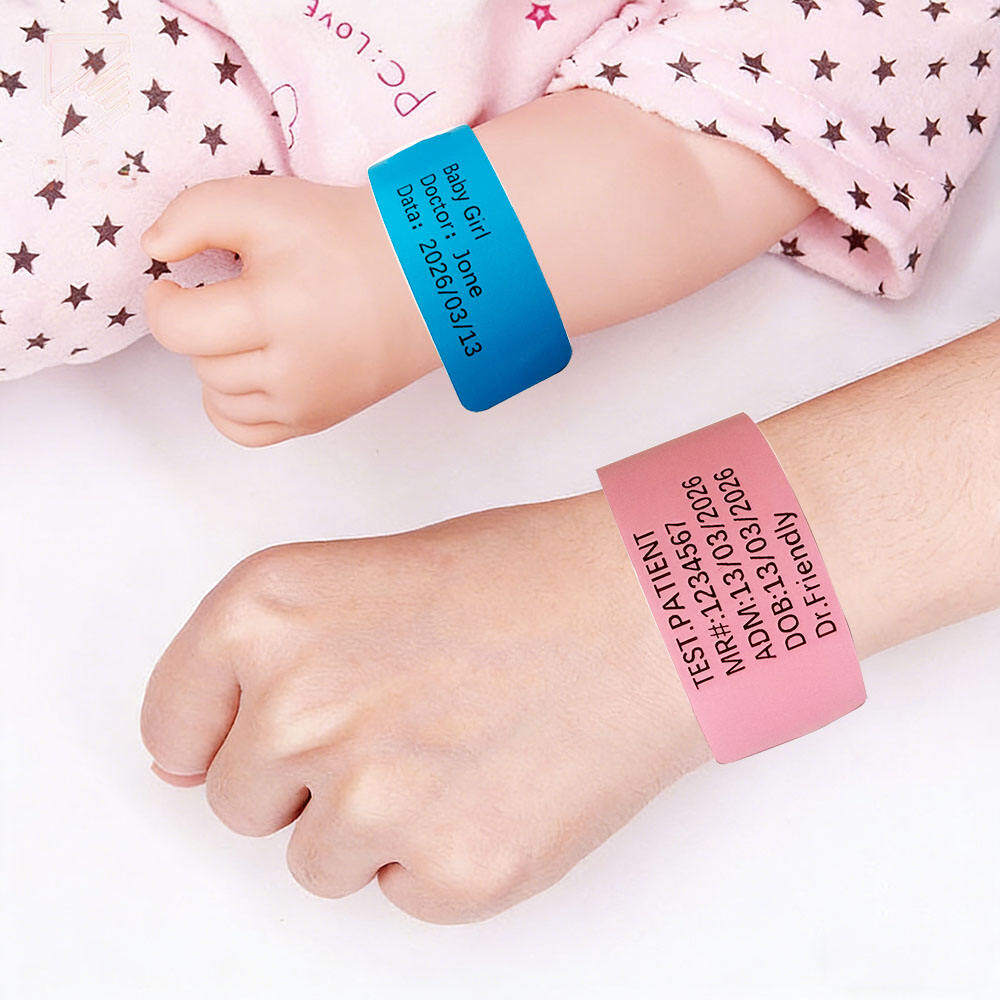
Limit the number of colors. Pennsylvania's Patient Safety Authority has consistently recommended a limited palette, noting that as the number of colors increases, so does cognitive load and the potential for confusion. More colors mean more opportunities for error. Organizations should resist pressure to add bands for every conceivable risk condition. A disciplined formulary should still cover genuine clinical needs—bariatric patient wristbands, extended-length wristbands and ankle bands for patients whose wrist sites are inaccessible—without multiplying color meanings.
Address the community wristband problem. Patients often arrive wearing non-medical wristbands—Livestrong-style bracelets, event wristbands, or fashion accessories—in colors that may resemble medical alert bands. The yellow Livestrong bracelet, worn by an estimated 1 in 5 Americans at the peak of its popularity, created documented near-misses at hospitals where yellow signified DNR. Hospitals should have a policy for removing or covering community wristbands, and should educate patients about why this is necessary.
Train across the care continuum. Wristband training should not be limited to nursing staff. Physicians, transport personnel, radiology technicians, and anyone who might encounter a patient should understand the color scheme. The 2007 survey found that while 85 percent of respondents believed most nurses could correctly identify the DNR color, only 15 percent believed most physicians could do so. This disparity represents a significant safety gap.

Coordinate with regional partners. Hospitals in the same geographic area or referral network should align their color-coding systems. Patients move between facilities, and so do providers. Regional standardization, even in the absence of a national mandate, reduces the risk of cross-institutional misreading.
Document and monitor. Organizations should maintain records of their color-coding policies, training materials, and any incidents involving wristband confusion. This documentation serves both quality improvement and legal defense purposes. If a wristband-related error occurs, a thorough investigation can identify whether the problem lies in the policy itself, its implementation, or individual performance. Benchmarking programs such as CAP Q-Probes give safety committees an external reference point for measuring patient identification accuracy and wristband-related error rates against peer institutions.
Looking Forward
The history of color-coded wristband standardization is a case study in the gap between recognizing a problem and solving it. The problem—variation in color meanings across institutions—was identified nearly two decades ago. The solution—standardization—is widely agreed upon. Yet implementation has been piecemeal, voluntary, and inconsistent.
The legal risks of this inconsistency are real and growing. As healthcare becomes more mobile, as patients cross state lines and providers work across systems, the opportunities for misreading a wristband color multiply. Each instance of confusion is a potential adverse event, and each adverse event is a potential lawsuit.
Whether a national standard will eventually emerge is uncertain. The precedents exist—the Joint Commission's abbreviation list, the standardized medication labeling requirements—but the political and institutional will to apply them to wristbands has not yet coalesced. In the meantime, the burden falls on individual healthcare organizations to adopt standardized practices, train comprehensively, and monitor diligently.
For patients, the wristband is a small band of plastic or fabric. For the healthcare system, it is a test of whether safety standardization can overcome institutional inertia. The answer to that test will determine whether the wristband protects patients or, in rare but consequential cases, becomes a vector of harm.
Continue Reading
Have Questions About Wristbands?
Our team is ready to help you find the perfect wristband solution for your needs. Contact us directly on WhatsApp for quick responses.
Contact on WhatsApp