
Data Minimization on Wristbands: Why Patient Names and Allergies Should Not Be Stored on the Chip
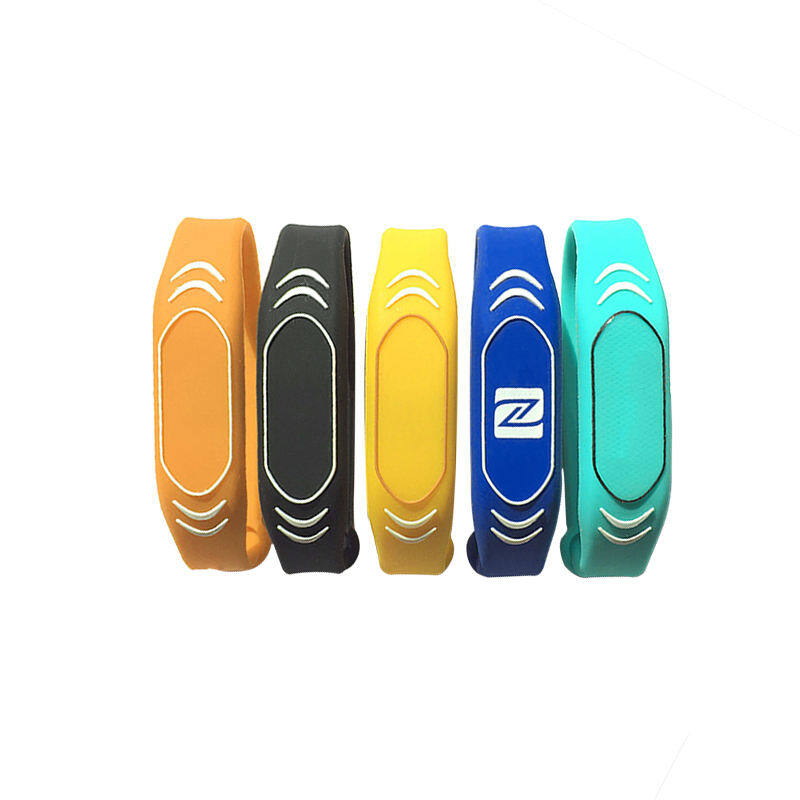
A wristband is the most continuously present data-carrying object in a patient's hospital stay. It survives shifts, bed transfers, imaging suites, and the brief, high-stakes moments before medication administration. Because the wristband sits at the center of patient identification, it is tempting to treat its embedded chip as a miniature medical record—a place to park the patient's name, allergy list, blood type, and code status "just in case." That instinct is understandable, especially in emergency scenarios. It is also one of the most consequential design mistakes in healthcare RFID.
The principle at stake is data minimization: the idea that a system should collect and retain only the data strictly necessary for its defined function, for only as long as necessary. Applied to a wristband chip, data minimization produces a clear architectural rule: the chip should carry an encrypted unique identifier—a lookup key—and nothing else that qualifies as protected health information (PHI). Patient names, allergies, diagnoses, and medication histories belong in the secured enterprise subsystem, behind authentication, access control, and audit logging, where they can be protected at a level that a passive tag simply cannot provide.
What the chip actually is—and what it is not
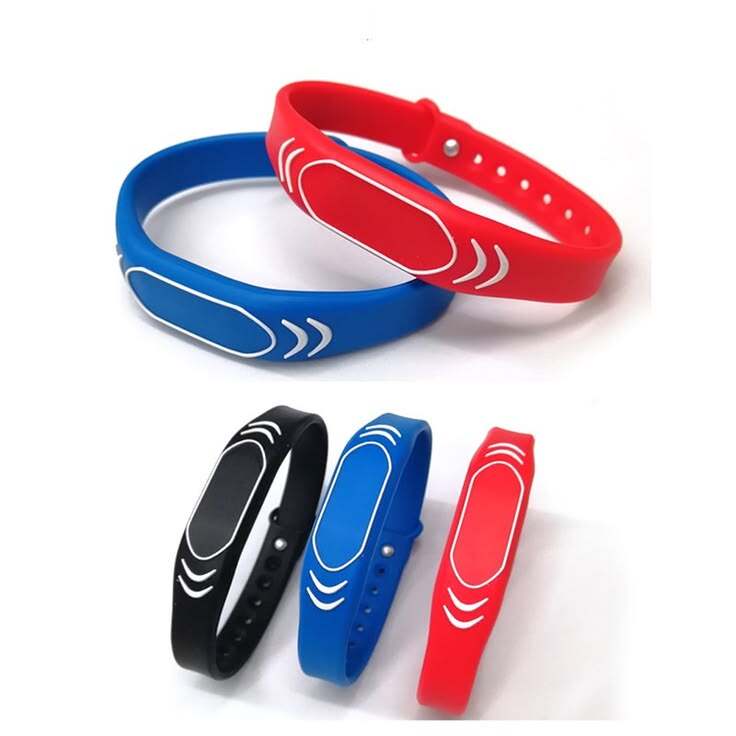
A healthcare RFID wristband is not a self-contained medical record. It is a patient identification token. The chip's job is to answer one question reliably: which record in the hospital system does this person correspond to? In well-designed deployments, the tag stores a medical record number (MRN), a serialized identifier, or an encrypted unique identifier (UID) that resolves to the patient's electronic health record (EHR) when read by an authorized RFID reader. The patient's name may appear on the printed surface of the band for human visual verification, but the chip's stored payload remains a pointer, not a database.
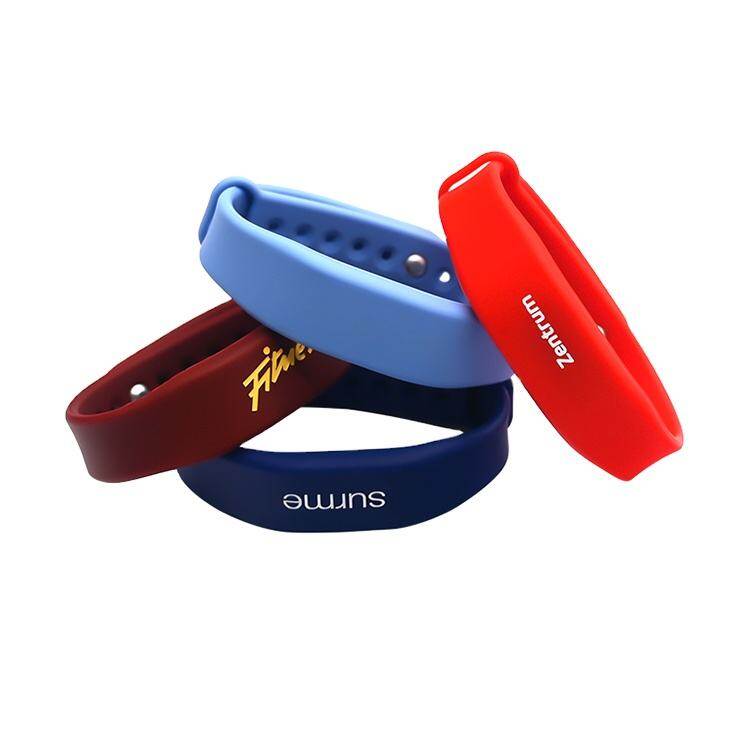
This distinction matters because RFID tags operate in an exposed physical and radio environment. A passive RFID or NFC inlay has no battery and no ability to run a full cryptographic stack on par with a server. Even encrypted tags with AES-128 support are constrained by cost, memory, and power budgets. The moment you write a patient's allergy list or blood type onto that chip, you are asking a low-cost edge device to carry the confidentiality burden of clinical data. That is a burden it was never designed to bear at the same assurance level as a backend database behind a HIPAA-compliant access control regime.
The attack surface on the tag–reader link
The argument for keeping PHI off the chip begins with the security realities of the tag–reader link. RFID security research consistently identifies a family of threats that target the air interface and the physical tag itself: eavesdropping and skimming, spoofing and tag cloning, man-in-the-middle interception, replay attacks, denial-of-service, side-channel analysis, and reverse engineering. These are not theoretical curiosities. An unprotected or weakly protected RFID tag can be interrogated by a reader that was never authorized to see the data it carries.
If the chip stores only an opaque identifier, a successful skimming attack yields a number. That number may be sensitive as a linkable identifier, which is why even identifiers should be protected with authentication and, where feasible, encryption. But a stolen identifier does not directly disclose that the patient is allergic to penicillin, that she has epilepsy, or that she is on an anticoagulant. If the chip stores the allergy list itself, a single unauthorized read produces clinical PHI in the clear—or, worse, in a form that the attacker can retain and analyze offline. The privacy property of an RFID system depends on the difficulty of linking tag interactions to a real identity; storing names and allergies on the tag collapses that difficulty to near zero.
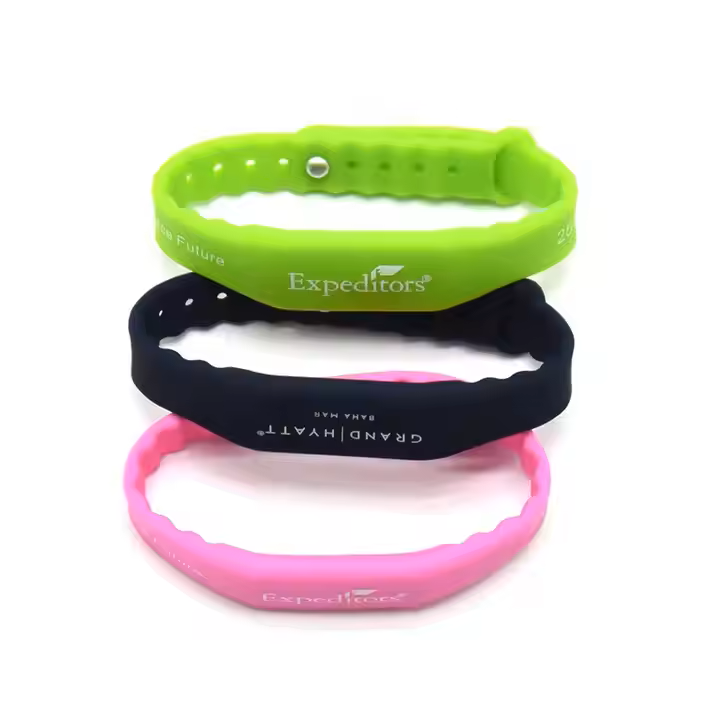
The reader side of the link is equally relevant. NFC-enabled phones and handheld RFID readers are pervasive. In a hospital corridor, a man-in-the-middle device or a malicious app with NFC access can attempt to interact with a wristband without the patient or staff noticing. The eHealth security guidance is explicit: unprotected RFID tags are vulnerable to physical attacks, counterfeiting, eavesdropping, traffic analysis, and denial of service, and tags must not compromise the privacy of their holders. A tag that holds a name and an allergy list is a high-value target for exactly these attacks.
The "backup" argument and why it fails as a design principle
There is a recurring counterargument, visible in earlier RFID healthcare proposals, that the chip should hold a compressed backup of critical clinical data so that emergency responders can access it even when the network or the EHR is unavailable. One representative system from the mid-2000s explicitly encoded a patient's medical history, including allergies, blood type, and medical conditions, onto a 2-kilobyte HF transponder, arguing that "a mini-database" on the tag enables immediate access without a database lookup.
That argument deserves to be taken seriously, because the underlying clinical concern is real: in a mass-casualty event or a network outage, a first responder may not be able to query the EHR. But the existence of a clinical need does not make the tag the right place to meet it. The "backup on the chip" approach creates a permanent, portable, offline copy of PHI on a device that is worn in public, can be lost or removed, and can be interrogated by any compatible reader within range. The backup is only as secure as the weakest reader that can access it. And because the data is static once written, it cannot be revoked, updated, or audited at the point of access in the way a system-side lookup can.
A better answer to the emergency-access problem is architectural, not tag-centric. Hospitals can implement break-glass access procedures, offline-cached EHR views on authorized handheld devices, and role-based emergency credentials that are logged and reviewed. These mechanisms preserve access while keeping the authoritative record under access control and audit trail governance. The tag remains a lookup key, not a copy of the record. The earlier RFID "backup" model is useful as a historical contrast: it illustrates why the industry moved toward unique identifier architectures once the security and privacy costs of on-tag PHI became clear.
What data minimization looks like in a defensible wristband architecture
A data-minimized wristband design is not simply a tag with less memory used. It is a chain of custody in which each layer knows only what it needs to know.
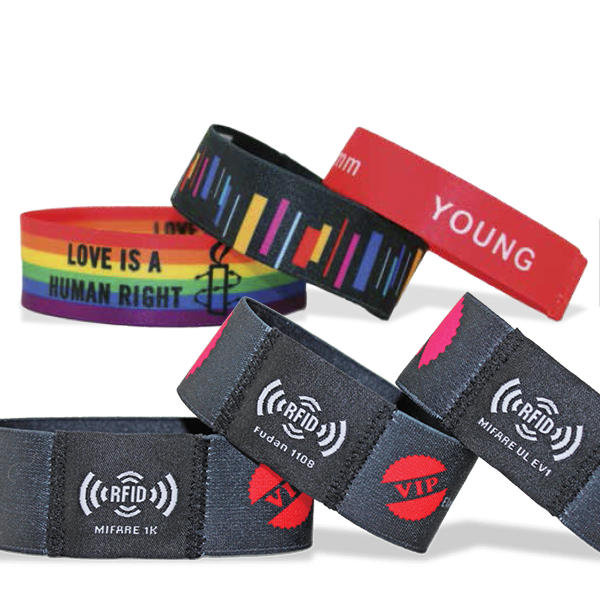
At the chip layer, the tag carries an encrypted unique identifier or a write-locked serial number. The identifier should be protected with mutual authentication between tag and reader where the chip supports it, and with key diversification so that compromising one tag does not compromise the fleet. AES-128-capable chips such as MIFARE DESFire are appropriate when the identifier itself must be protected against unauthorized reading; open NTAG chips are acceptable for a write-locked opaque serial that carries no PHI.
At the lookup layer, the RFID reader or NFC device passes the identifier to a trusted enterprise subsystem. That subsystem performs authentication, checks the clinician's role and context, and resolves the identifier to the patient's record. The EHR—not the tag—returns the name, allergy history, medication list, blood type, and diagnosis codes. Every resolution is logged. If the identifier is read by an unauthorized device, no clinical data is disclosed; the subsystem simply refuses the lookup or records the attempt.
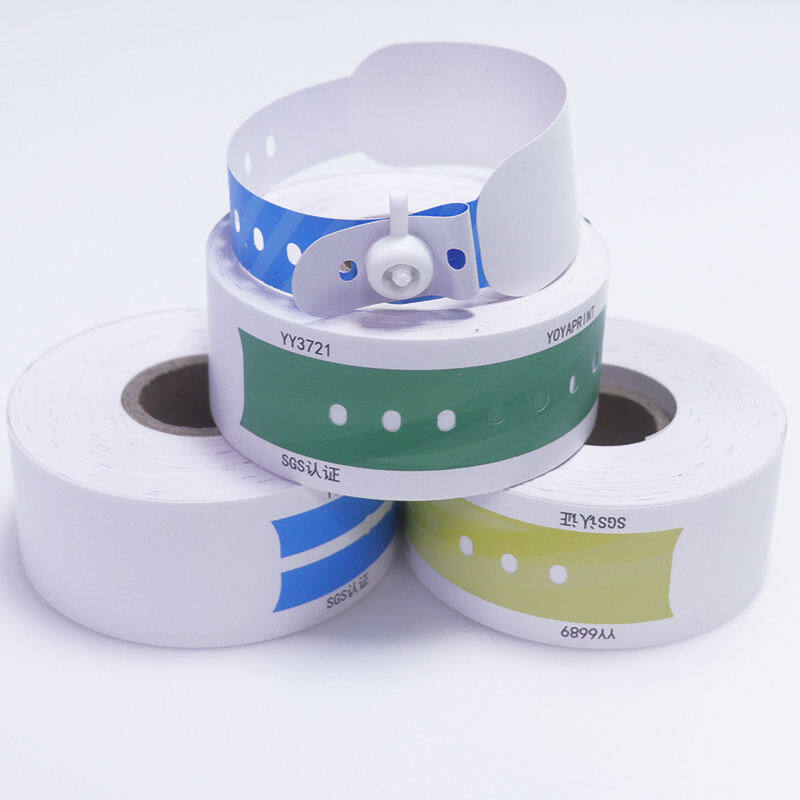
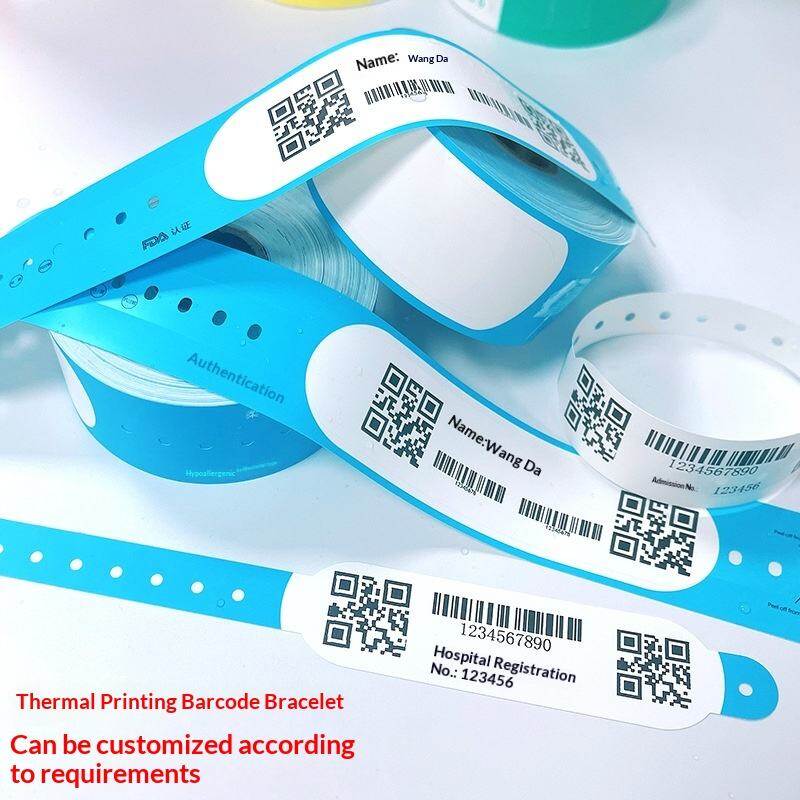
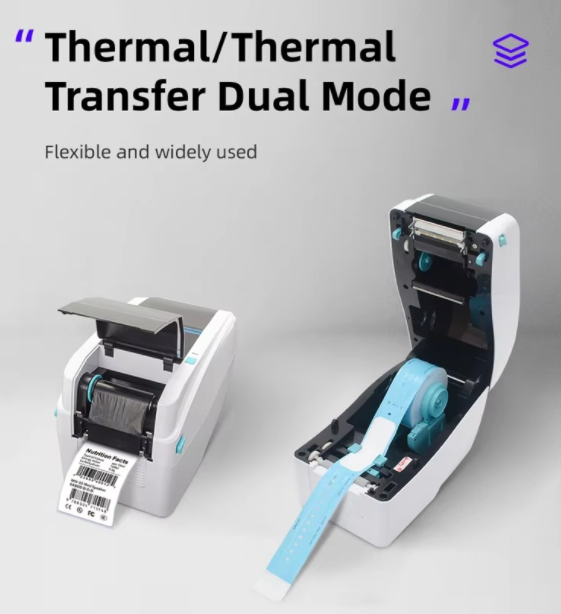
At the printed surface layer, hospitals may still display the patient's name, date of birth, MRN, and a barcode or QR code for visual and backup scanning. The printed surface is a human-verification aid, not a data store. Laser-printed and thermal-printed wristbands remain in wide use precisely because they support the visual and barcode workflows that coexist with RFID and NFC reading. The same printed surface must be legible and durable whatever the band format—a standard adult band, one of the extended-length wristbands ordered as bariatric patient wristbands, or one of the ankle bands applied when wrist access is unavailable—so that the visual and barcode layer keeps protecting patient identification accuracy even when the chip is read passively. The Joint Commission's two-identifier requirement is satisfied by the combination of a person-specific printed identifier and a chip-borne lookup key; the chip does not need to carry the identifiers in cleartext.
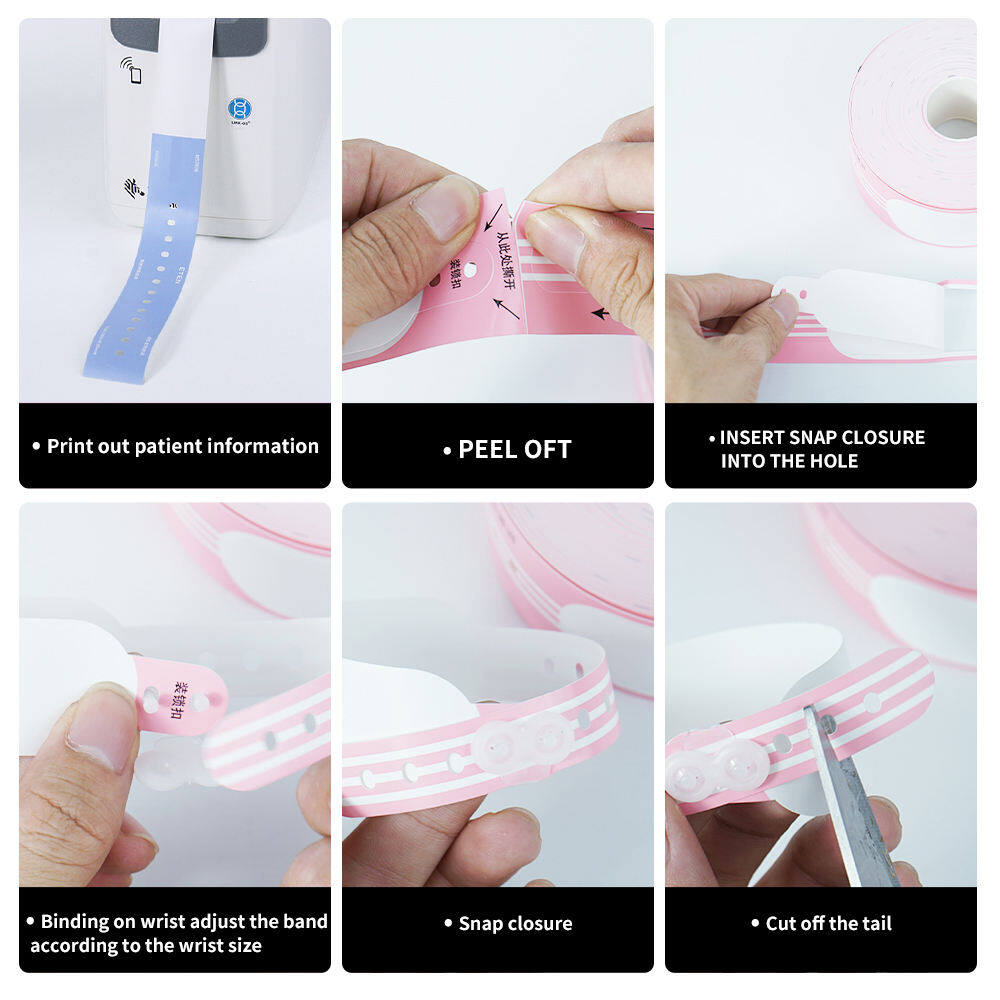
At the disposal layer, the identifier model simplifies decommissioning. A discharged patient's wristband can be cut off and discarded; because the chip holds no PHI, the disposal risk is limited to the linkability of a retired identifier. Hospitals can rotate or invalidate identifier ranges on a schedule, and tamper-evident or one-way closure designs reduce the risk of band transfer between patients.
Compliance is not the same as security—but data minimization strengthens both
HIPAA does not prescribe a single wristband format, and GDPR does not ban RFID in healthcare. Both frameworks, however, push toward the same design logic. HIPAA's minimum necessary principle and GDPR's data minimization and storage limitation principles ask whether the data placed on the tag is actually needed at that location for the stated purpose. A chip that carries an encrypted UID and nothing else is easier to defend under both regimes than a chip that carries a patient's allergy list and name.
HIPAA-focused implementation guidance is blunt on this point: prefer chips supporting AES-128 encryption and mutual authentication, write tokens rather than PHI, lock or segment memory after encoding, and never write open PHI to tag memory. The HITRUST and Joint Commission alignment points reinforce the same architecture: the wristband is an identification medium, not a protected-health-information repository. FDA UDI and electromagnetic compatibility requirements add device- and environment-level constraints, but they do not create a justification for putting clinical data on the tag.
The compliance benefit of data minimization is not merely doctrinal. A breach involving a lost or skimmed wristband that carried only an opaque identifier is categorically different from a breach involving a wristband that carried names and allergies. The former may trigger notification obligations depending on jurisdiction and linkability, but the latter is a direct PHI exposure with clinical implications. Minimization reduces the blast radius of the inevitable edge-case failure.
Operational realities: why "just put it on the chip" creates new failure modes
Even setting aside adversarial threats, on-tag clinical data introduces operational failure modes that system-side lookup avoids.
First, data staleness. A patient's allergy history can change during an admission. If the chip holds a static allergy flag, and the EHR is updated but the tag is not rewritten, the wristband becomes a source of false reassurance. Rewriting tags at the bedside introduces write operations, key management, and potential data integrity errors. A lookup key architecture eliminates this problem: the tag does not need to be updated when clinical data changes, because the authoritative record lives in the EHR.

Second, transcription and readability errors. Allergy information printed or encoded in compact form on a wristband is vulnerable to misspelling, abbreviation confusion, illegibility, and transcription errors—risks that are amplified when the data must fit within the constraints of a small tag or a small printed area. System-side lookup presents the allergy list in the full EHR context, with coded values, interaction checks, and clinical decision support.
Third, reader compatibility and tag capability variance. Not all HF, UHF, NFC, and BLE tags are created equal. Some chips support encryption; some do not. Some have writable memory; some are read-only. A design that depends on on-tag clinical data must guarantee that every reader in every workflow can interpret every data format on every chip generation. A unique identifier model dramatically reduces this interoperability burden: the reader only needs to capture an identifier and pass it to the subsystem, which handles the semantic interpretation.
Fourth, workflow fragility. A passive RFID wristband read through fabric or at a distance of 5–30 cm with an HF reader, or 1–5 m with a UHF reader, is valuable precisely because it reduces scan failures at the bedside. That value is preserved when the read operation returns a key. If the read operation must also deliver a complete allergy list, the system now couples identification reliability to data-delivery reliability. The identification function should be as simple and robust as possible; clinical data retrieval is a separate, richer operation that belongs to the subsystem—the same identification-compliance discipline that CAP Q-Probes style surveillance programs track when they audit whether staff actually verify identity at the bedside.
Designing for trust: what to specify and what to reject
For hospital IT teams, clinical engineering, and procurement groups, the data-minimization principle translates into concrete specification language.
Specify a chip that carries an encrypted unique identifier or a write-locked serial number, with mutual authentication where the chip class supports it. Specify that no PHI—name, allergy, diagnosis, medication, blood type, or date of birth—is written to tag memory. Specify a backend lookup service that performs authentication, access control, and audit logging for every identifier resolution. Specify key diversification and a key-management lifecycle that covers provisioning, rotation, and revocation.
Reject proposals that justify on-tag PHI by invoking emergency backup without also providing a break-glass audit trail and a secure offline-access architecture. Reject "write the allergy list to the chip so responders can read it" as a substitute for interoperable, authenticated emergency access to the EHR. Reject the assumption that encryption on the tag makes on-tag PHI equivalent to system-side PHI; the tag remains a physically accessible, resource-constrained device with a fundamentally different threat model.
The historical contrast is instructive. The mid-2000s vision of a wristband as a "mini-database" was not malicious; it was an attempt to solve a real access problem with the tools of the moment. What changed is not the clinical need but the security architecture. Enterprise RFID subsystems, EHR-integrated lookup services, NFC authentication, and modern access control make it possible to deliver fast, reliable identification without turning the wristband into a portable PHI store. Data minimization is not a retreat from functionality; it is the design discipline that makes functionality sustainable.
Conclusion: The Wristband as a Lookup Key, Not a Medical Record
A patient wristband should be trusted to do one thing exceptionally well: identify the patient and link to the authoritative record. The chip is a unique identifier, not a medical record. When hospitals keep patient names, allergies, and other clinical data off the chip and in the secured enterprise subsystem, they reduce the attack surface of the tag–reader link, eliminate staleness and transcription failure modes, simplify HIPAA and GDPR defensibility, and preserve the speed and reliability that make RFID and NFC wristbands valuable in the first place. The right question is not "how much data can we fit on the chip?" but "what is the minimum data the chip must carry to fulfill its role?" The answer, in a well-designed system, is an encrypted identifier—and nothing more.
A note on terminology for readers seeking further information: This article discusses RFID wristband, patient wristband, patient identification, data minimization, unique identifier, encrypted tag, encrypted UID, RFID chip, NFC wristband, HF RFID, UHF RFID, passive RFID, RFID reader, tag–reader link, privacy, security, HIPAA, GDPR, PHI, EHR, electronic health record, medical record number, MRN, backend database, enterprise subsystem, access control, authentication, mutual authentication, encryption, AES-128, MIFARE DESFire, NTAG, key diversification, skimming, eavesdropping, spoofing, tag cloning, man-in-the-middle, replay attack, denial of service, side-channel attack, audit trail, break-glass access, medication error, allergy, blood type, barcode wristband, laser-printed wristband, thermal-printed wristband, silicone wristband, disposable wristband, Joint Commission, lookup key, write-locked, tamper-evident, data integrity, minimum necessary, storage limitation, and PHI exposure.
Continue Reading
Have Questions About Wristbands?
Our team is ready to help you find the perfect wristband solution for your needs. Contact us directly on WhatsApp for quick responses.
Contact on WhatsApp