
A Comprehensive Guide to Global Medical Patient Wristband Standards and Certification Requirements for Top Economies
The Global Foundation: ISO Standards and International Frameworks
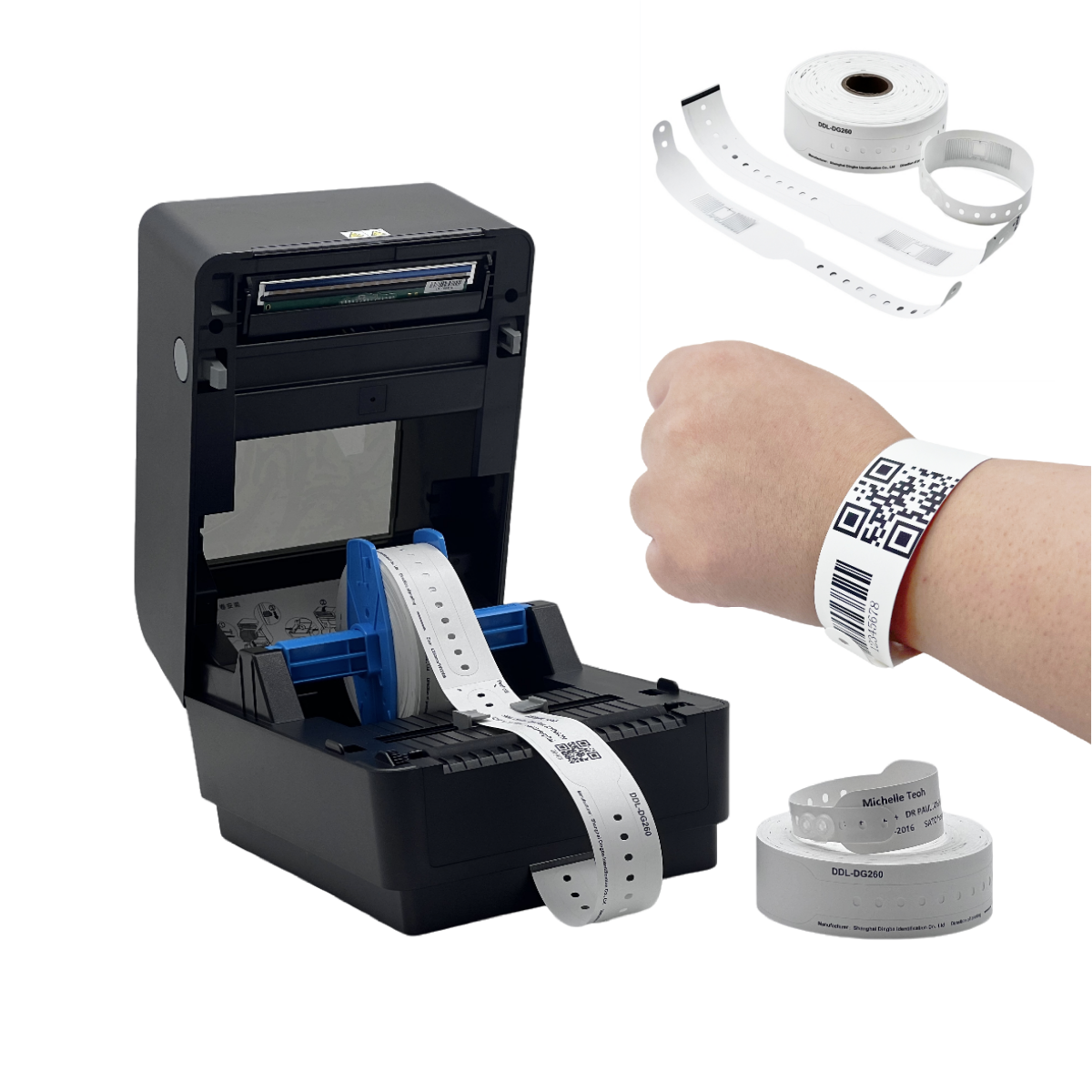
Medical wristbands are a critical component of patient safety, serving as the primary tool for identification in healthcare settings worldwide. However, the standards, certification requirements, material specifications, and design preferences vary significantly across different countries and regions. For manufacturers and exporters of medical wristbands, understanding these differences is essential for market access and regulatory compliance.
Before diving into country-specific requirements, it is important to understand the global benchmarks that influence many national regulations. The primary international standard for medical wristbands is ISO 18530:2021, which provides specifications for identifying and labeling the Subject of Care (SoC) on identification wristbands to enable automatic data capture in the care delivery process. This standard is based on the GS1 system of standards and describes good practices to reduce variation and compromise that can challenge patient safety.
ISO 13485 serves as the overarching quality management system standard for medical devices, and many countries require manufacturers to hold this certification as a prerequisite for market entry.
Additionally, the MedicAlert Foundation provides a globally recognized standardization framework where IDs are linked to a secure database accessible by emergency professionals worldwide. In Europe, the Star of Life symbol is widely recognized as a universal call to action for emergency responders.
Regulatory Frameworks and Certification Requirements by Country
1. United States
Regulatory Body: Food and Drug Administration (FDA)
Medical wristbands in the US are regulated under the FDA's classification system. Most protective restraints, including wristlets, are classified as Class I devices under 21 CFR 880.6760, which means they are subject to general controls and exempt from premarket notification procedures.
Key Certification Requirements:
- FDA registration and listing
- Compliance with general controls (good manufacturing practices, labeling requirements, etc.)
- Many manufacturers also pursue FDA 510(k) clearance for additional market credibility, though not always mandatory for Class I devices
First Responder Recognition: US paramedics and EMTs are trained to search for medical identification on the wrist, neck, and even shoes as part of their patient assessment.
2. Germany
Regulatory Body: German Institute for Medical Documentation and Information (DIMDI) / Competent Authority
Germany follows EU medical device regulations and is known for its rigorous standards. Medical wristbands in Germany often incorporate Data Identifiers (DI) as defined by ISO/IEC 15418 and DIN standards.
Key Certification Requirements:
- CE marking under EU MDR (Medical Device Regulation)
- DIN V 66401 for Unique Identification Mark (UIM) compliance for small medical items
- Compliance with EHIBCC (European Health Industry Business Communication Council) guidelines for identification
Technical Specifications: German hospitals frequently use the "25H" data identifier for globally unique patient IDs, ensuring interoperability across different healthcare systems.
First Responder Recognition: Germany's paramedic training includes thorough instruction on checking for medical alerts during patient evaluations.
3. United Kingdom
Regulatory Body: Medicines and Healthcare products Regulatory Agency (MHRA)
Key Certification Requirements:
- CE marking under UKCA (UK Conformity Assessed) post-Brexit, or CE marking for EU market access
- Compliance with NHS Digital standards for patient identification
- ISO 13485 certification is widely expected
First Responder Recognition: UK responders are trained to look for bracelets and necklaces during their patient assessments.
4. France
Regulatory Body: Agence Nationale de Sécurité du Médicament (ANSM)
Key Certification Requirements:
- CE marking under EU MDR
- Compliance with AFNOR (French Association for Standardization) standards
- ISO 18530:2021 adoption for AIDC marking and labeling
5. Japan
Regulatory Body: Pharmaceuticals and Medical Devices Agency (PMDA)
Japan has a highly regulated medical device market with specific requirements for foreign manufacturers.
Key Certification Requirements:
- Pharmaceuticals and Medical Devices Act (PMD Act) compliance
- JIS (Japanese Industrial Standards) adherence for medical devices
- ISO 13485 certification mandatory for quality management
- Local MAH (Marketing Authorization Holder) required for foreign manufacturers
6. Brazil
Regulatory Body: Agência Nacional de Vigilância Sanitária (ANVISA)
Key Certification Requirements:
- ANVISA registration
- INMETRO certification (Brazilian National Institute of Metrology, Quality and Technology) for product safety
- ISO 13485 certification is often required for foreign manufacturers
7. Indonesia
Regulatory Body: Badan Pengawas Obat dan Makanan (BPOM)
Key Certification Requirements:
- AKL (Alat Kesehatan - Medical Device) registration with BPOM
- ISO 13485 certification is typically required
- SNI (Indonesian National Standard) compliance where applicable
8. Vietnam
Regulatory Body: Ministry of Health
Vietnam's regulatory framework for medical devices is developing rapidly. According to recent documentation, medical wristbands are classified as Class A medical devices, which requires a declaration of conformity with applied standards.
Key Certification Requirements:
- ISO 13485:2016 certification is mandatory for market access
- CE marking is often accepted for imported devices
- Product announcement (Công bố tiêu chuẩn áp dụng) submitted to the provincial Department of Health
Material and Design Specifications by Market
Common Materials Used Across Markets
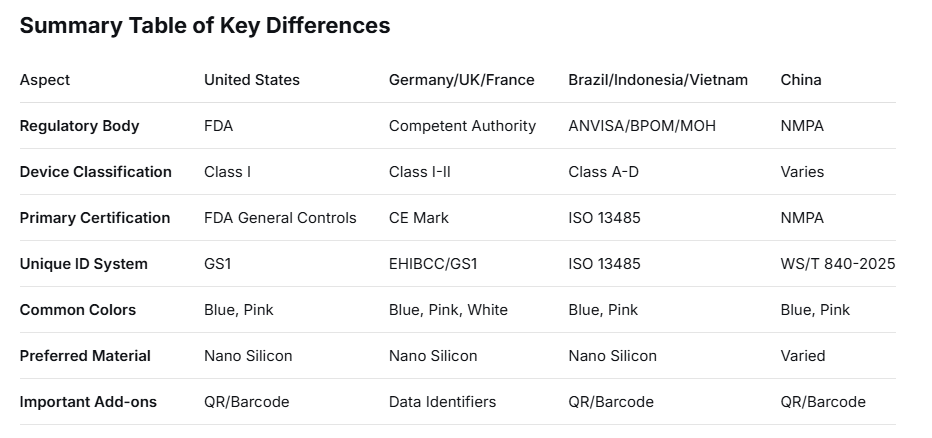
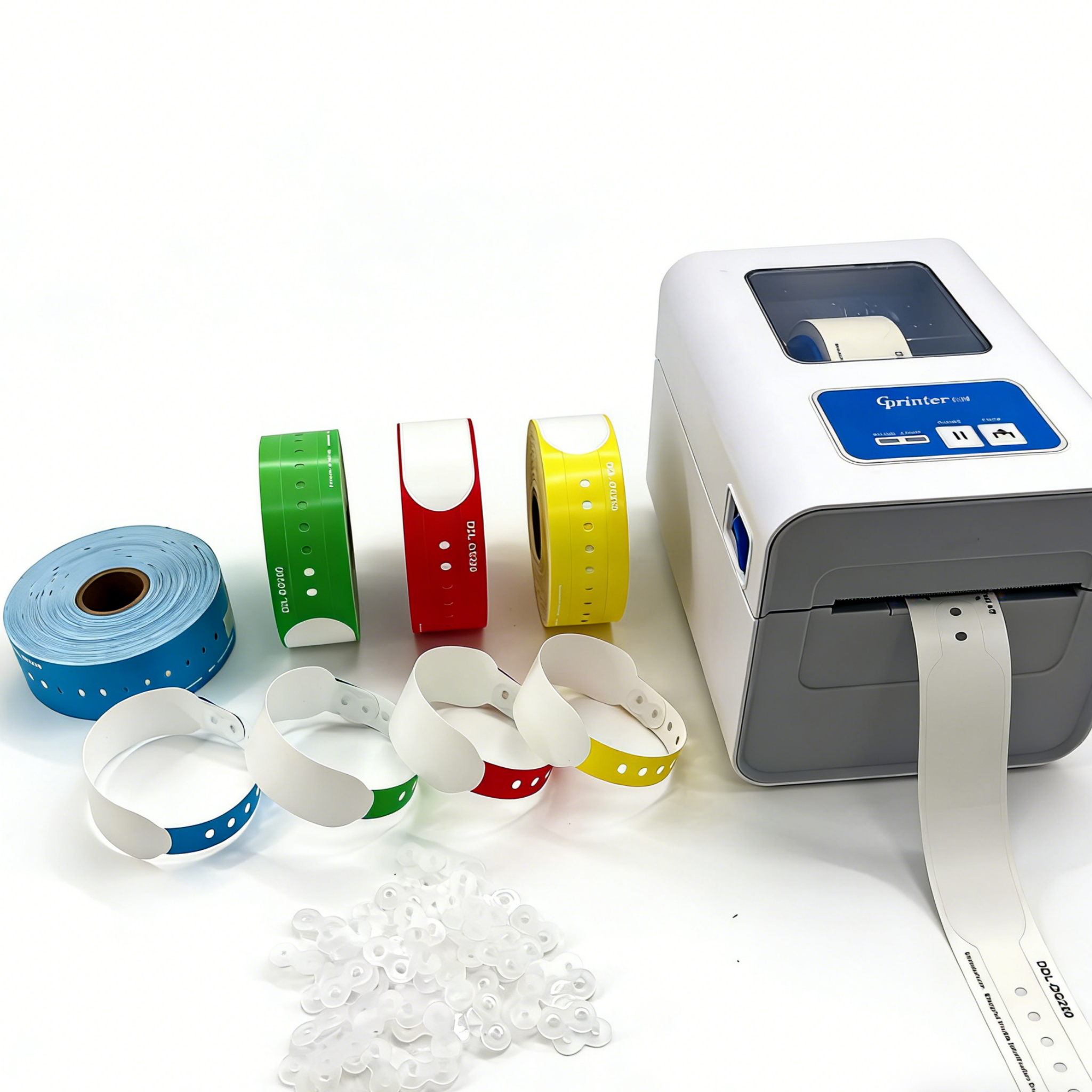
Based on available product specifications, the following materials are commonly used in medical wristbands across major markets:
- Nano Silicon: High purity (82-100%) nano silicon material offers superior softness, tear resistance, and durability
- Direct Thermal Material: Enables on-demand printing with thermal printers
Antibacterial/Antimicrobial Properties
Many leading manufacturers incorporate antibacterial and antimicrobial properties into their medical wristbands, making them latex-free, non-irritating, and comfortable for users.
Color Coding
The most common color standards include:
- Blue and Pink: Widely used for adult and pediatric patients across many markets
- Color coding may vary by hospital or regional practice for specific patient categories (pediatric, geriatric, allergy, etc.)
Sizing Variations
Standardized sizing across markets:
- Adult Size: Typically 260mm x 26mm
- Child Size: Typically 180mm x 20mm
Regulatory Requirements by World's Top 20 Economies
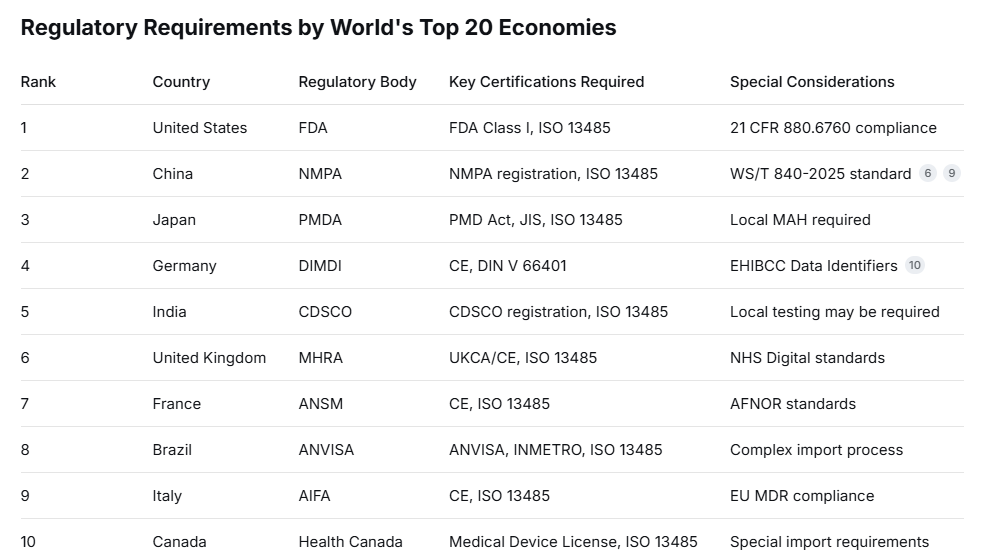
| Rank | Country | Regulatory Body | Key Certifications Required | Special Considerations |
|---|---|---|---|---|
| 1 | United States | FDA | FDA Class I, ISO 13485 | 21 CFR 880.6760 compliance |
| 2 | China | NMPA | NMPA registration, ISO 13485 | WS/T 840-2025 standard |
| 3 | Japan | PMDA | PMD Act, JIS, ISO 13485 | Local MAH required |
| 4 | Germany | DIMDI | CE, DIN V 66401 | EHIBCC Data Identifiers |
| 5 | India | CDSCO | CDSCO registration, ISO 13485 | Local testing may be required |
| 6 | United Kingdom | MHRA | UKCA/CE, ISO 13485 | NHS Digital standards |
| 7 | France | ANSM | CE, ISO 13485 | AFNOR standards |
| 8 | Brazil | ANVISA | ANVISA, INMETRO, ISO 13485 | Complex import process |
| 9 | Italy | AIFA | CE, ISO 13485 | EU MDR compliance |
| 10 | Canada | Health Canada | Medical Device License, ISO 13485 | Special import requirements |
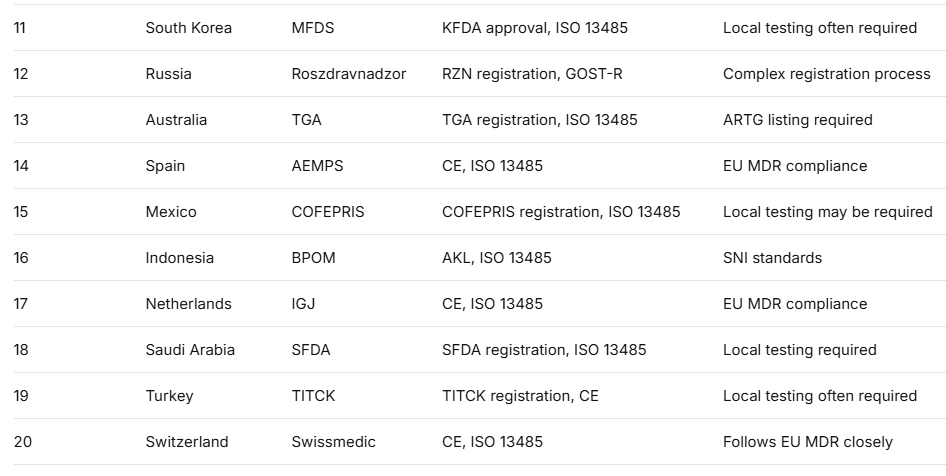
| 11 | South Korea | MFDS | KFDA approval, ISO 13485 | Local testing often required |
| 12 | Russia | Roszdravnadzor | RZN registration, GOST-R | Complex registration process |
| 13 | Australia | TGA | TGA registration, ISO 13485 | ARTG listing required |
| 14 | Spain | AEMPS | CE, ISO 13485 | EU MDR compliance |
| 15 | Mexico | COFEPRIS | COFEPRIS registration, ISO 13485 | Local testing may be required |
| 16 | Indonesia | BPOM | AKL, ISO 13485 | SNI standards |
| 17 | Netherlands | IGJ | CE, ISO 13485 | EU MDR compliance |
| 18 | Saudi Arabia | SFDA | SFDA registration, ISO 13485 | Local testing required |
| 19 | Turkey | TITCK | TITCK registration, CE | Local testing often required |
| 20 | Switzerland | Swissmedic | CE, ISO 13485 | Follows EU MDR closely |
Conclusion
Navigating the global landscape of medical wristband regulations requires a thorough understanding of country-specific requirements, from the FDA's general controls in the United States to the China NMPA's WS/T 840-2025 standards. The common thread across all major markets is the increasing adoption of ISO 13485 quality management, ISO 18530 identification standards, and the integration of data capture technologies such as QR codes, barcodes, and RFID for improved patient safety and efficient healthcare delivery.
For manufacturers seeking to enter multiple markets, maintaining ISO 13485 certification provides the broadest foundation for global market access, while regional certifications such as FDA registration, CE marking, and NMPA approval remain essential for specific jurisdictions.
Keywords Relevant to Your Search About Global Wristband Standards
Medical wristband standards, patient ID wristband certification, FDA wristband regulation, CE marking wristbands, ISO 13485 medical devices, ISO 18530 identification, NMPA registration, PMDA approval, ANVISA certification, BPOM AKL registration, MHRA UKCA marking, EHIBCC data identifiers, DIN V 66401, GS1 barcode standards, thermal transfer wristbands, nano silicon wristbands, antibacterial wristbands, waterproof patient bands, color-coded wristbands, global healthcare compliance, medical device export, wristband manufacturer certification, patient safety standards, hospital wristband requirements, international medical regulations.
Continue Reading
Have Questions About Wristbands?
Our team is ready to help you find the perfect wristband solution for your needs. Contact us directly on WhatsApp for quick responses.
Contact on WhatsApp