
Medical Wristband MOQ and Custom Printing: What Importers Need to Know
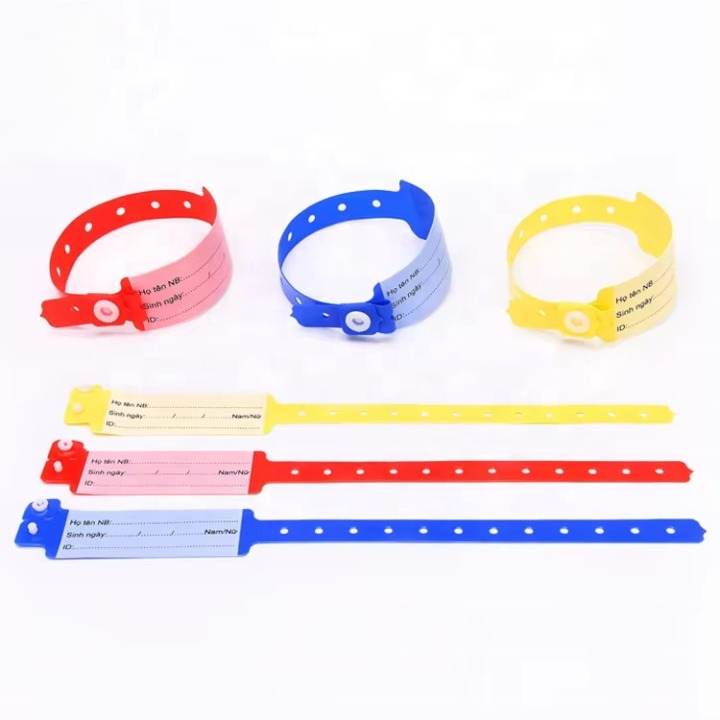
For importers, distributors, and healthcare procurement specialists, sourcing medical wristbands from overseas manufacturers is a practical way to obtain high-quality products at competitive prices. However, the journey from initial inquiry to a successful shipment involves several decisions that can make or break a purchasing project. Among the most important are minimum order quantity (MOQ) requirements and custom printing specifications.
MOQ is often the first barrier that smaller buyers encounter. A distributor looking to test a new market or a clinic wanting branded wristbands may find that manufacturers require order volumes far beyond their immediate needs. Understanding why MOQs exist, how they vary by product type, and how to negotiate them is essential for anyone importing patient identification bands.
Custom printing presents a second set of considerations. The ability to print a hospital's logo, a distributor's brand, or specific language and regulatory information on each wristband is a valuable differentiator. But custom printing affects cost, lead time, and production complexity in ways that importers must anticipate.
This article provides a comprehensive guide to medical wristband MOQ and custom printing for importers. It covers product types, typical MOQ ranges, printing methods, artwork requirements, quality control considerations, and practical strategies for successful sourcing.
Understanding Medical Wristband MOQ
Why Manufacturers Set Minimum Order Quantities
Minimum order quantity is not an arbitrary hurdle designed to frustrate small buyers. It reflects the economic realities of manufacturing. When a factory produces a batch of medical wristbands, it incurs fixed costs regardless of the order size: machine setup, material preparation, printing plate creation, quality testing, and packaging configuration. These costs must be spread across a sufficient number of units to make the production run economically viable.
For custom-printed products, the setup costs are even higher. Creating custom printing plates, mixing specific ink colors, and calibrating printers for a particular design all require time and materials. If a manufacturer accepted an order of 100 custom wristbands, the setup cost alone would exceed the value of the order.
MOQ also serves a quality assurance function. Larger production runs allow manufacturers to identify and correct issues during the run, ensuring consistency across the entire batch. Smaller runs offer fewer opportunities for quality monitoring and may result in higher defect rates.
Typical MOQ Ranges by Product Type
MOQ requirements vary significantly depending on the type of wristband, the material, and the printing method. The following ranges reflect common practice among Chinese medical wristband manufacturers, who supply a large share of the global market:
Blank Thermal Wristbands (No Printing): 4,000 – 20,000 units
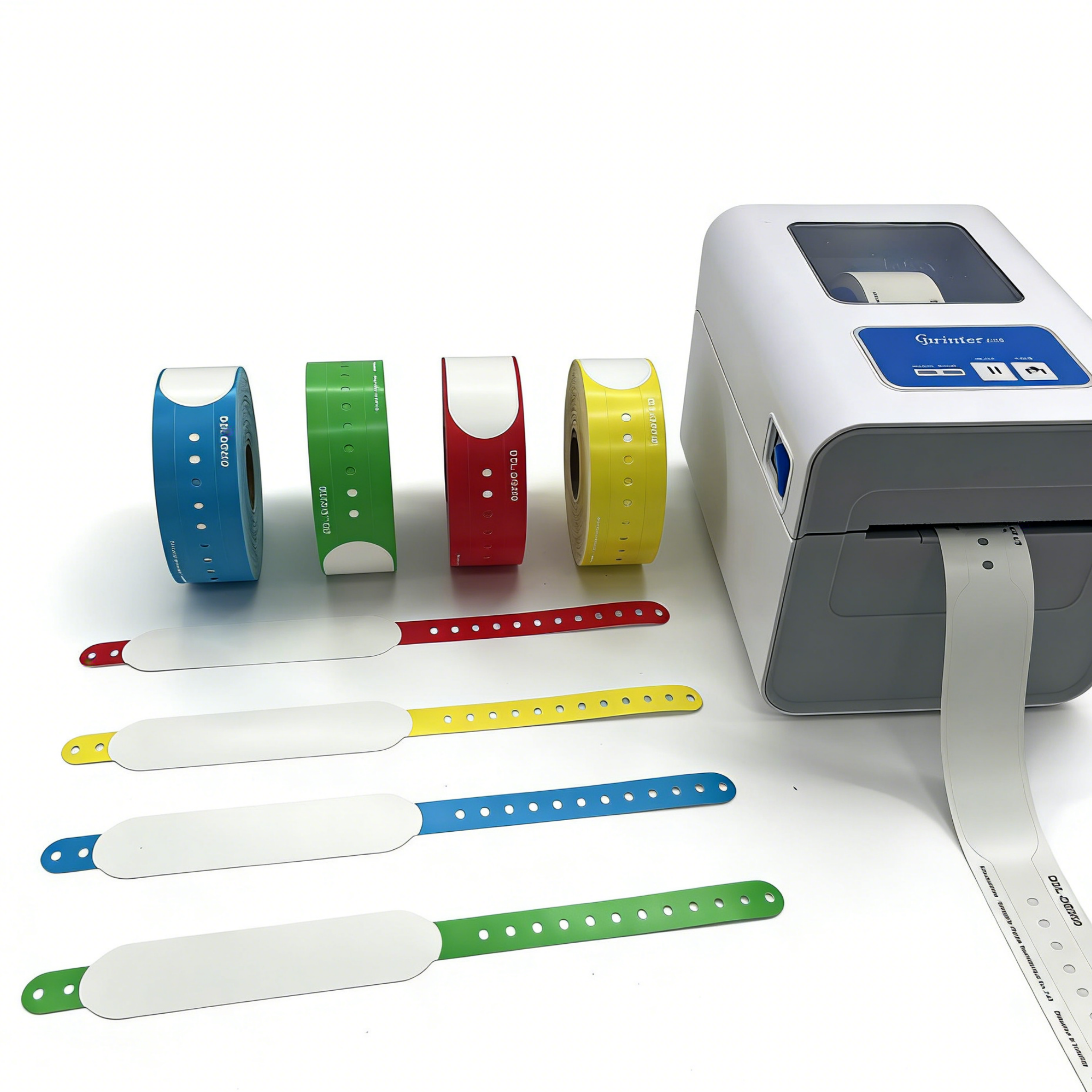
Blank thermal wristbands that are printed on-demand by the end user require no custom printing setup. MOQs are therefore relatively low, often starting at 4,000 units for standard sizes and materials.
Pre-Printed Thermal Wristbands: 20,000 – 40,000 units
Wristbands that come pre-printed with hospital branding, barcodes, or fixed information require printing plates and setup. MOQs increase accordingly.
Handwritten PVC Wristbands: 4,000 – 40,000 units
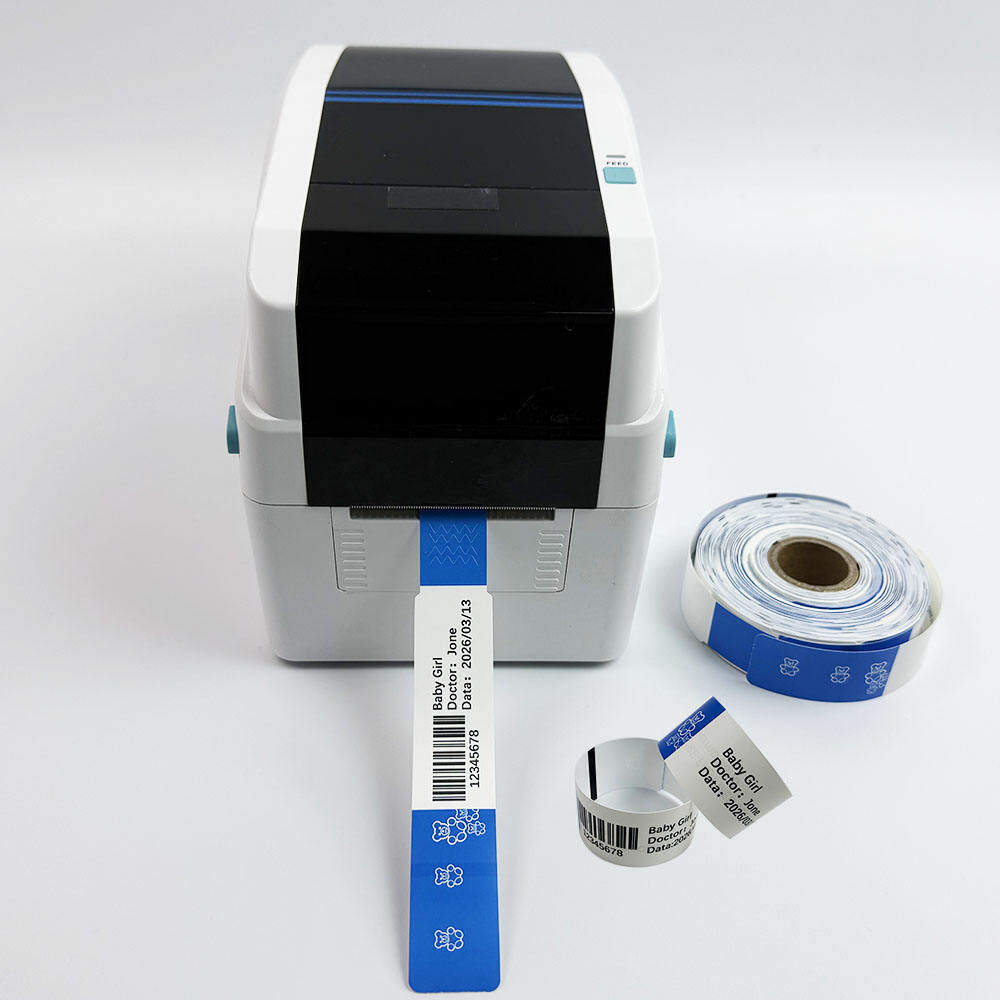
Simple handwritten bands with pre-printed logos or color coding have moderate MOQs, depending on the complexity of the design.
Custom-Printed Adult Wristbands: 40,000 – 120,000 units
Fully custom adult wristbands with multi-color printing, sequential numbering, or specialized features typically require higher volumes to justify the setup.
Neonatal and Infant Wristbands: 20,000 – 80,000 units
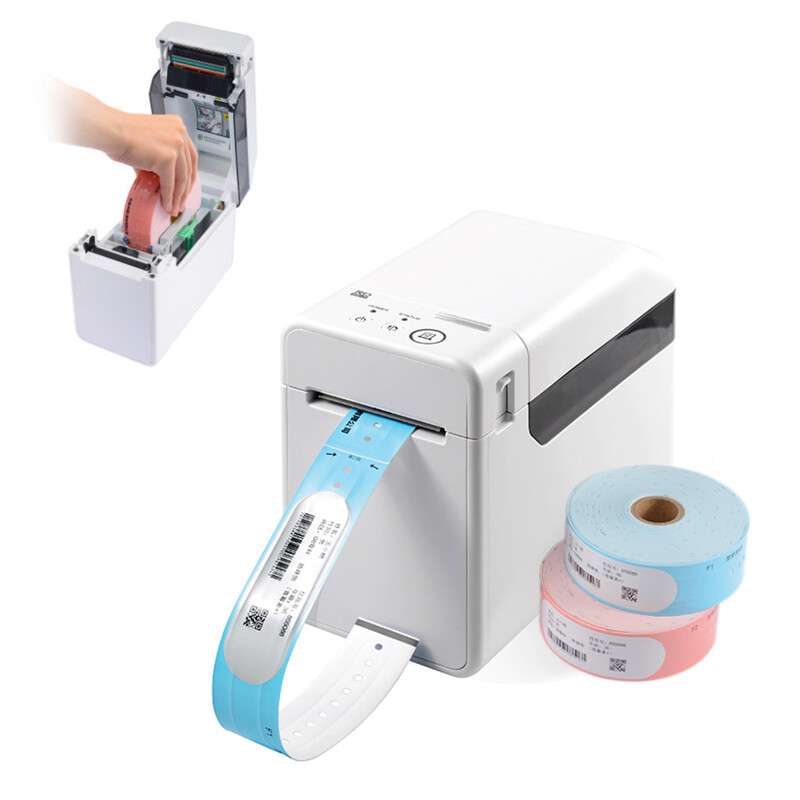
Because neonatal bands are smaller and produced in lower volumes, MOQs may be higher relative to the unit size. Some manufacturers set MOQs based on the total material used rather than the number of units.
RFID Wristbands: 20,000 – 200,000 units
RFID wristbands carry higher MOQs because of the cost of chip encoding and the need to verify each chip's functionality. Custom encoding adds another layer of setup.
Specialty Bands (Tamper-Evident, Antimicrobial): 40,000 – 200,000 units
Specialty products often have higher MOQs due to the complexity of materials and the lower production volumes.
Factors That Influence MOQ
Several factors can cause MOQ requirements to shift up or down:
Material Type: Standard materials are available in smaller quantities than specialty materials that must be specially ordered.
Printing Complexity: Simple one-color printing requires less setup than full-color designs or variable data printing.
Order Frequency: Manufacturers may reduce MOQs for customers who commit to regular orders or annual contracts.
Existing Inventory: If a manufacturer has excess inventory of a particular product, they may accept smaller orders to clear stock.
Sample Orders: Many manufacturers offer sample orders at higher unit prices but with much lower MOQs, allowing buyers to evaluate quality before committing to bulk purchases.
Custom Printing Options for Medical Wristbands
Printing Methods and Their Applications
Custom printing transforms a generic wristband into a branded, functional identification tool. The method chosen affects cost, durability, and the range of achievable designs.
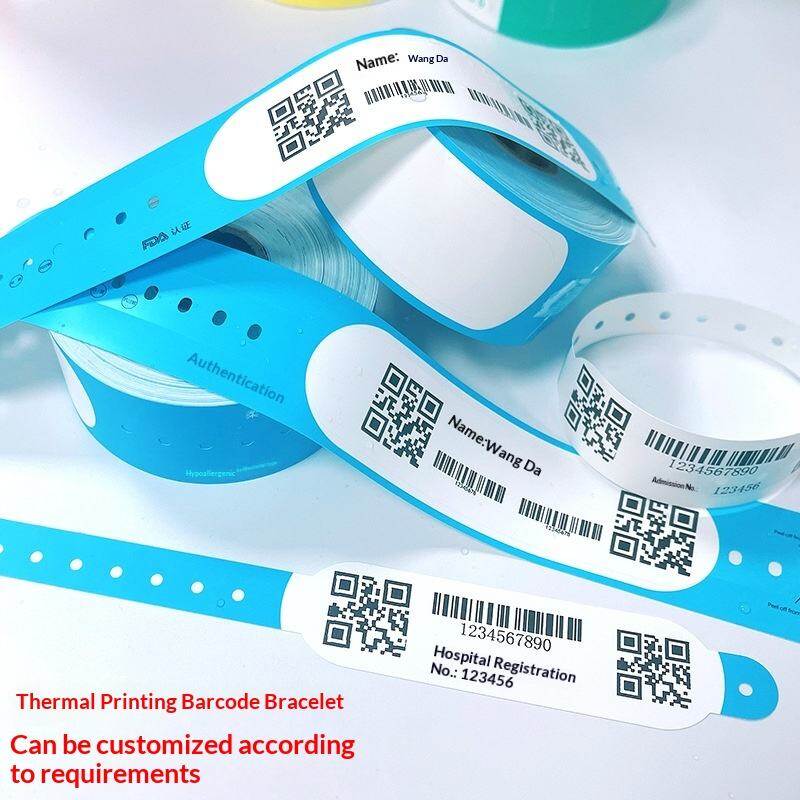
Thermal Printing (Direct Thermal): This method uses heat-sensitive material that darkens when exposed to a thermal print head. It is the standard for on-demand barcode printing in hospitals. For pre-printed custom orders, thermal printing can produce high-contrast text and barcodes, though the printed information may fade over time if exposed to heat, sunlight, or certain chemicals.
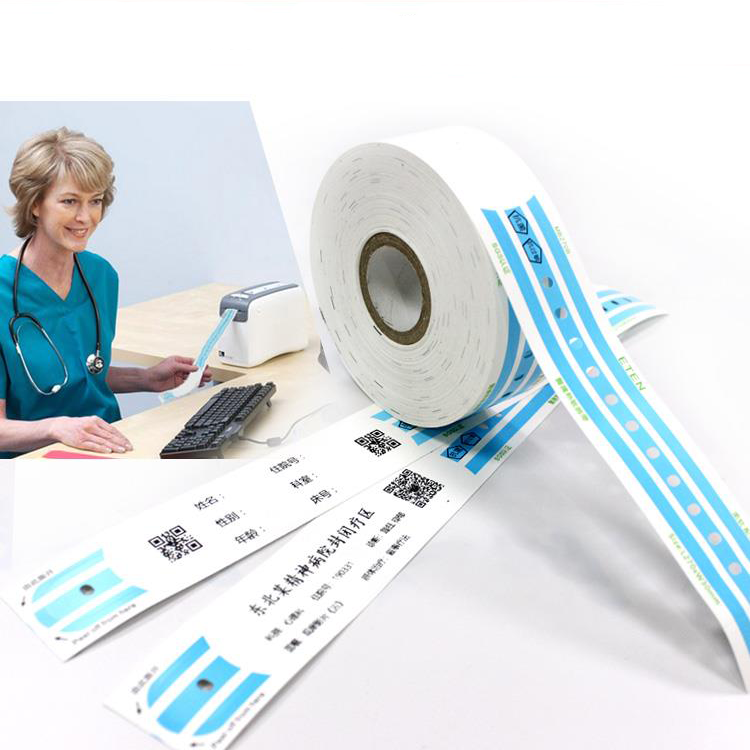
Thermal Transfer Printing: This method uses a ribbon to transfer ink onto the wristband material. It produces more durable prints than direct thermal and can be used with a wider range of materials. Thermal transfer is suitable for wristbands that must withstand harsh conditions.
Laser Printing: Laser printing uses toner and heat to fuse information onto the wristband. It is commonly used for sheet-fed wristbands that are printed in a standard office laser printer. Laser printing offers good durability and is suitable for hospitals that prefer to print their own bands in-house.
Flexographic Printing: This is a high-volume commercial printing method used for pre-printed wristbands. It is cost-effective for large orders but requires significant setup and is not suitable for small quantities or variable data.
Screen Printing: Screen printing applies ink through a mesh screen and is used for simple, bold designs. It is durable and suitable for logos and color blocks but less suited for fine text or barcodes.
Digital Printing: Digital printing allows for variable data, full-color designs, and short runs without the setup costs of traditional printing methods. It is ideal for custom orders with moderate volumes and complex designs.
What Can Be Customized
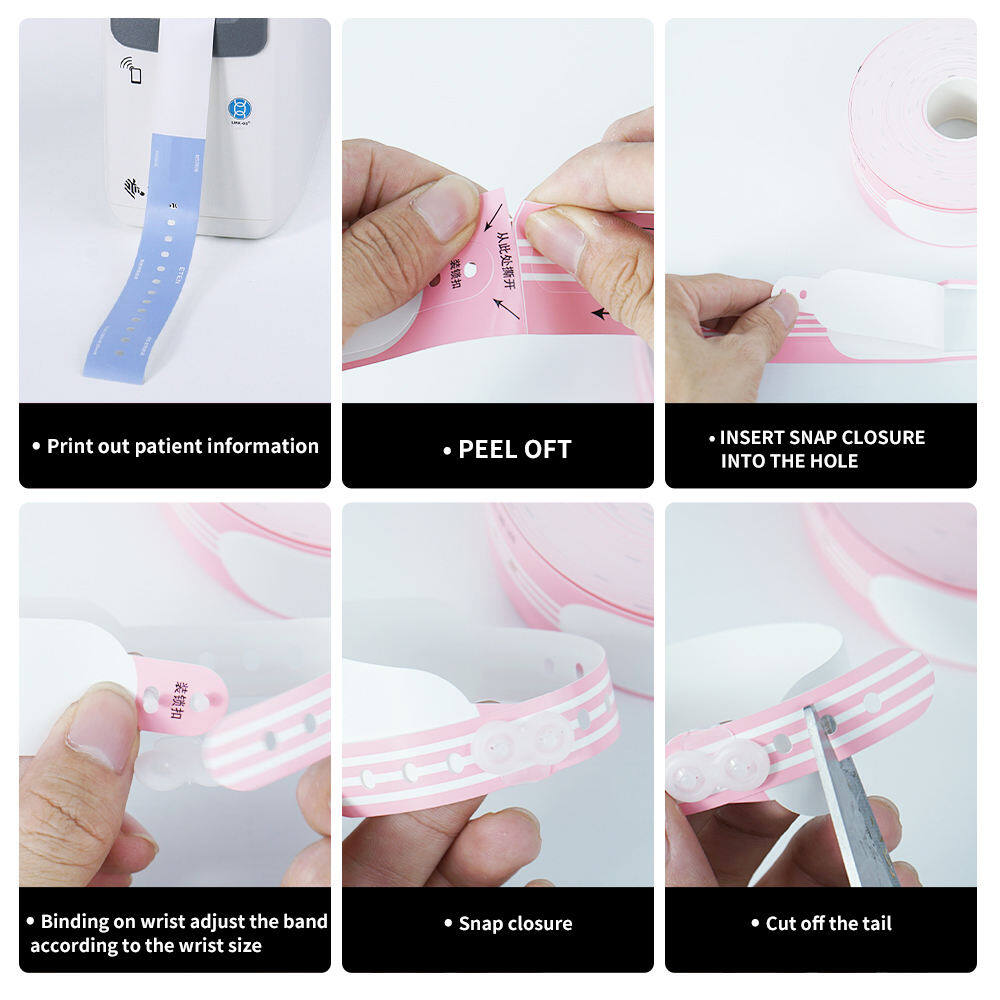
Importers and their healthcare customers can customize medical wristbands in several ways:
Logos and Branding: Hospital logos, distributor branding, or health system identifiers can be printed on the band.
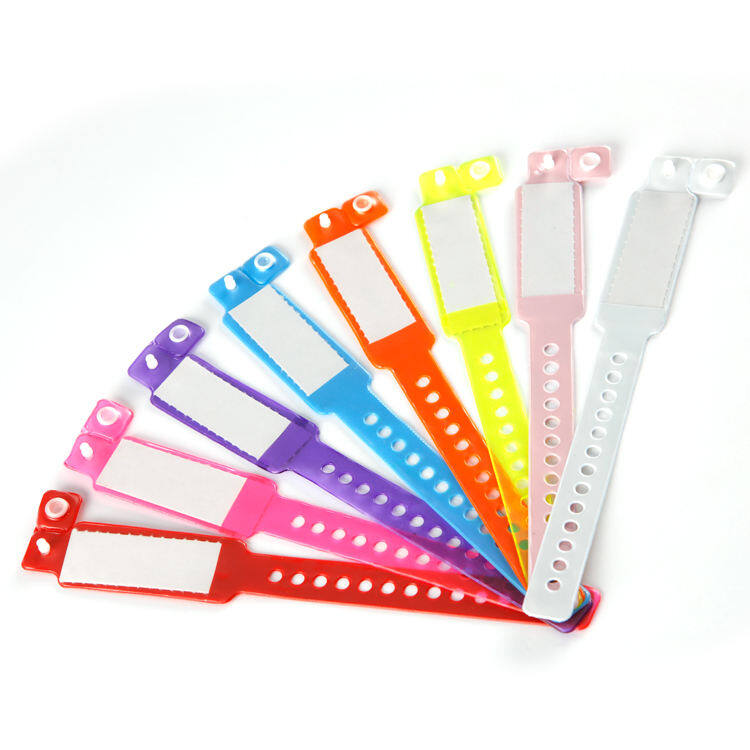
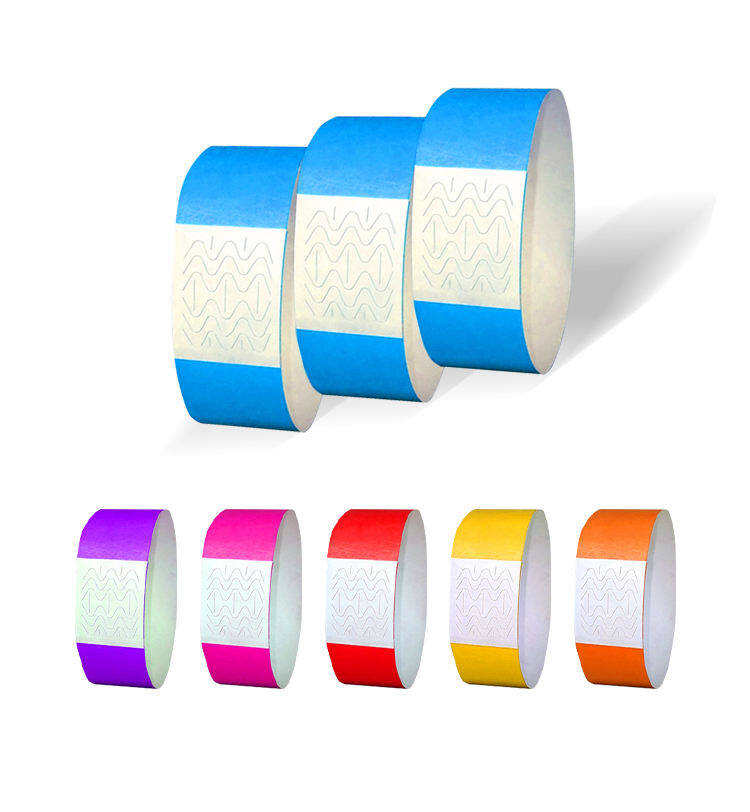
Colors: Bands can be produced in standard colors (white, blue, pink, yellow, green) or custom colors to match a facility's color-coding system.
Text and Language: Wristbands can be printed with text in multiple languages, which is essential for regions with diverse populations.
Barcodes and QR Codes: Barcodes can be pre-printed on the band or left blank for on-demand printing. QR codes can link to digital records or patient education resources.
Sequential Numbering: Pre-printed sequential numbers support manual tracking and backup identification.
Size and Shape: Custom sizes and shapes can be produced for specific patient populations or special applications.
Security Features: Tamper-evident slits, security patterns, or hidden markings can be incorporated into the design.
Artwork and Design Requirements
To produce custom-printed wristbands, manufacturers require artwork in a suitable format. Importers should be prepared to provide:
Vector Files: Adobe Illustrator (.ai), EPS, or PDF files are preferred because they can be scaled without loss of quality.
High-Resolution Images: If vector files are unavailable, high-resolution raster images (300 DPI or higher) may be acceptable.
Color Specifications: Pantone (PMS) or CMYK color values ensure accurate color reproduction.
Dimensions and Layout: Clear specifications for band size, print area, and orientation of text and images.
Variable Data Files: For sequential numbering or variable barcodes, provide a data file (Excel or CSV) with the required information.
Proofing: Always request a digital or physical proof before mass production. This allows you to verify colors, text accuracy, and layout before committing to the full order.
Quality Control and Compliance for Importers
Quality Standards to Verify
When importing medical wristbands, quality is not negotiable. Importers should verify the following:
Material Safety: Confirm that materials are latex-free, hypoallergenic, and safe for prolonged skin contact. Request material safety data sheets (MSDS) and biocompatibility test reports.
Print Durability: Test printed samples for resistance to water, alcohol-based hand sanitizers, and abrasion. Printed information must remain legible and scannable throughout the patient's stay.
Adhesive Performance: For adhesive bands, verify that the adhesive is strong enough to remain in place but gentle enough to remove without skin trauma.
Barcode Scannability: If barcodes are printed, verify that they can be scanned reliably by standard hospital scanners.
Size Accuracy: Verify that band dimensions match specifications and that sizing is consistent across the order.
Regulatory Considerations
Medical wristbands are regulated as medical devices in many countries. Importers should be aware of the following:
CE Marking: Required for sale in the European Union. Indicates compliance with applicable EU regulations.
FDA Registration: Required for sale in the United States. Manufacturers and importers must register with the FDA and list their products.
ISO Certifications: ISO 13485 (medical devices quality management) and ISO 9001 (general quality management) indicate that a manufacturer has implemented recognized quality systems.
Local Regulations: Some countries have specific requirements for medical device labeling, language, and registration. Importers should verify requirements in their target market.
Practical Strategies for Importers
How to Work Within MOQ Constraints
If a manufacturer's MOQ exceeds your immediate needs, consider these strategies:
Start with Samples: Order samples to evaluate quality before committing to a bulk order. Most manufacturers offer samples at reasonable prices.
Combine Products: If you need multiple wristband types, combine them into a single order to meet the MOQ.
Negotiate: MOQs are sometimes negotiable, especially for new customers or for products that are already in production. Ask if a lower MOQ is possible at a higher unit price.
Partner with Other Buyers: Smaller distributors can combine orders with partners to reach the MOQ.
Choose Stock Designs: If customization is not essential, choose stock designs that are already in production. These often have lower MOQs.
Plan Ahead: Order in larger quantities less frequently to take advantage of volume pricing and reduce per-unit shipping costs.
Building a Successful Supplier Relationship
Long-term relationships with reliable suppliers yield better pricing, priority production, and more flexible terms. To build a strong relationship:
Communicate Clearly: Provide detailed specifications and artwork. Ask questions when requirements are unclear.
Pay on Time: Reliable payment builds trust and may lead to better terms on future orders.
Provide Feedback: Share information about how the products perform in your market. This helps manufacturers improve their offerings.
Visit If Possible: Factory visits build confidence and allow you to verify production capabilities firsthand.
Discuss Long-Term Plans: If you anticipate growth, share your projections with your supplier. This may encourage more favorable MOQ and pricing terms.
Conclusion
Medical wristband MOQ and custom printing are two of the most important considerations for importers. MOQs reflect the economic realities of manufacturing and vary widely by product type, material, and printing method. Custom printing offers valuable branding and functional benefits but requires careful attention to artwork, proofing, and quality control.
For importers, the keys to success are understanding the factors that drive MOQ, selecting the right printing method for the application, verifying quality and compliance, and building strong relationships with reliable manufacturers. With careful planning and clear communication, importers can source high-quality medical wristbands that meet the needs of their healthcare customers while maintaining healthy margins.
Whether you are a distributor entering the medical supplies market or an established buyer looking to optimize your sourcing strategy, a thorough understanding of MOQ and custom printing will help you make informed decisions and avoid costly mistakes.
Continue Reading
Have Questions About Wristbands?
Our team is ready to help you find the perfect wristband solution for your needs. Contact us directly on WhatsApp for quick responses.
Contact on WhatsApp