
Neonatal NICU Wristband Requirements: Why Adult Standards Are Not Enough
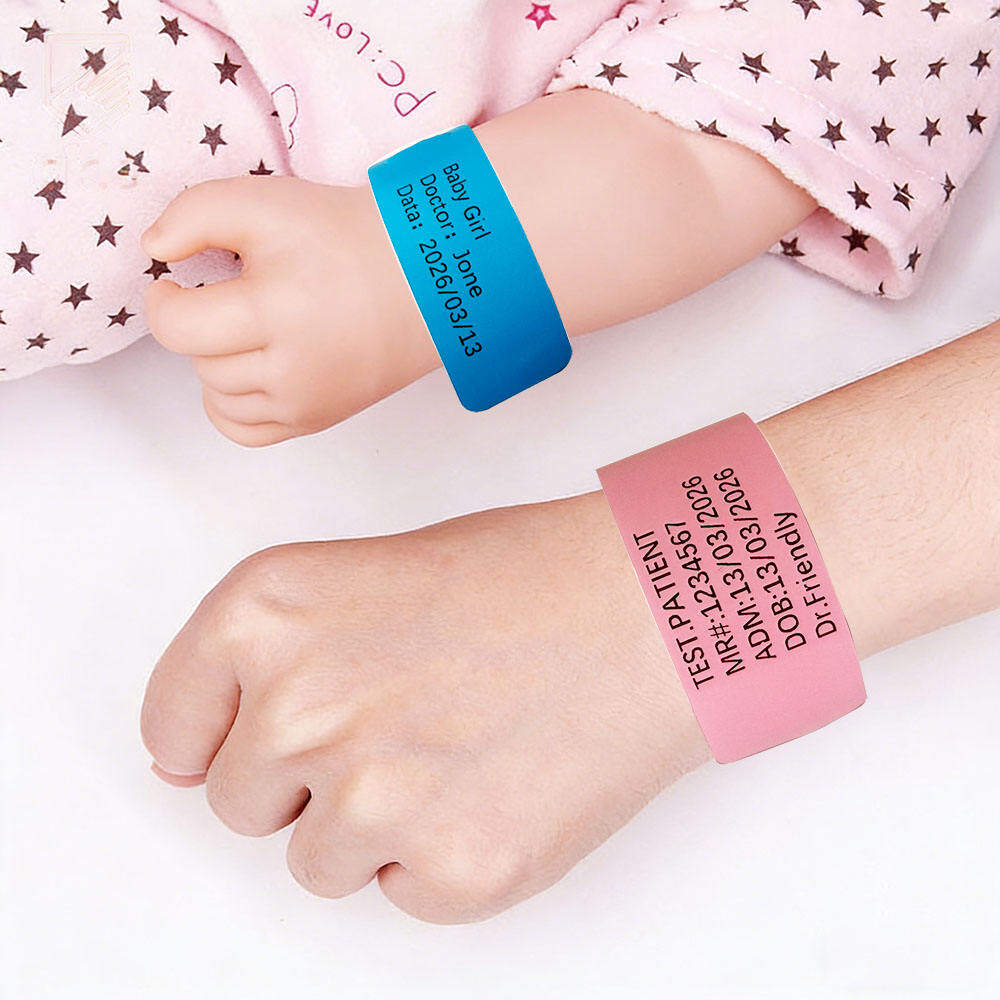
A neonatal identification band is not a scaled-down adult wristband. The materials are different. The closure is different. The tolerances are different. And the consequences of getting it wrong are measured in wrong-patient events involving patients who cannot speak, cannot correct you, and often look exactly like the baby in the next incubator.
Most hospitals know this instinctively. Yet procurement catalogs, printing configurations, and nursing workflows frequently treat the neonatal wristband as an afterthought—a size variant on the same SKU list, ordered in smaller quantities, stocked in a drawer somewhere in the NICU. That gap between what neonates actually need and what adult-centric supply chains deliver is where neonatal wristband requirements diverge from adult assumptions, and where safety erodes.
Why a Smaller Version of the Same Product Fails
The logic of "just cut it smaller" or "order the pediatric size" collapses under the actual conditions of neonatal care. A newborn in the NICU wears an identification band for days or weeks, not hours. The band sits against skin that is thinner, more permeable, and far more reactive than adult skin. The limb it encircles may be smaller than an adult thumb. The band must survive repeated cleaning, diaper changes, handling by multiple staff members, and the constant motion of a baby who cannot be reasoned with about keeping still.
Médecins Sans Frontières publishes explicit specifications for neonatal identification bracelets that diverge sharply from adult requirements. The material must be soft vinyl or non-stretch polyester, latex-free, flexible, waterproof, cleanable, and breathable. The band must have no sharp corners, profiling, or edges that can irritate or rub the skin—including any edges produced when cutting the band to size. That last clause is quietly devastating for any hospital that has ever handed a nurse a pair of scissors and an adult band.
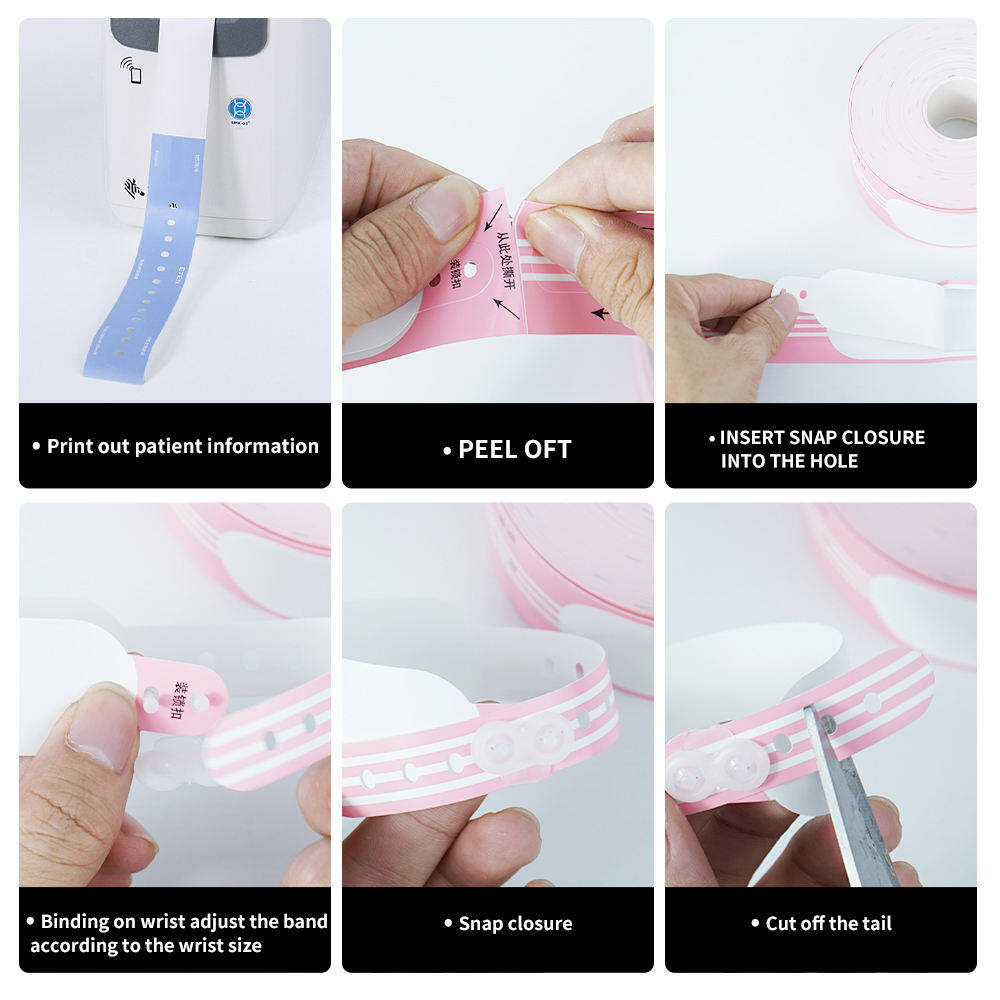
The closure is also different. MSF specifies a vinyl clasp closure with no metal, and the fastening must not press into the skin. Adult bands often rely on adhesive closures or metal snaps. Neither belongs on a neonate. Metal introduces a pressure point and a potential imaging artifact. Adhesive that contacts neonatal skin risks irritation, sensitization, and the particular nightmare of a band that cannot be removed without damaging the skin beneath it.
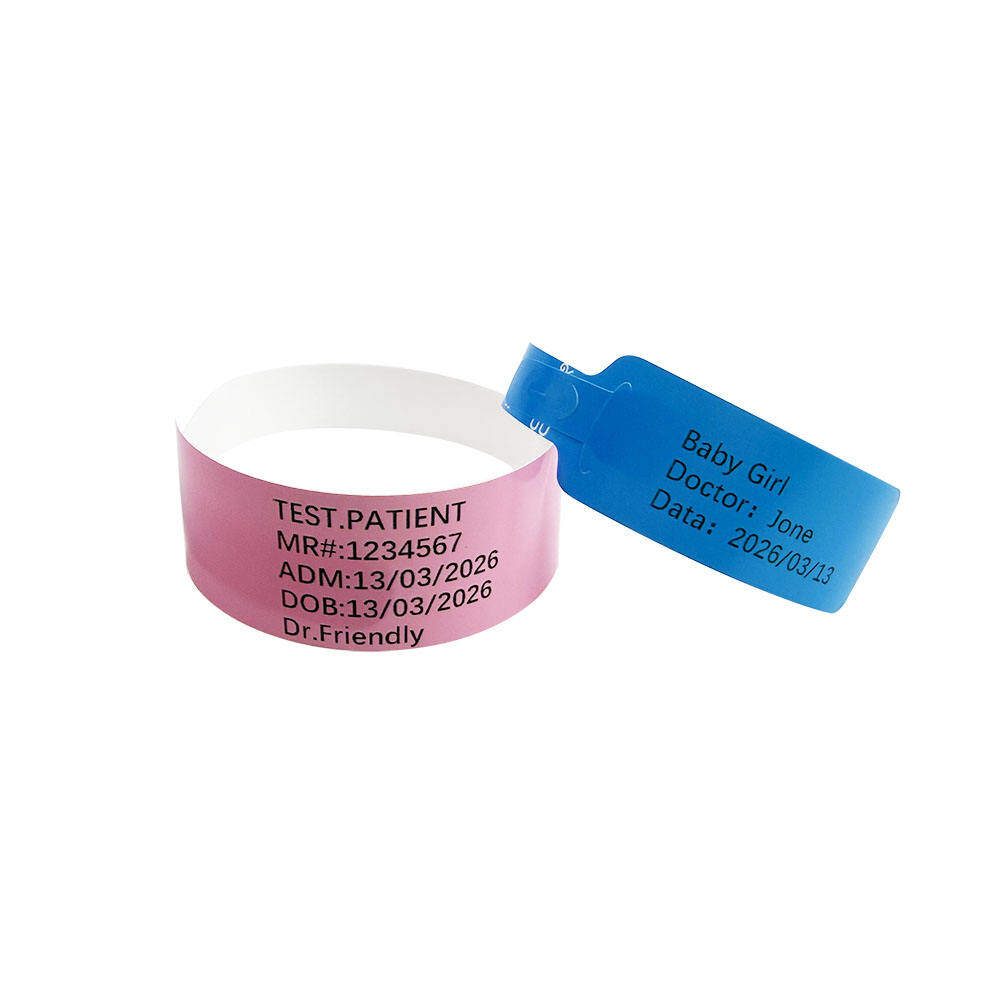
UK NHS Supply Chain contracts reinforce the same principle from the procurement side. Wristbands supplied under the national framework must come in three distinct standard sizes: adult, paediatric, and neo-natal, and must be latex-free. The neonatal category is not a sub-option of paediatric. It is a separate classification with its own engineering requirements.
The Anatomy of a Neonatal Band That Works
What does a properly specified neonatal wristband actually look like? It is not simply "small." It is purpose-built around a set of constraints that adult bands never face.
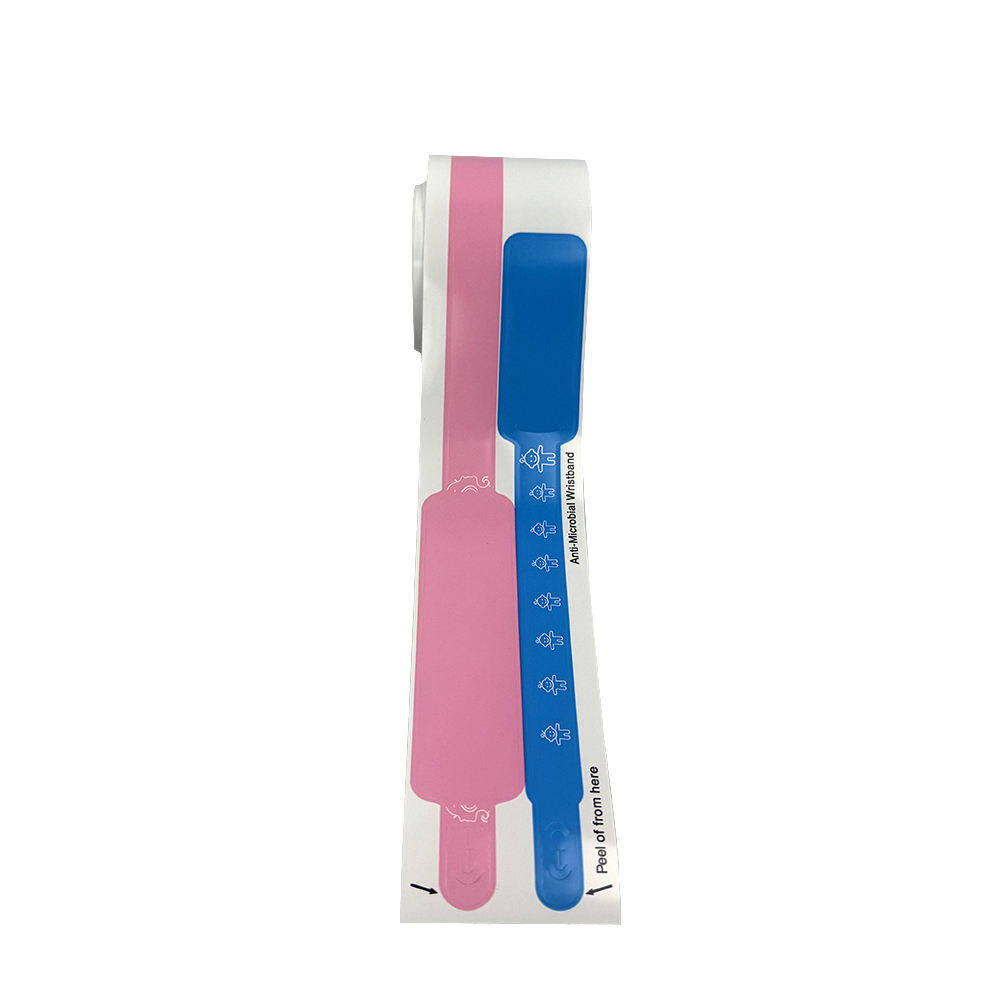
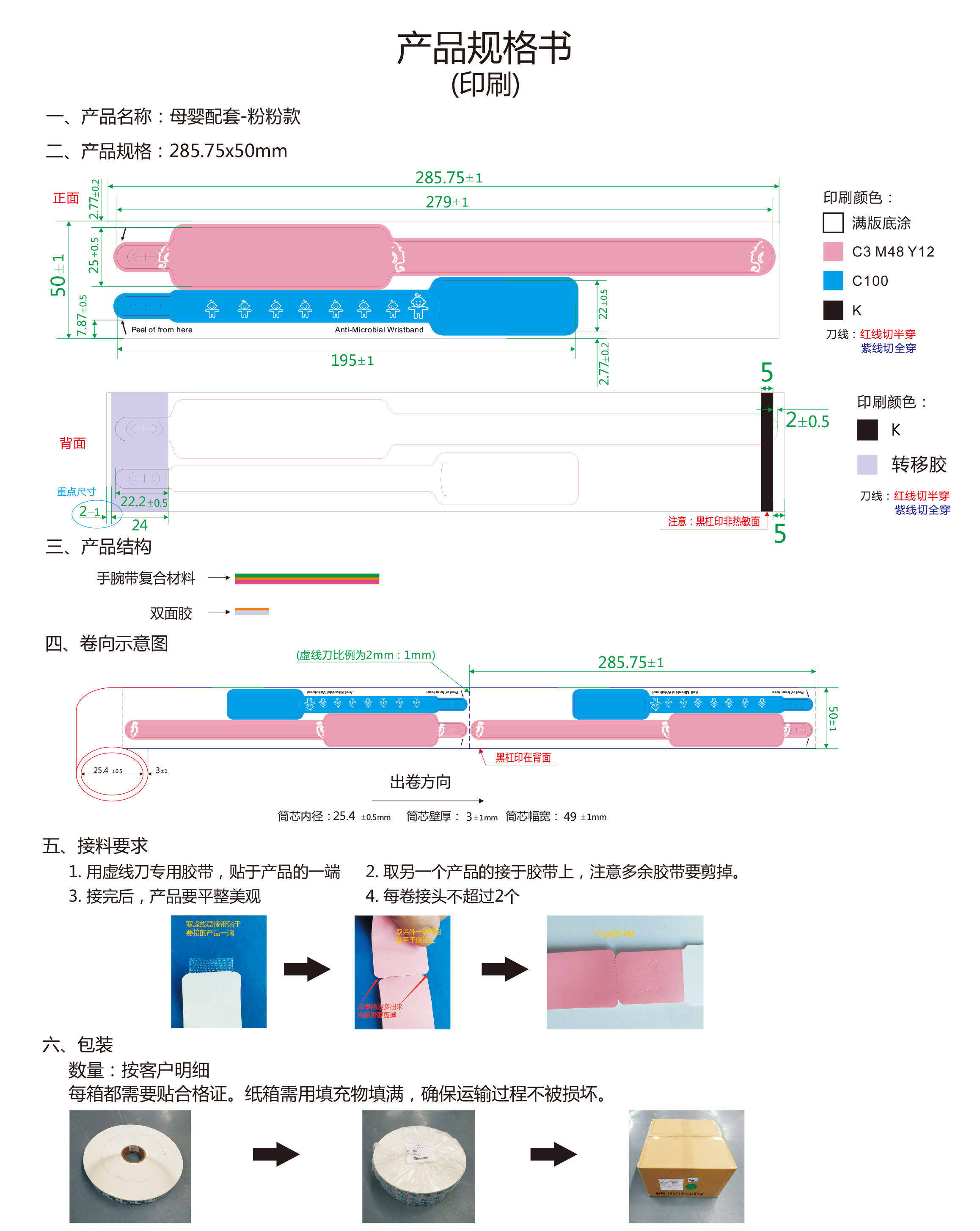
Length and profile. MSF specifies a length of approximately 16 cm for the neonatal bracelet. Compare that to the adult/child writable band at 25 cm—the same blank stock that becomes extended-length wristbands for larger limbs—which is designed to be cut to length. The neonatal band is manufactured at its final size. There is no cutting step, because cutting introduces exactly the sharp edges the specification forbids.
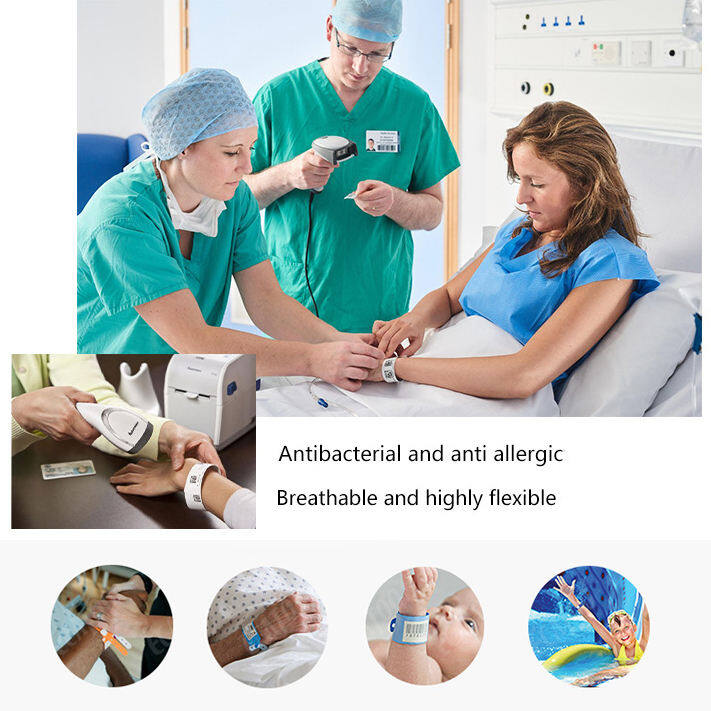
Material. Soft vinyl or non-stretch polyester, latex-free, waterproof, cleanable, breathable, and non-allergenic. The emphasis on cleanability matters enormously in the NICU, where hand hygiene and surface decontamination are constant. A band that degrades under alcohol wipes or soap becomes illegible, and an illegible band is functionally absent.
Closure. Vinyl clasp, no metal, no pressure on skin. The clasp must be secure enough that a band cannot slip off a tiny wrist or ankle—whether the unit applies wrist bands or ankle bands—but not so tight that it compromises circulation. This is a narrower engineering window than adult bands face, where the limb circumference is larger and the tissue more forgiving.
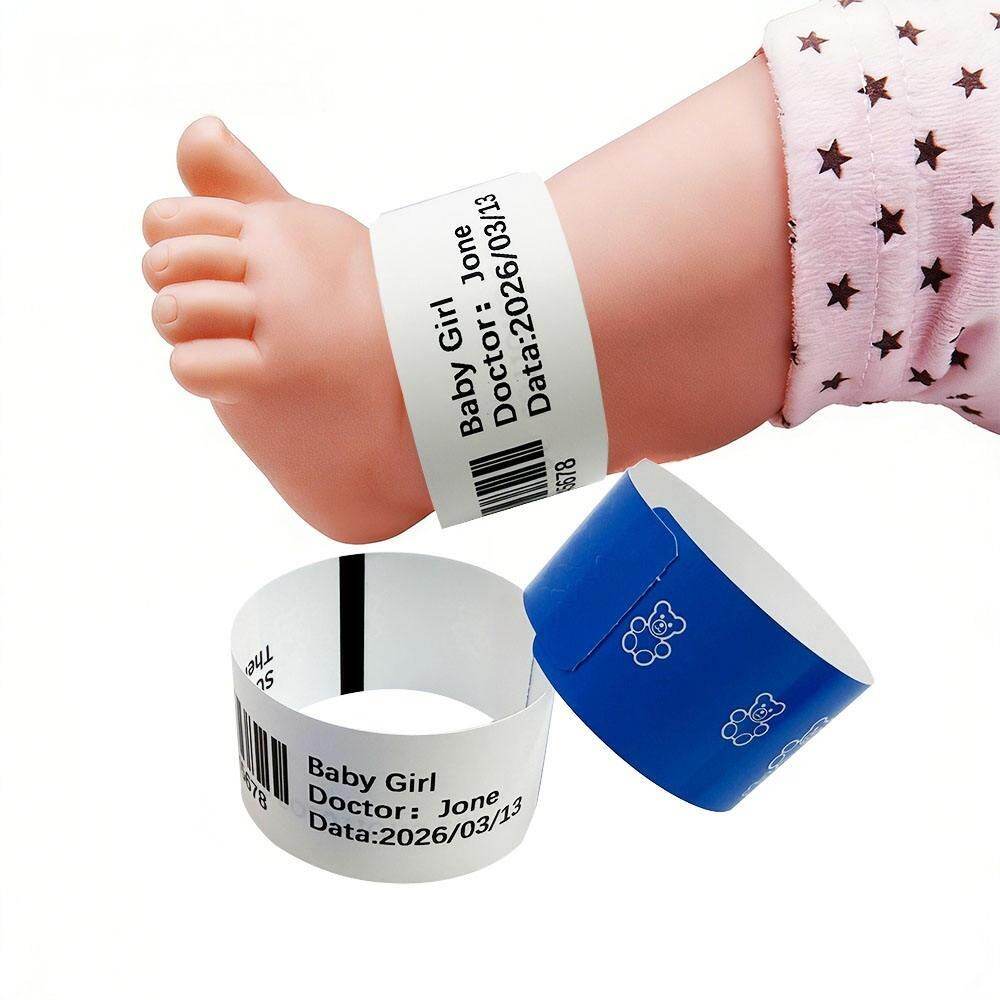
Legibility. MSF specifies black text on a white background for maximum contrast, and requires that the information space is adequate for patient identifiers to be recorded clearly and unambiguously. For neonates, the core identifiers remain name, date of birth, and medical record number, but local policy may require additional identifiers given the particular risks of the neonatal population. The band must accommodate these without becoming cluttered.
Durability. The information cannot wear off, and no special pens are required to write on the band. In a NICU, a band that requires a specific pen from a specific drawer is a band that will eventually be left blank or filled in with whatever is at hand.
The Clinical Consequence of Getting It Wrong
The neonatal wristband is not a cosmetic accessory. It is the physical anchor for every identity verification that happens during a hospitalization that may last weeks or months. When it fails—when it falls off, becomes illegible, irritates the skin enough that a nurse removes it, or is cut from an adult band and leaves a raw edge against a premature infant's wrist—the verification chain breaks.
A study of nursing adherence to patient safety actions in neonatal units found that while use of identification wristbands was among the highest-frequency practices, checking the wristband and verifying its secure closure showed the lowest compliance rates. In other words, staff put the band on, but do not consistently confirm it is still there, still legible, and still correctly fastened. That gap exposes newborns to preventable adverse events in a setting where patients cannot self-identify and physical resemblance between patients is a genuine hazard to NICU patient identification.
The problem is not that NICU nurses are careless. It is that the wristband, when specified poorly, becomes a source of friction that encourages workarounds. A band that irritates skin gets loosened. A band that slips off gets retaped. A band that cannot be read gets replaced with a handwritten note on the incubator. Each of these micro-workarounds is rational at the bedside and catastrophic at the system level.
What Procurement Gets Wrong
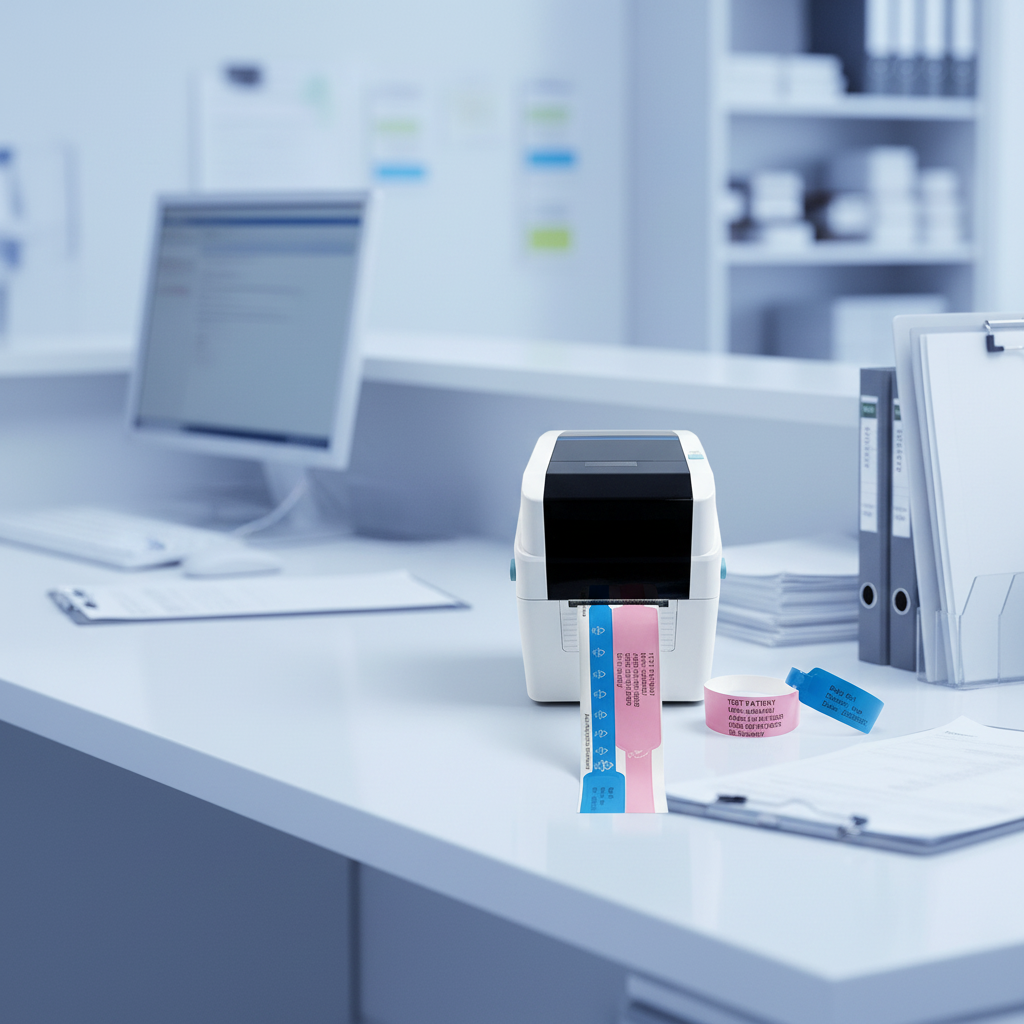
The procurement failure mode is subtle but predictable. A hospital standardizes on a single wristband product line, orders adult and paediatric sizes, and assumes the neonatal unit will use the smallest available option. The smallest option may still be too large, too stiff, or too aggressive in its closure. Or the hospital orders a "neonatal" band that meets some specifications but not others—latex-free, yes, but with an adhesive closure that sticks to skin. Or the band is compatible with the thermal printer in the NICU but not the laser printer in the main lab, creating a printing bottleneck that leads to pre-printed bands and the associated labeling errors.
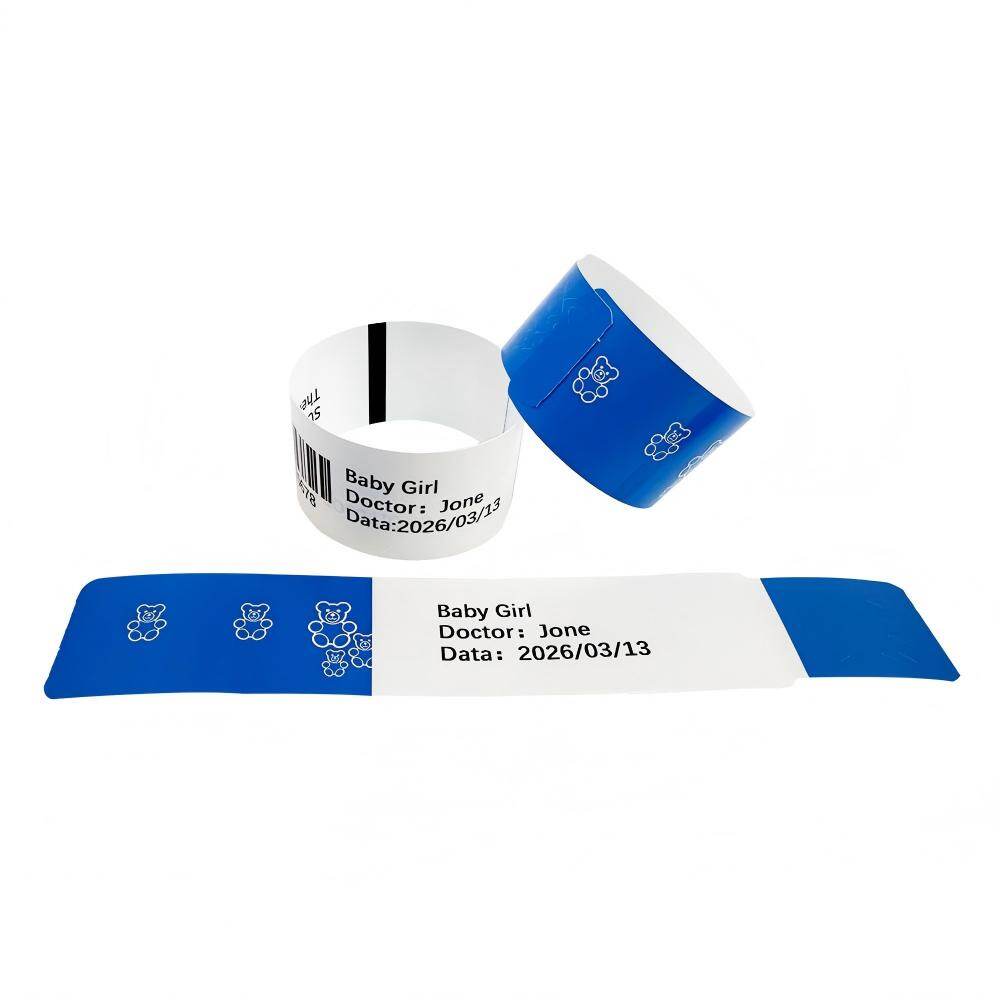
The UK framework contract addresses this by requiring wristbands printable with a 2D barcode and compatible with both laser and thermal printers. That is not a luxury. A neonatal band that cannot be printed on demand at the point of need is a band that will be prepared in batches, stored, and eventually applied to the wrong patient.
MSF's specification goes further by requiring that the band be durable enough that information cannot wear off and that the writing surface not require special pens. These are not high-tech requirements. They are the minimum conditions for a band that will actually be used correctly under the pressures of a busy NICU, and they are the same conditions that protect patient identification accuracy across every unit in the hospital.
The Infant Identification Problem Is Not Solved by Adult Standards
There is a temptation to think of neonatal identification as a solved problem. Babies have worn bands for decades. What more is there to say?
Plenty, it turns out. The neonatal population is uniquely vulnerable to identification failure because the usual backup systems do not exist. An adult patient can state their name. A child can often confirm a parent's name or a birthdate. A neonate cannot do any of these things. The wristband is not one identifier among several. It is often the only identifier physically attached to the patient.
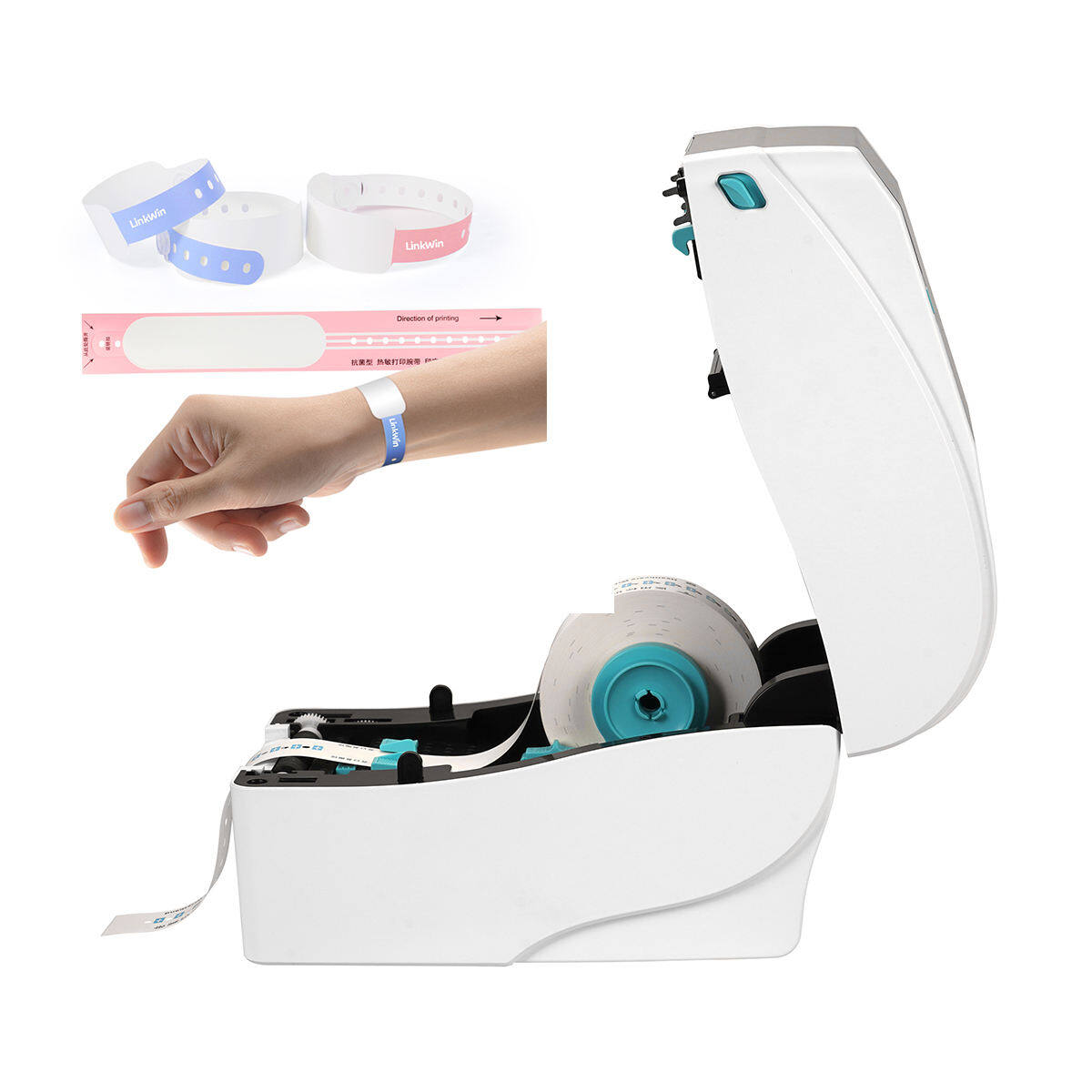
That is why the specification details matter so much. A band that irritates the skin will be removed. A band that slips off will be lost. A band with a metal clasp will create a pressure injury on a wrist the size of a finger. A band cut from an adult product will have edges that MSF explicitly prohibits because they "irritate or rub the skin". Each of these failures is preventable through correct specification and procurement.
The neonatal wristband is not a commodity item. It is a medical device engineered for a patient population that cannot advocate for itself. Treating it as a small adult band is not a cost-saving measure. It is a risk transfer—from the procurement budget to the bedside, from the supply chain to the patient.
A Practical Checklist for Neonatal Wristband Selection
When evaluating a neonatal wristband product, the following specifications should be treated as non-negotiable:
- Material and construction. Soft vinyl or non-stretch polyester. Latex-free. Waterproof, cleanable, breathable. No sharp edges, including edges that would be created by cutting.
- Closure. Vinyl clasp closure, no metal. Fastening must not press into the skin. Self-locking but not requiring excessive force to apply or remove.
- Size. Manufactured at neonatal length (approximately 16 cm per MSF specification). Not a cut-down adult or paediatric band.
- Printability. Compatible with the printers available in the neonatal unit. If thermal printing is used, the band must withstand the thermal process without curling or degrading. If laser printing is used, the band must tolerate the fuser temperatures.
- Legibility. High-contrast surface (black on white). Sufficient space for at least two patient identifiers. Durable enough that information does not wear off during the expected wear period.
- Skin compatibility. Non-allergenic and latex-free. This is not a preference. It is a requirement for a product that will be in continuous skin contact with a patient whose skin barrier is not fully developed.
The Bottom Line
Neonatal wristbands fail in quiet ways. A band that slips off at 3 a.m. does not trigger an alarm. A band that irritates the skin and gets removed by a well-meaning nurse does not generate an incident report. A band cut from an adult product leaves an edge that no one documents. The failures are invisible until they are not—until a patient is misidentified, a specimen is mislabeled, or a medication is given to the wrong baby in a room full of babies who all look the same.
The fix is not complicated. It is a matter of specifying the right product, procuring it through the right channel, and refusing to accept adult standards as good enough for patients who cannot speak for themselves. The neonatal wristband is small. The consequences of getting it wrong are not.
Continue Reading
Have Questions About Wristbands?
Our team is ready to help you find the perfect wristband solution for your needs. Contact us directly on WhatsApp for quick responses.
Contact on WhatsApp