
The Patient Took Off the Wristband: Adhesive Closure vs Snap Closure as a Safety Divide
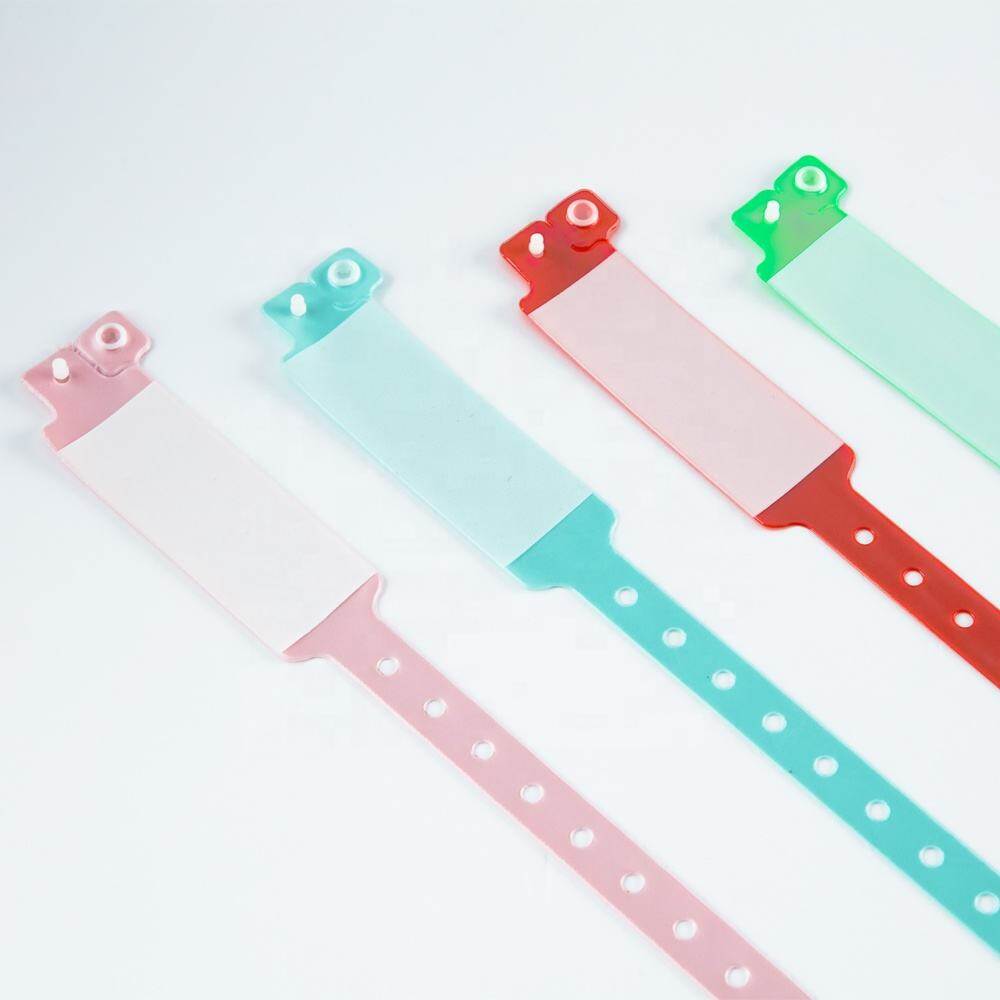
When a patient removes their hospital identification band, the immediate question is always why. The more useful question is how. How did the band come off? What mechanism allowed it? And what does that mechanism reveal about the safety assumptions built into the product long before it ever reached the bedside?
The answer almost always comes down to a small, unglamorous design decision: the closure. Adhesive or snap. Peel-and-press or pin-and-click. It is the least discussed component of the patient wristband and the one that most directly determines whether the band stays on the patient through a shower, a sleepless night, a confused episode, or a determined attempt to remove it. The closure is the safety divide.
Why the Wristband Comes Off in the First Place
Patients remove wristbands for reasons that are entirely rational from their perspective. The band irritates the skin. It gets wet and stays wet. It feels tight after a procedure causes swelling. It catches on clothing and bed rails. It broadcasts a medical status to strangers. A nursing publication in China documented the full range of these complaints with unusual directness: patients found the bands uncomfortable, poorly ventilated, allergenic, and aesthetically stigmatizing. One hospital responded by developing a cotton elastic band with snap fasteners that patients could remove and reapply themselves—a workaround that acknowledges the design failure rather than resolving it.
The data on missing bands is not ambiguous. A College of American Pathologists study of 712 hospitals examining over 2.4 million wristbands found that absent wristbands represented 49.5% of all wristband errors. A later Q-Tracks study of 217 institutions found that missing wristbands accounted for 71.6% of errors, with a mean error rate of 7.40% in the first quarter that fell to 3.05% only after sustained monitoring and intervention. A questionnaire study of hospital staff found that 79% of respondents reported not always using wristbands for patient identification as an undesirable practice.
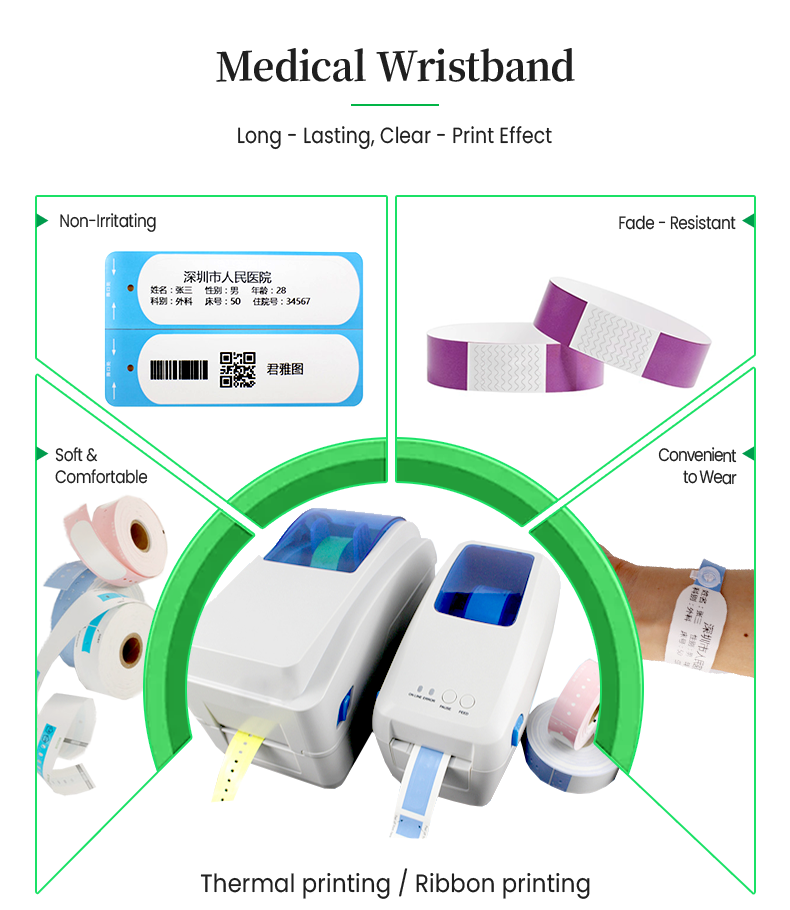
These figures describe a system in which the identification band is treated as optional by the people wearing it and, too often, by the people supposed to be checking it. The closure mechanism is the physical point at which that optionality is either enforced or abandoned.
Adhesive Closure: Convenience That Undermines Persistence
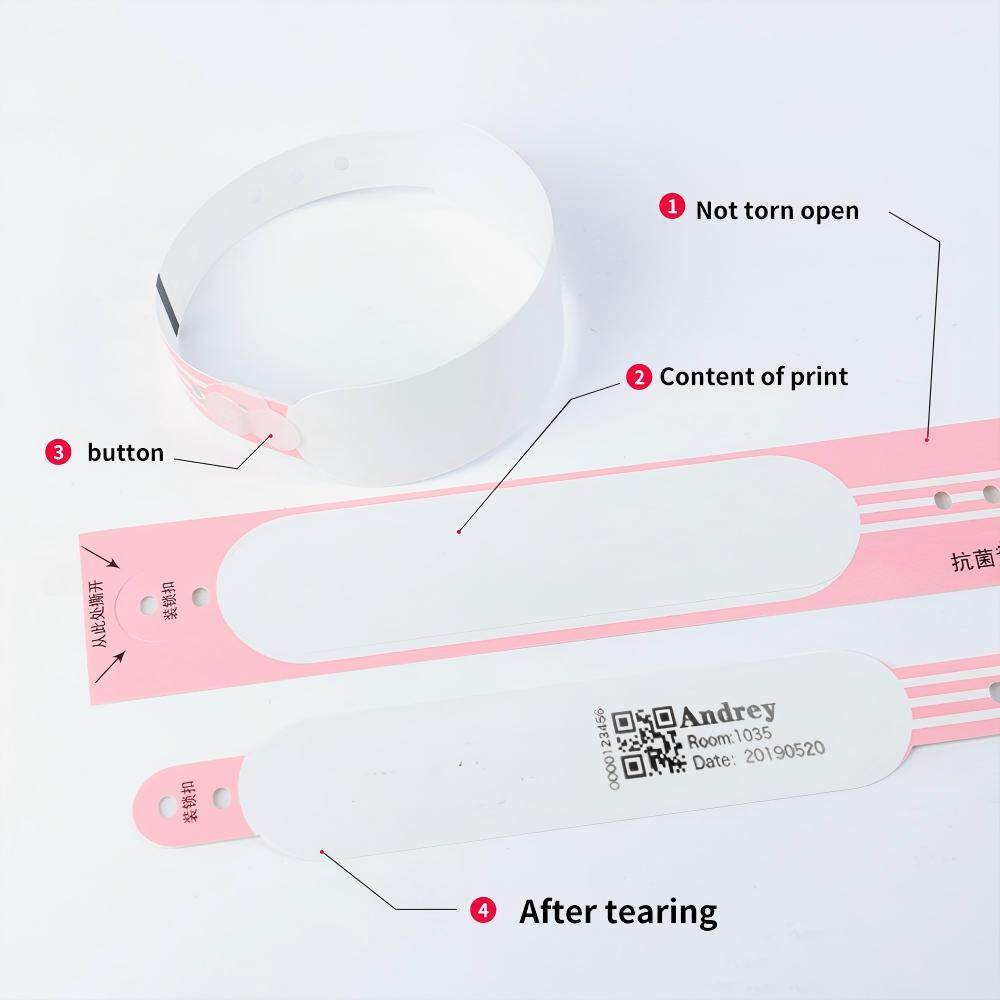
Adhesive closures dominate the market for a straightforward reason: they are fast and cheap. A nurse peels a liner, wraps the band, presses the adhesive to itself, and moves on. No alignment of holes. No snapping a pin into a receiver. No two-handed fumbling with a mechanism that requires a cooperative patient.
That speed carries a cost that never appears on the invoice. An adhesive closure is, by design, reversible with sufficient force. The same peel strength that holds the band in place during normal wear is also what allows a patient to pull it apart, reapply it later, or transfer it to a different wrist. The adhesive does not distinguish between a nurse adjusting a band and a patient removing it for a shower.
In practice, adhesive bands degrade in predictable ways. The adhesive edge collects lint, hair, and moisture. It loses tack. It peels up at the corner, creating a snag point that catches on sleeves and bed rails, which accelerates the peeling until the band is hanging loose or gone entirely. The band may still be physically present on the unit—in a drawer, on a bedside table, in a pocket—but it is no longer on the patient, which means it is no longer functioning as an identifier.
There is a legitimate place for adhesive closures. Short-duration procedures, outpatient encounters measured in hours, situations where the patient is continuously observed and the band is unlikely to be challenged. But for inpatient admissions that stretch across days and nights, adhesive closure introduces a structural vulnerability that no amount of nursing vigilance fully compensates for.
Snap Closure: Friction as a Safety Feature
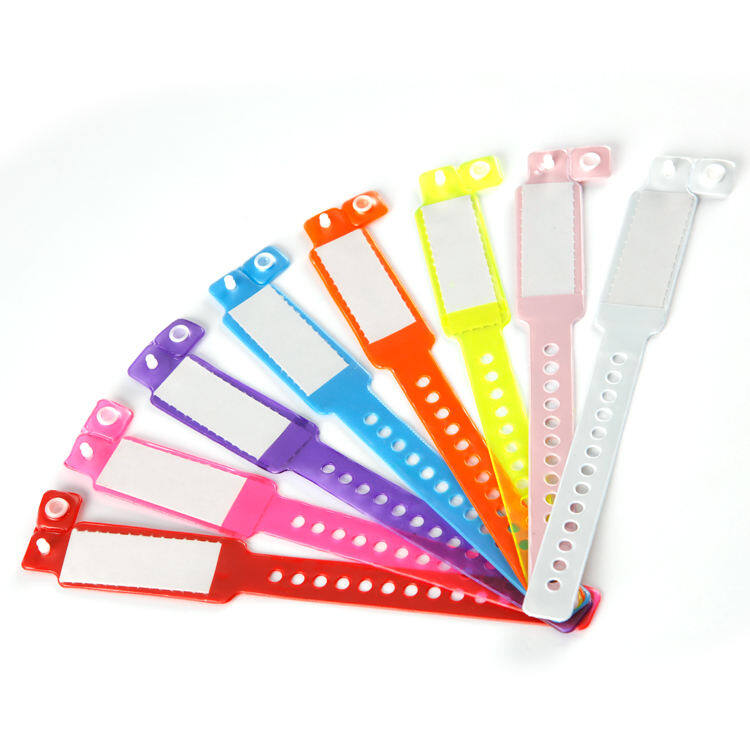
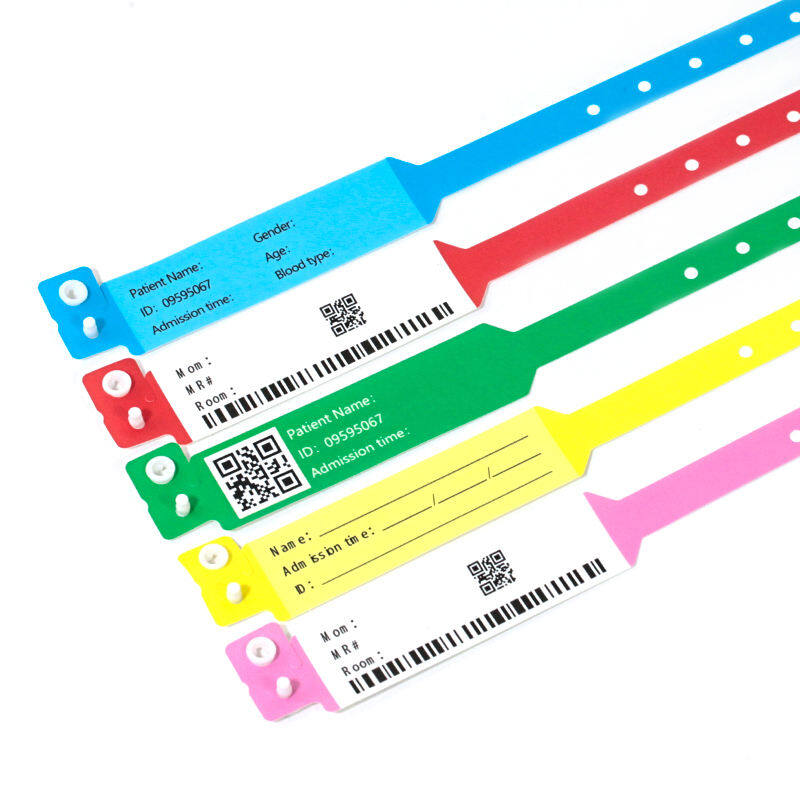
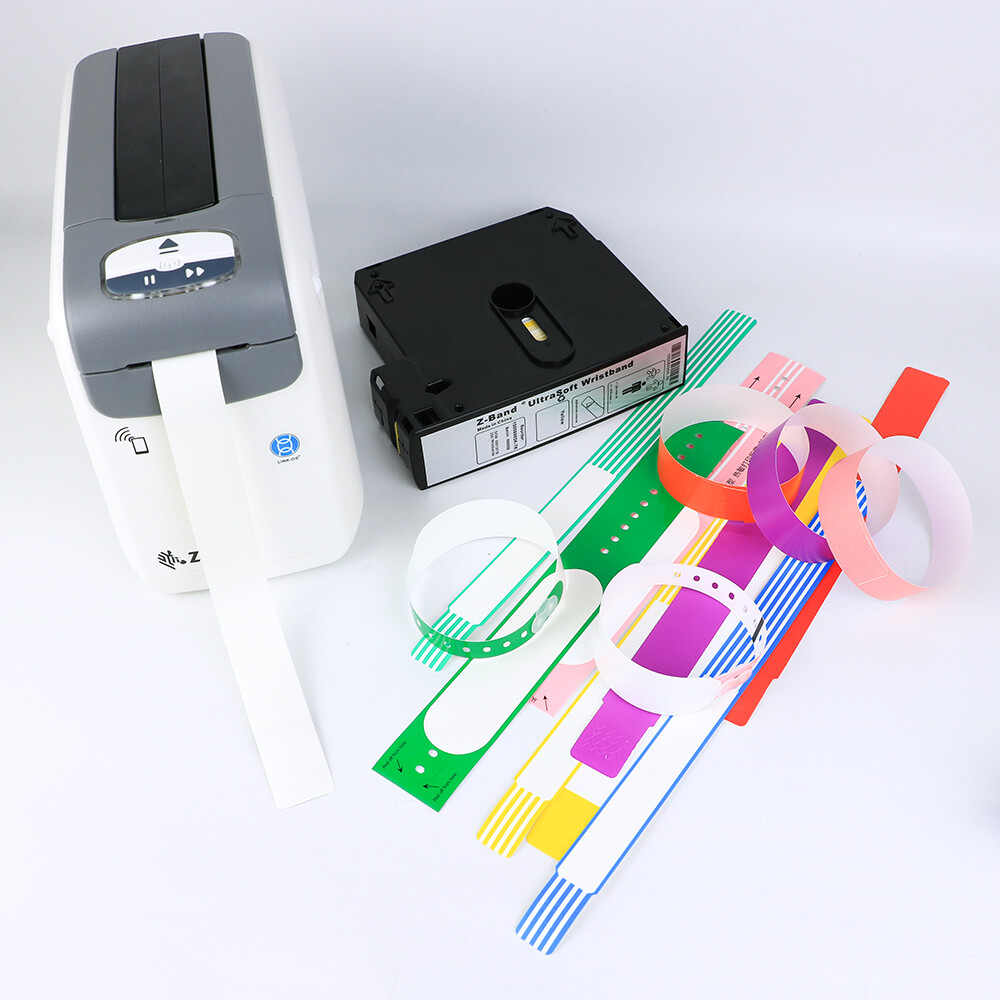
A snap closure is designed to be difficult to reverse. The pin seats into the receiver with an audible click. Removing it requires either deliberate effort or destruction of the band. The mechanism does not loosen gradually. It does not collect lint. It does not peel.
Médecins Sans Frontières specifies vinyl clasp closure with no metal for its identification bracelets, with the fastening designed so that it does not press into the skin. The clasp is self-locking. Once engaged, it stays engaged. This is not an incidental design choice. It is the entire point.
The trade-off is obvious and real. A snap closure takes longer to apply. It requires more dexterity. It cannot be adjusted as easily when a patient's wrist swells or when the band is applied too tightly. In a busy admission, the extra time per patient adds up. In a code situation, those seconds may not exist.
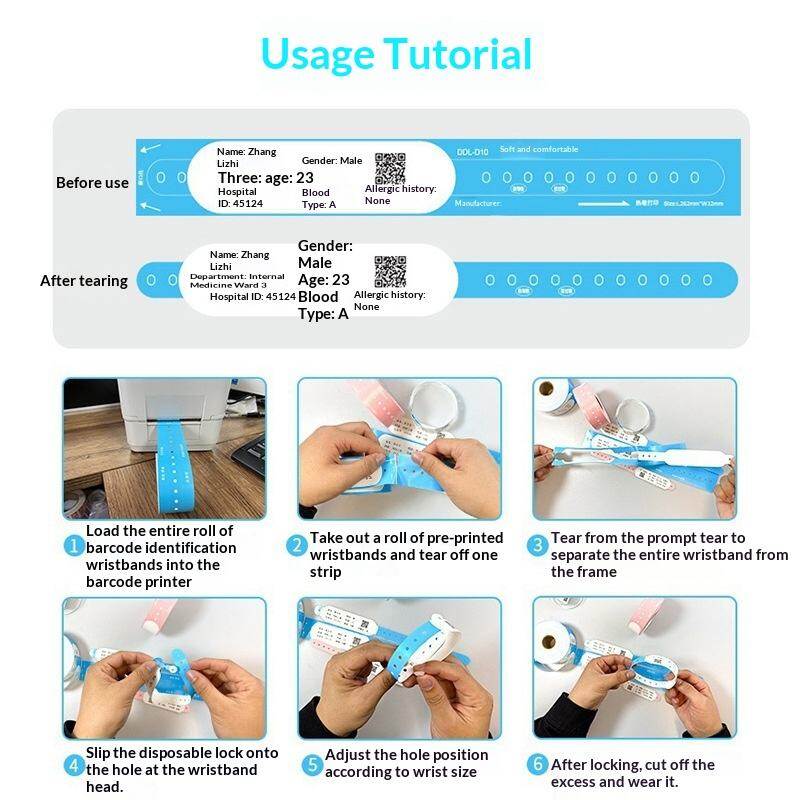
But the friction that makes snap closures inconvenient is also what makes them tamper-evident in practice. A patient who wants to remove a snap-closure band must either break it or work at the mechanism long enough that the removal becomes a deliberate act rather than an absent-minded tug. That deliberateness matters. It creates a moment in which the patient must consciously decide to defeat the identification system. Some will still do it. But the band does not make it easy.
A patent filing for a tamper-evident fastening device describes the design logic explicitly: the spike-and-washer engagement is configured so that the force required to disengage the locked mechanism is greater than the force required to break the frangible connection. In other words, the band breaks before the closure releases. The physical evidence of removal is preserved. The system knows the band was defeated, even if it cannot prevent the defeat.
The Safety Divide Is Contextual, Not Absolute
The honest answer to "adhesive or snap" is that neither is universally correct. The closure must match the wear duration, the patient population, and the workflow constraints of the unit.
Emergency departments operate in a different reality. Patients arrive unannounced, may be confused or combative, and may be discharged or admitted within hours. An adhesive band applied in triage and removed before transfer to the floor is not a persistence problem. It is a short-duration identifier. The speed of application matters more than tamper resistance. But even here, the band must survive long enough to support the first medication order, the first lab draw, the first imaging study. An adhesive band that peels off during a CT scan has failed regardless of its intended duration.
Inpatient wards are where the calculus shifts decisively. A patient admitted for three days will shower. They will change clothes. They will be left alone in a room with their thoughts and their discomfort and their wristband. Every one of those moments is an opportunity for an adhesive closure to fail or be defeated. The CAP data showing that missing wristbands constitute the majority of errors is largely a story about inpatient settings. The band was applied. It did not stay applied.
Long-term care and behavioral health present the most extreme case for snap closures. Patients with cognitive impairment may remove bands without understanding the consequence. Patients with behavioral health diagnoses may remove them deliberately. In these settings, an adhesive closure is not a mild vulnerability. It is a predictable failure waiting to happen.
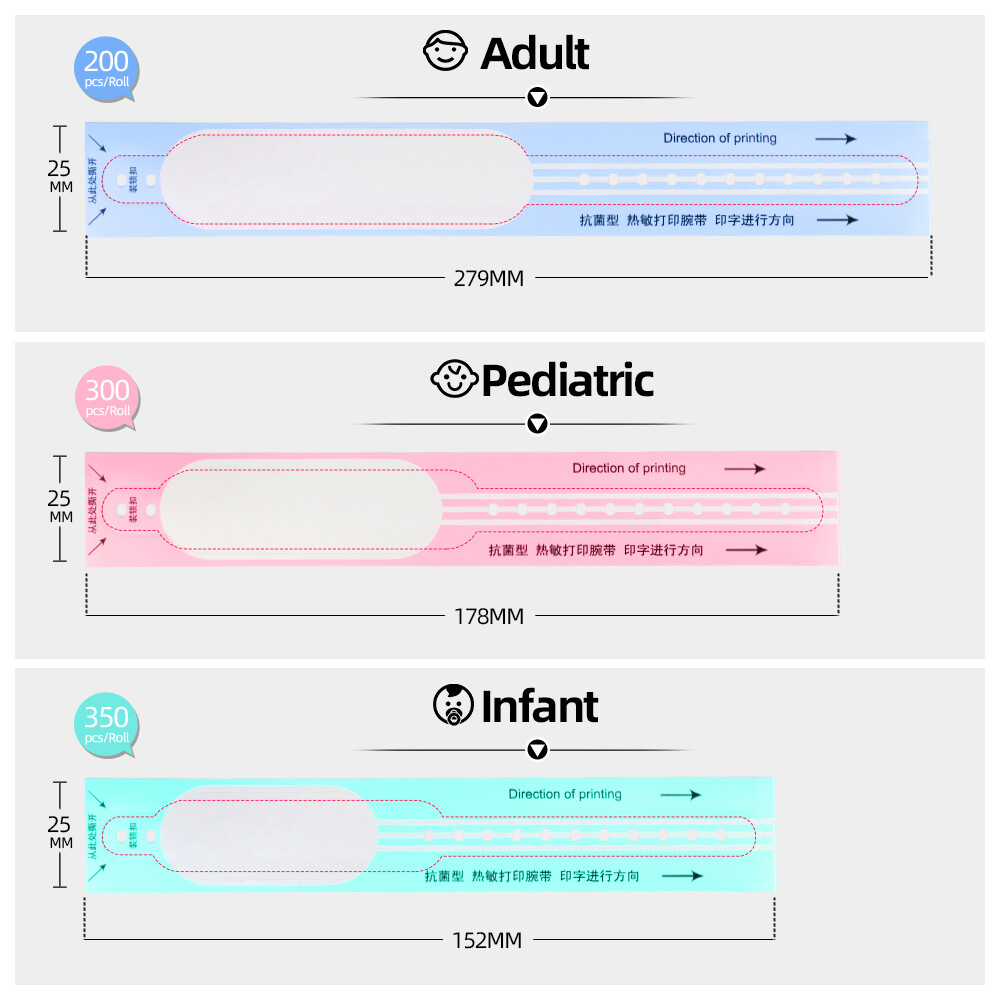
Neonatal and pediatric units require their own specification. MSF's neonatal bracelet uses a vinyl clasp closure with no metal, sized at approximately 16 cm and manufactured without cut edges. The closure must be secure enough to stay on a moving infant but not so tight that it compromises circulation. Adult snap mechanisms are not appropriate. The closure is engineered for the patient, not adapted from an adult product.
The common thread across all these settings is that the closure must be chosen with intentionality. The default—ordering whatever adhesive band is already in the catalog—is not a choice. It is an abdication of the decision that protects patient identification accuracy to the supply chain.
What Procurement and Nursing Should Ask
When evaluating wristband closures, the questions that matter are not the ones on the specification sheet. They are the ones that emerge from the workflow.
How long is the expected wear period? If the answer is measured in days rather than hours, adhesive closure deserves scrutiny. The longer the wear period, the more opportunities for peeling, moisture intrusion, and deliberate removal.
Who is the patient? A cooperative adult on a surgical floor presents different risks than a patient with dementia, a psychiatric admission, or a premature infant. Add the practical cases—bariatric patient wristbands that must be ordered as extended-length wristbands, or ankle bands when wrist access is blocked by IV lines and edema—and the closure must match the patient's capacity, the limb it encircles, and the patient's likely behavior.
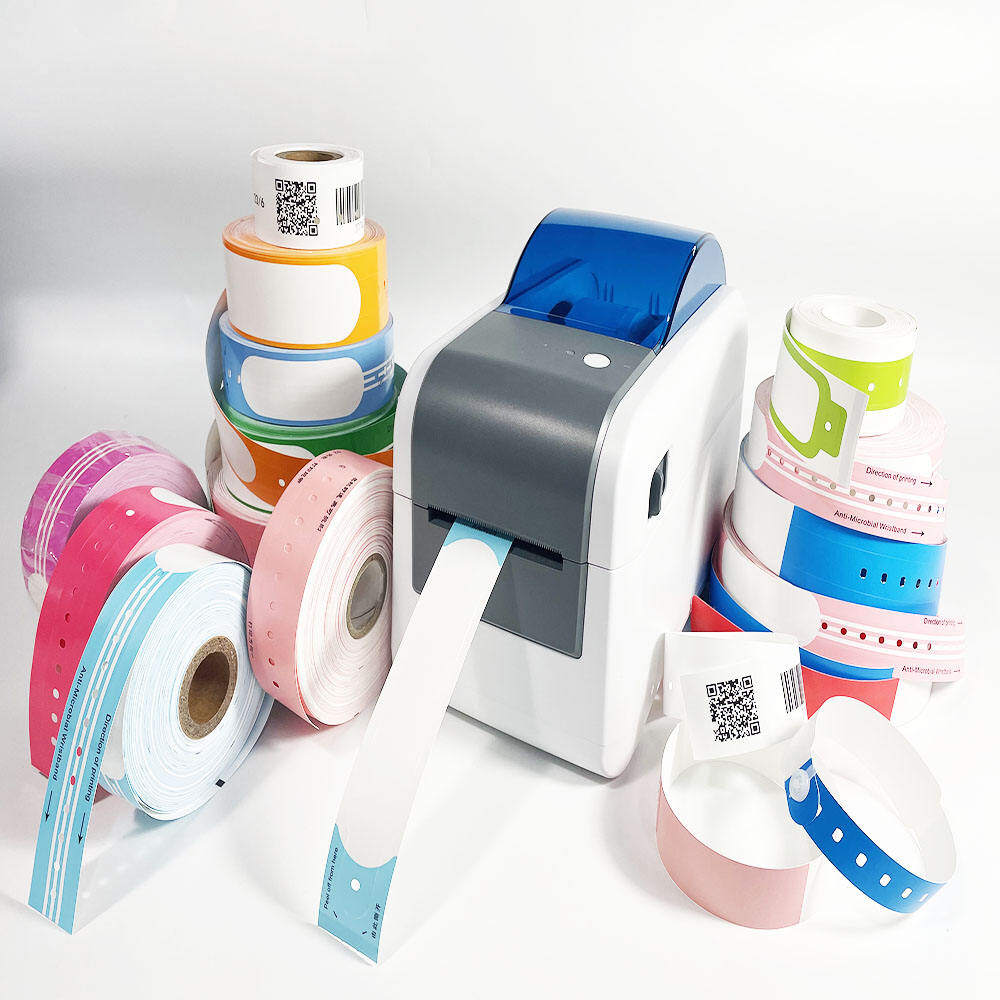
What happens when the band comes off? In a system with strong redundancy—frequent checks, barcode scanning at every transaction, a culture of refusing to proceed without verification—a missing band is caught quickly. In a system where wristband checks are inconsistent, the absence may go unnoticed until it causes harm. The CAP studies suggest that the latter system is more common than anyone would like to admit.
What is the cost of the workaround? An adhesive band that costs pennies less per unit but generates a 7% error rate is not cheaper. It is a hidden subsidy for risk. The Q-Tracks data showing that error rates can be cut in half through sustained monitoring is encouraging, but monitoring is a labor cost that never appears on the procurement spreadsheet—it is the same longitudinal surveillance discipline that CAP Q-Probes style programs were built to institutionalize.
The Band That Stays On
The patient who removes their wristband is not the root cause of identification failure. They are the messenger. The root cause is a closure mechanism that was selected for the convenience of the person applying it rather than the persistence of the identity it is supposed to anchor.
Snap closures are not elegant. They are not fast. They require a small amount of extra effort at the moment of application and a small amount of extra training to ensure they are seated correctly. But they do something that adhesive closures cannot: they make removal a decision rather than an accident. They keep the band on the wrist where it belongs, through showers and sleep and the long, boring hours of an inpatient stay when a patient has nothing better to do than pick at the edge of their identification.
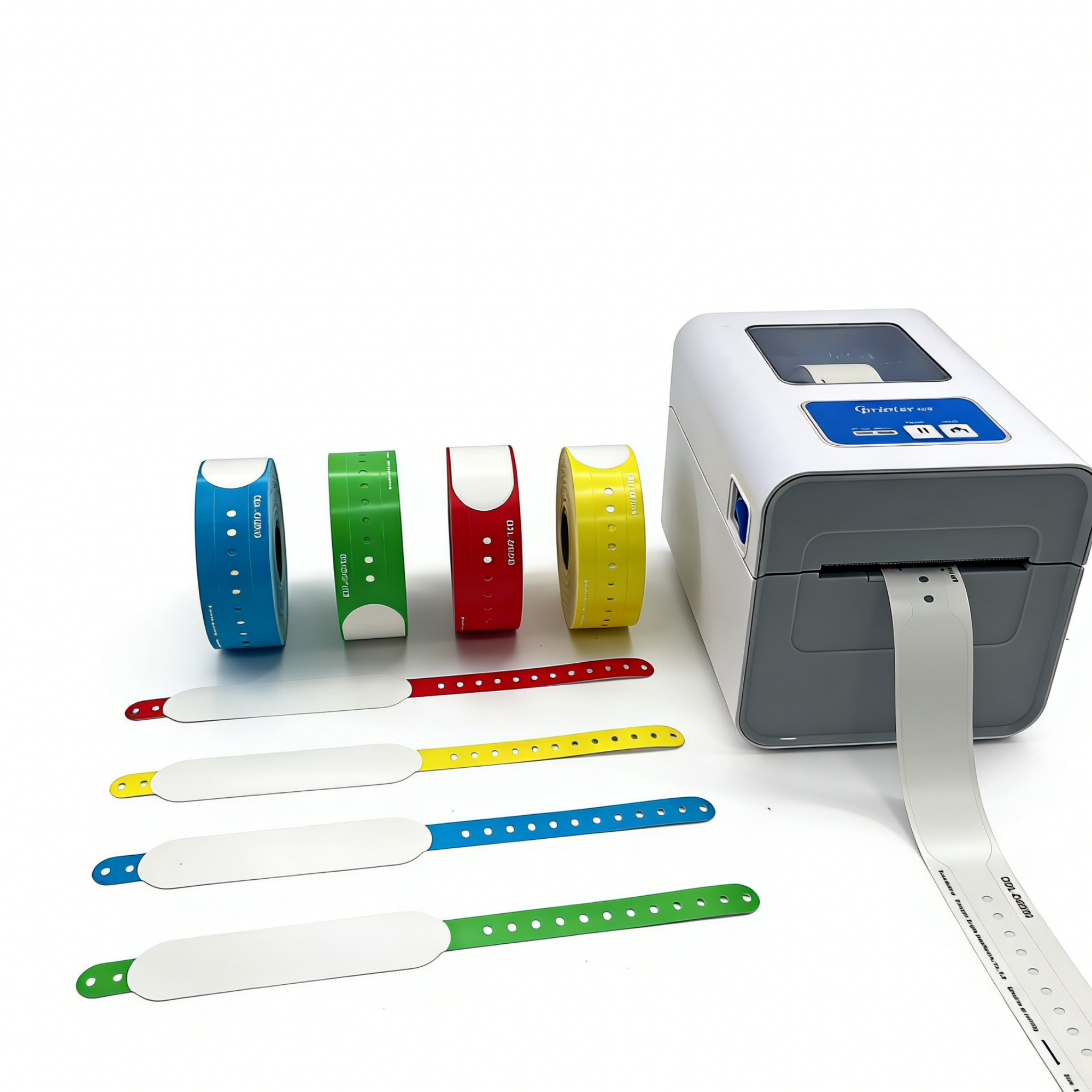
The wristband is a small thing. But it is the only physical link between a patient and their identity in a system that increasingly depends on barcodes, scanners, and digital verification. If it comes off, the chain breaks. The closure is where that chain is either held or released.
Choose the closure that holds.
A note on terminology for readers searching for more information: This article discusses patient identification wristbands, hospital wristbands, medical ID bands, patient ID bracelets, and identification bands used in healthcare settings. Related terms include wristband closure types, adhesive vs snap closures, tamper-evident wristbands, patient identification errors, missing wristbands, wristband compliance, barcode wristbands, RFID wristbands, neonatal wristbands, and wristband procurement specifications.
Continue Reading
Have Questions About Wristbands?
Our team is ready to help you find the perfect wristband solution for your needs. Contact us directly on WhatsApp for quick responses.
Contact on WhatsApp