
When the Wristband Is Wrong, Who Is Responsible? The Accountability Gap Between Procurement, Nursing, and IT
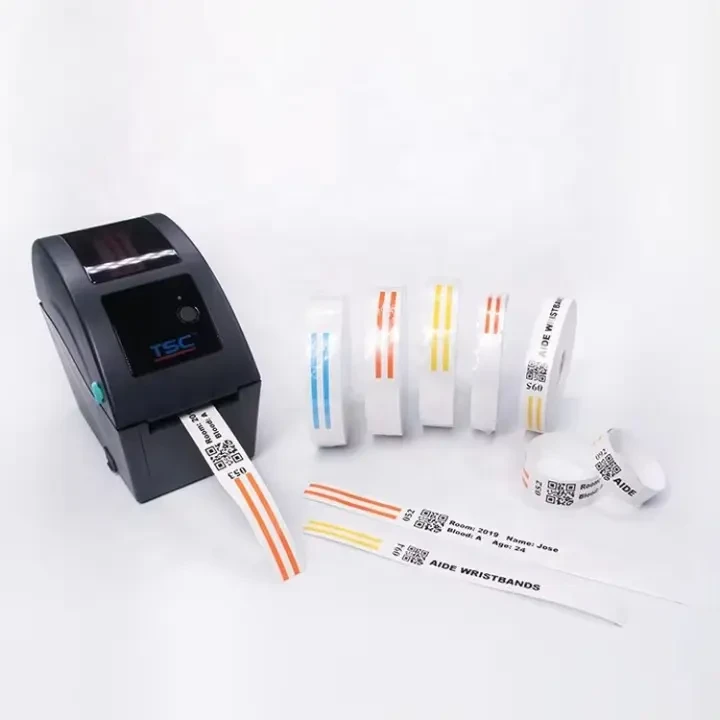
A patient identification wristband fails. It snaps in the shower, the printed name fades under hand sanitizer, or the barcode simply will not scan at 3 a.m. A nurse, under time pressure, does what nurses have always done: she finds a way to get the medication to the patient anyway. No harm occurs—this time. But the wristband was wrong, and nobody is quite sure who owns that wrongness.
This is not a story about a careless nurse. It is a story about a structural vacuum. The wristband is the single most scanned object in a hospital, the physical anchor that ties every medication dose, blood draw, and surgical cross-check to the correct human being. Yet the accountability for its integrity is distributed across departments that rarely share a common language, a common metric, or a common sense of ownership when the scan fails. Procurement buys it. Nursing applies it, replaces it, and works around it when it fails. IT builds the scanning infrastructure that depends on it and receives the failure signals—or does not. Each function can point to a plausible boundary of its own responsibility. The patient, meanwhile, remains exposed at the exact point where those boundaries meet.
Understanding this accountability gap requires looking past the individual error and into the systems, incentives, and silences that make the error predictable.
The Workaround as a Symptom, Not a Cause
The most rigorous evidence on wristband-related failure comes from the study of workarounds to barcode medication administration (BCMA) systems. In a landmark typology developed by Koppel and colleagues, researchers identified fifteen distinct categories of clinician workarounds and thirty-one categories of causes. Among the causes, "unreadable or missing patient identification wristbands (chewed, soaked, missing)" sits alongside malfunctioning scanners, non-barcoded medications, and failing batteries. The workarounds are equally telling: patient identification barcodes affixed to computer carts, scanners, doorjambs, or nurses' belt rings; barcodes carried in pockets and worn as bangles; a cut-off wristband taped to the head of a stretcher so that the scan can proceed even though the band is no longer on the patient's body.
These are not acts of defiance. They are adaptations to a broken front-end condition. An AHRQ-funded analysis of the same research concluded that the most common causes of workarounds were organizational, specifically "workflow policies [that] were incompatible with safety". When a wristband is missing, the nurse faces a forced choice: delay care and hunt for a replacement, or bypass the safety check and rely on recognition, memory, or a secondary identifier. The workaround is the visible behavior; the missing or unreadable wristband is the upstream condition that made the behavior feel necessary. If the accountability conversation stops at the nurse's scanning compliance, it never reaches the conditions that produced the non-scanning event.
The Procurement Blind Spot: A Clinical Safety Decision Disguised as a Supply Chain Task
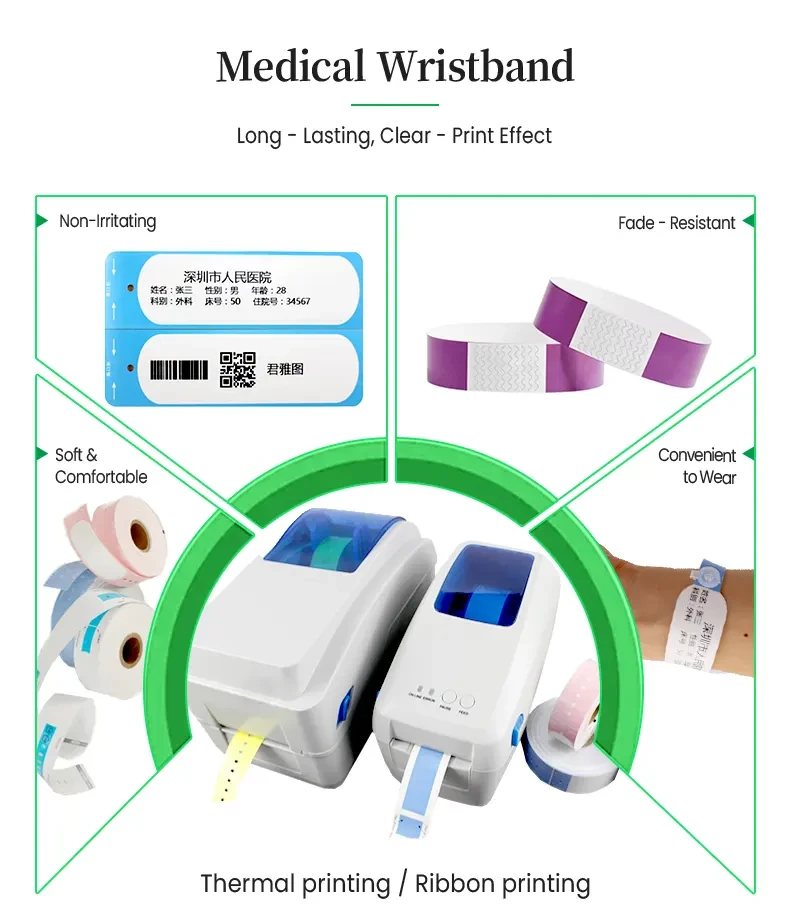
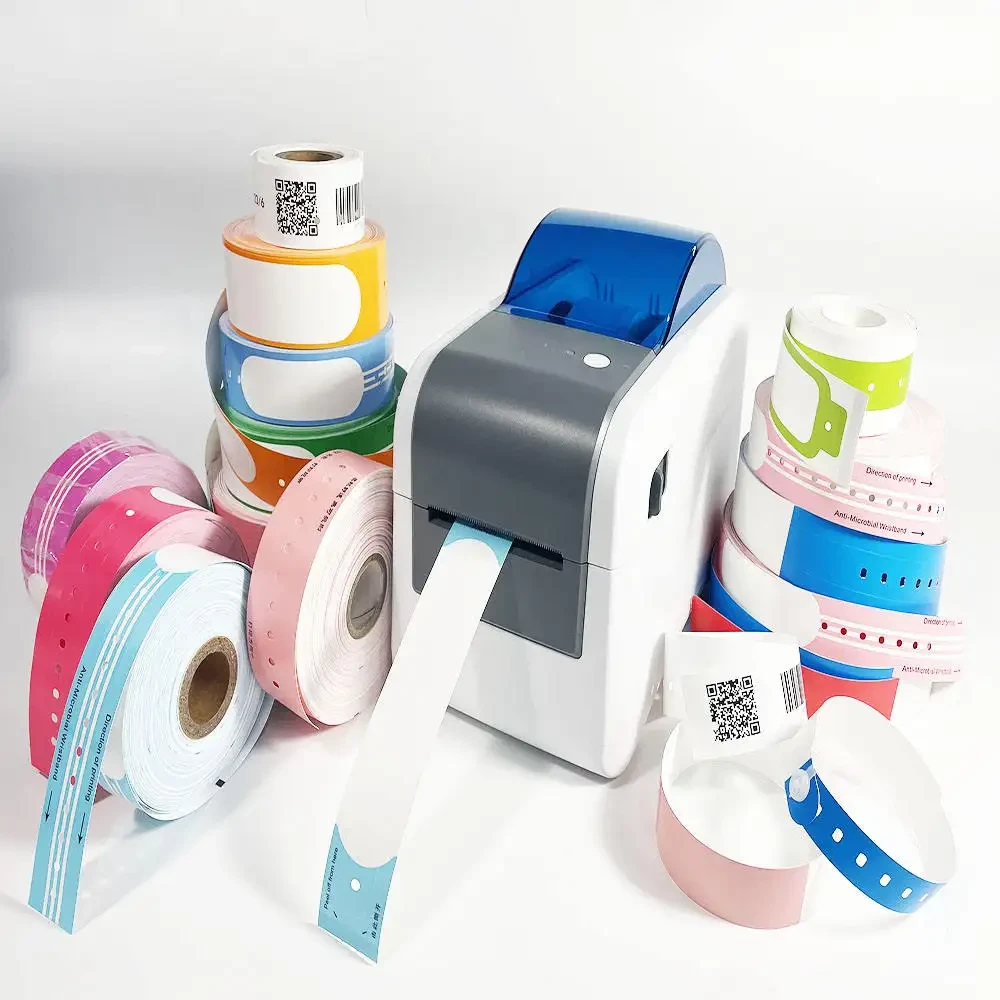
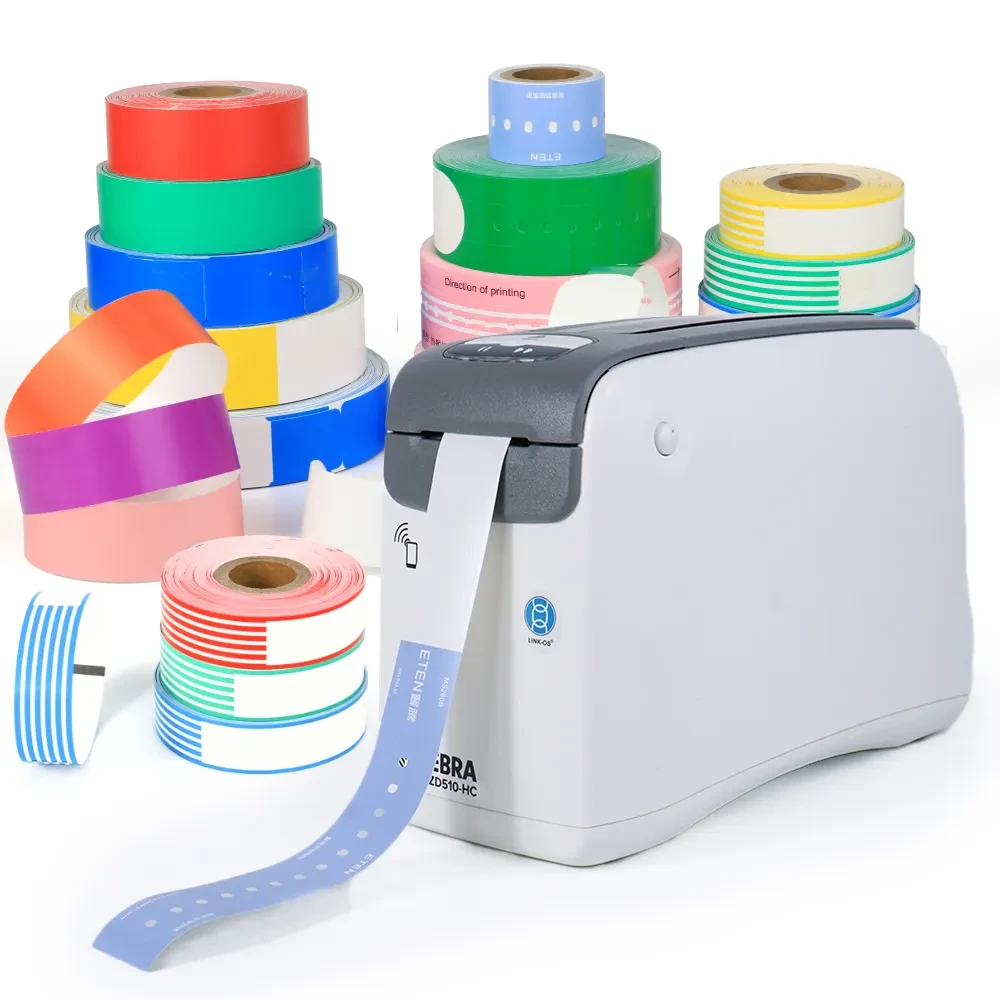
Patient identification wristbands are frequently treated as commodities within hospital supply chains. They are ordered through materials management, evaluated on unit cost and lead time, and standardized through group purchasing contracts. Yet the material properties of the wristband directly determine whether the safety workflow can function at all. Direct thermal wristbands, for example, are inexpensive and adequate for short emergency department stays, but their printed surfaces fade under hand sanitizer and body heat, typically remaining legible for only three to seven days. Thermal transfer wristbands use a resin ribbon fused to the surface, resisting alcohol, soap, and water for thirty days or longer—but they cost more per unit. A procurement decision driven by unit price can systematically select a wristband that degrades precisely on the patient populations—long-stay inpatients, oncology patients, those requiring frequent sanitization—whose safety depends most on a durable, scannable band.
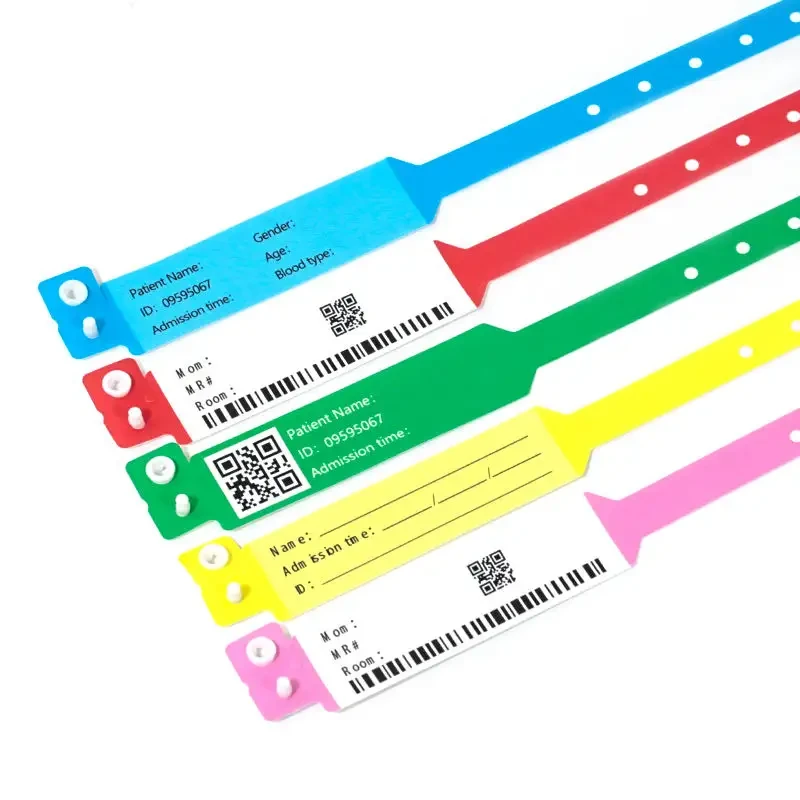
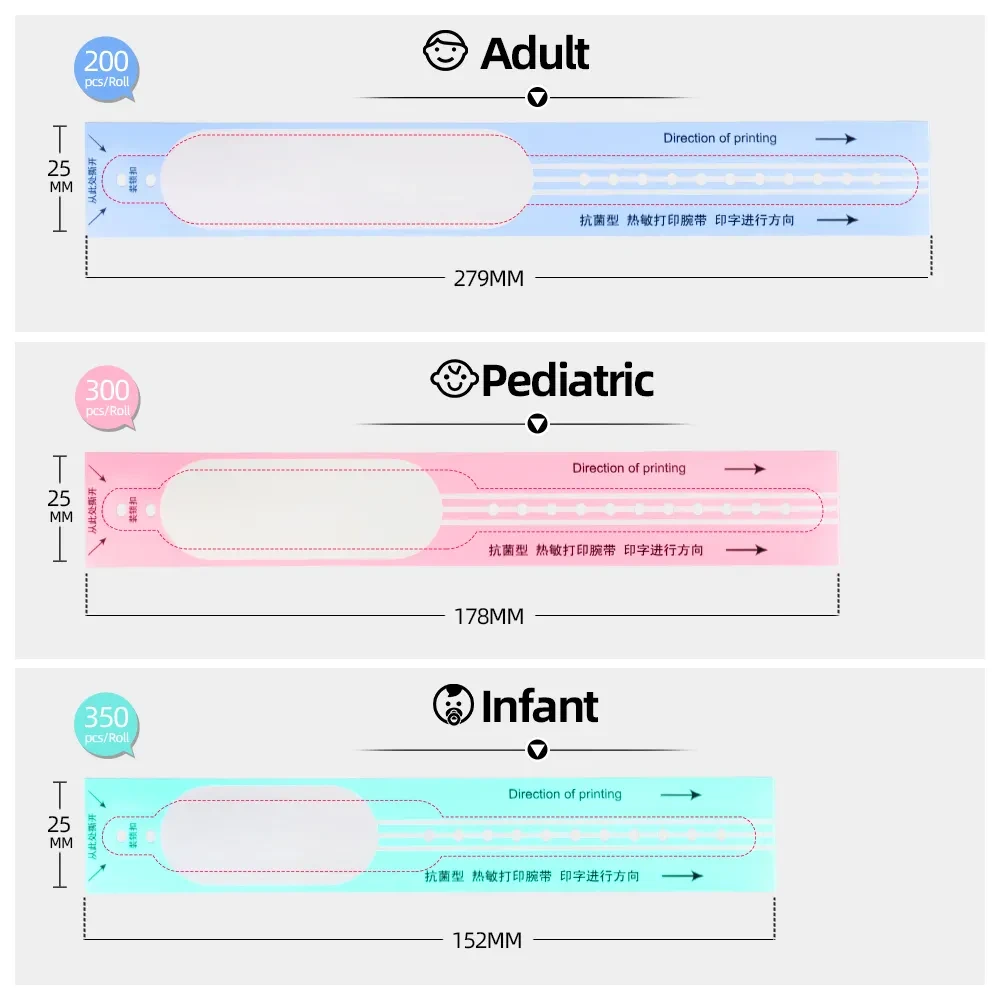
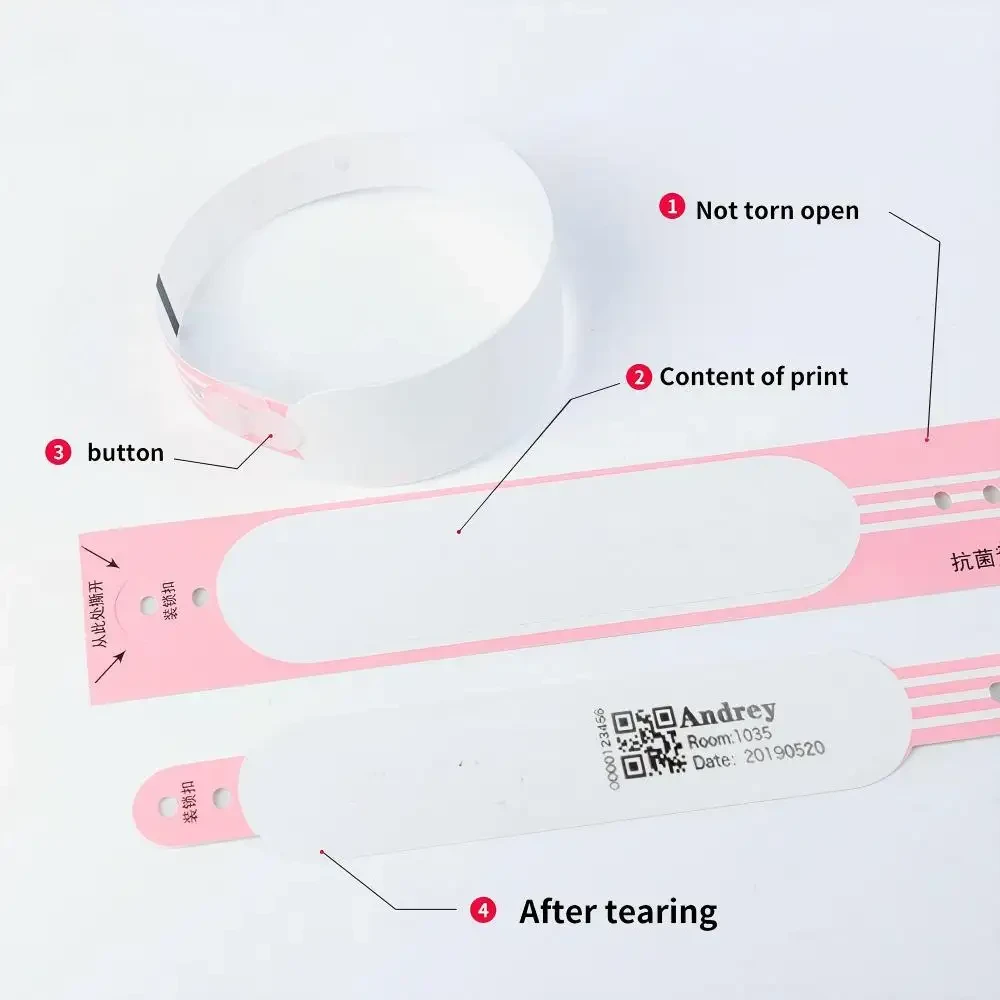
The consequences surface at the bedside. When the printable surface degrades, nurses are forced into manual entry workarounds, bypassing the safety nets built into the electronic health record. When pediatric or neonatal units lack dedicated sizing, nurses cut adult bands down with scissors, producing sharp edges and risking the clipping of critical barcode data. And when the wristband itself is of a quality that patients can easily remove—by breaking or stretching it—or when it becomes illegible after routine care, the daily count of missing or unreadable bands rises predictably. Sizing that covers the full patient population matters as much as material: a neonatal band, a standard adult wristband, the extended-length wristbands ordered as bariatric patient wristbands, and the ankle bands applied when wrist access is unavailable all have to remain scannable in the workflow they were bought for. One quality improvement initiative at Ulster Hospital found that eighteen to twenty patients per day had a missing or illegible wristband, and that "the quality and type of the wristband was the single most important factor that influenced compliance with the wearing of a legible wristband". The same initiative discovered that the regional tender for patient wristbands had been awarded to a product that was not compatible with key essential criteria.
Herein lies the first structural gap. The procurement function is accountable for cost, contract compliance, and supply continuity. The nursing function is accountable for application, verification, and replacement. Neither function is unambiguously accountable for the clinical performance of the wristband as a safety device in the real-world workflow. The purchasing team may never see a faded barcode. The nurse sees the faded barcode but may not have the authority, the data, or the organizational channel to trace that failure back to a contract specification. As one industry analysis puts it plainly: "Choosing the right wristband is not a commodity purchasing decision—it is a clinical safety decision disguised as a supply chain task". The disguise is effective. It allows each function to perform its defined role while the safety performance of the product remains an orphan.
Nursing's Burden: Responsibility Without the Levers of Control
Nursing carries the most visible and most immediate responsibility for the wristband. Policy documents across health systems are explicit: the healthcare worker admitting the patient is responsible for fully completing the patient details on the identification band before applying it. Any member of staff who discovers a patient without an identity band must assume responsibility for correctly identifying them and either applying a band or reporting the omission immediately. If a band is removed for a procedure, it is the responsibility of the person removing it to ensure a replacement is fitted. When a wristband cannot be scanned, policy typically directs the nurse to reprint it immediately. These are clear, individual-level duties. They are also duties that assume the surrounding system supplies a functional wristband, a working printer, and a scanning workflow compatible with the realities of a busy ward.
That assumption frequently fails. Nurses encounter roughly one system failure per hour, or about 6.5 failures per eight-hour shift, according to research cited in a clinical case study. In one documented emergency department event, a patient returned from radiology without her wristband. Medications were nevertheless administered; the nurse had scanned a cut-off wristband taped to the stretcher, believing that because she "knew the patient," she could proceed and obtain a new bracelet when time permitted. The investigation revealed that the workaround defeated the purpose of the safety feature—but it also revealed a workflow in which the band had been removed for a procedure and not replaced, and in which the nurse's alternatives were not immediately visible.
This is the second structural gap: nursing is held accountable for verification and replacement, but the conditions that produce missing, unreadable, or unscannable wristbands are often outside nursing's direct control. The nurse did not select the wristband material. The nurse did not negotiate the supply contract. The nurse may not have access to the scanning failure data that would demonstrate a pattern of degradation across a patient population. Yet the nurse is the person at the point of care when the safety check fails. A blame-oriented response would discipline the individual. A systems-oriented response would ask why the individual was placed in a position where the safest action was also the most effortful one. The AHRQ-funded research team behind the workaround typology reached a similar conclusion: hospitals should revise protocols so that adhering to policy is easier than deviating from it. That revision cannot be accomplished by nursing alone.
IT's Blind Spot: Data Without a Feedback Loop
Information technology owns the scanning infrastructure, the electronic health record integration, and the alert logic that governs BCMA. The BCMA system is designed to confirm the "five rights" of medication administration—right patient, drug, dose, route, and time—and to interrupt the workflow when a mismatch is detected. When the wristband does not scan, the system generates an alert, a bypass, or a failed scan event. In theory, IT possesses the most granular data on wristband performance: first-pass scan rates, repeat scan attempts, override frequencies, and the specific error codes associated with degraded or missing barcodes.
In practice, that data rarely flows upstream to procurement or to nursing leadership in a form that changes the wristband specification. A BCMA coordinator or point of contact may gather information on the causes of wristband scanning failures, obtain a sample demo patient wristband, and send it to a verification lab. But this is a troubleshooting response to an identified failure, not a routine feedback mechanism built into the supply chain or the quality dashboard. The scanning failure data exists in IT systems, but the accountability for acting on that data—changing the wristband vendor, revising the material specification, or adjusting the printing hardware—is not assigned to IT, nor is it routinely transferred to the functions that do hold that authority.
The third gap is therefore a gap of translation. IT sees the scan failure. Nursing experiences the scan failure. Procurement owns the contract that determines the wristband's physical properties. But no single role owns the loop that connects the observed failure to the contractual or specification-level remedy. The data sits at the point of care and at the point of transaction, but it does not travel between them with the authority to trigger change. Institutional variation of this kind is exactly what large-scale surveillance programs such as CAP Q-Probes were designed to surface in other domains, yet the wristband supply chain still has no equivalent feedback mechanism.
Why "Just Culture" Does Not Close the Gap by Itself
The language of just culture offers a useful corrective to blame-based accountability. A just culture distinguishes between human error, at-risk behavior, and reckless action, and it holds that individuals should not be held accountable for system failings over which they have no control. This distinction is essential for understanding the nurse's workaround: scanning a cut-off wristband taped to a stretcher is at-risk behavior, but it is behavior shaped by a system that made the correct action costly and the workaround available. A just culture would not discipline the nurse as if she had single-handedly created the hazard.
But just culture does not automatically assign accountability for the system itself. It says that the organization is accountable for designing safe systems that encourage and support safe choices. The difficult question is: which part of the organization? In a hospital, "the organization" is not a single actor. It is a procurement committee, a nursing leadership structure, an IT governance body, a supply chain contract, and a quality and safety function—each with its own metrics and its own sense of remit. A just culture can protect the individual from unfair blame, but it can also become a rhetorical refuge that leaves the structural gap intact. The organization is "accountable" in the abstract, while no function is accountable in practice for the wristband's performance as a safety device across the full lifecycle from specification to bedside scan.
Toward a Shared Accountability Architecture
Closing the gap does not require inventing a new department or a new bureaucracy. It requires making the wristband's clinical performance a shared, visible object of accountability across the functions that already touch it.
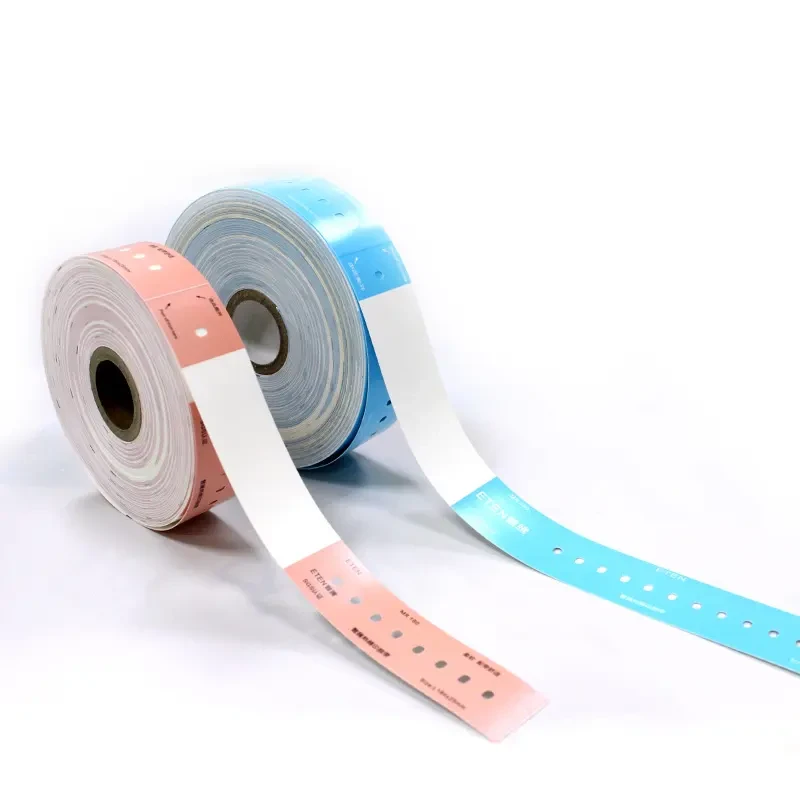
Procurement must specify for the bedside, not only for the invoice. Wristband contracts should include performance criteria derived from clinical workflow: first-pass scan rate under realistic conditions, legibility duration across the expected length of stay, resistance to hand sanitizer and body fluids, sizing for the full patient population, and compatibility with the printing and scanning hardware in use. These criteria should be developed jointly with nursing and IT, not negotiated in isolation. The Ulster Hospital experience demonstrates that a contract can be changed when the clinical performance data is made visible and the purchasing process is treated as a patient safety intervention.
Nursing must have a route to escalate wristband failure as a system defect, not only as an individual omission. When a nurse reports a missing or unreadable wristband, the report should feed a product-performance signal, not merely a compliance reminder. The DATIX-style incident reporting that many health systems already use for patient identification events can be a starting point, but the data must be aggregated and routed to the functions with the authority to change the specification or the vendor.
IT must close the loop between scan data and supply decisions. Scanning failure rates, override frequencies, and repeat-scan patterns are not merely IT operational metrics. They are product performance data. A routine reporting pathway—from the BCMA system to procurement and nursing leadership—would transform the wristband from a blind spot into a monitored safety device.

The quality and safety function must own the cross-functional metric. The ultimate accountability measure is not "Did the nurse scan?" but "Did the patient's identity remain verifiable at every point of care?" That is a composite outcome dependent on procurement, nursing workflow, IT reliability, and environmental conditions—and a direct measure of patient identification accuracy. It belongs to no single department, which means it must be deliberately assigned—through a shared dashboard, a standing review, and a named owner with authority across the relevant functions.
Conclusion: The Wristband Is a Boundary Object
The patient identification wristband sits at the boundary between supply chain and clinical care, between information technology and human workflow, between individual diligence and organizational design. Boundary objects are notoriously difficult to govern because they belong to everyone and therefore to no one. When the wristband is right, it disappears into the background of competent care. When it is wrong, the accountability question surfaces—and the answer is often a gesture toward the nurse at the bedside, the most visible actor in a chain that begins long before she touches the band.
A more honest answer is that the wristband is wrong because the specification was wrong, or the material was wrong, or the replacement workflow was wrong, or the data about its failure was never routed to the people who could have changed it. Each of those wrongs has an owner, but the ownership is fragmented across procurement, nursing, and IT. Until those functions share a common metric, a common feedback loop, and a common sense of responsibility for the wristband's performance as a safety device, the gap will persist. The patient will continue to wear the consequence.
A note on terminology for clinical and supply chain teams: The vocabulary of this problem spans several domains. Patient identification failures are often described in terms of wrong patient events, misidentification, or identification errors. The physical device is referred to as a wristband, identification band, ID bracelet, armband, or patient ID band. Its properties include barcode scannability, print durability, legibility, water resistance, alcohol resistance, and material compatibility. The workflow context involves BCMA, bedside scanning, point-of-care verification, two-patient-identifier protocols, medication administration, blood transfusion verification, and specimen collection. The failure modes include missing wristbands, unreadable barcodes, faded print, scan failures, workarounds, overrides, and bypass events. The organizational context involves procurement, supply chain, materials management, vendor contracts, group purchasing organizations, clinical specifications, nursing workflow, IT governance, EHR integration, incident reporting, root cause analysis, just culture, and accountability structures. These terms are not interchangeable decorations; each carries a distinct operational meaning. Bringing them into a shared conversation is itself part of closing the gap.
Continue Reading
Have Questions About Wristbands?
Our team is ready to help you find the perfect wristband solution for your needs. Contact us directly on WhatsApp for quick responses.
Contact on WhatsApp