Wristband Barcode Symbologies: Code 128 vs QR vs Data Matrix for Hospitals
Introduction
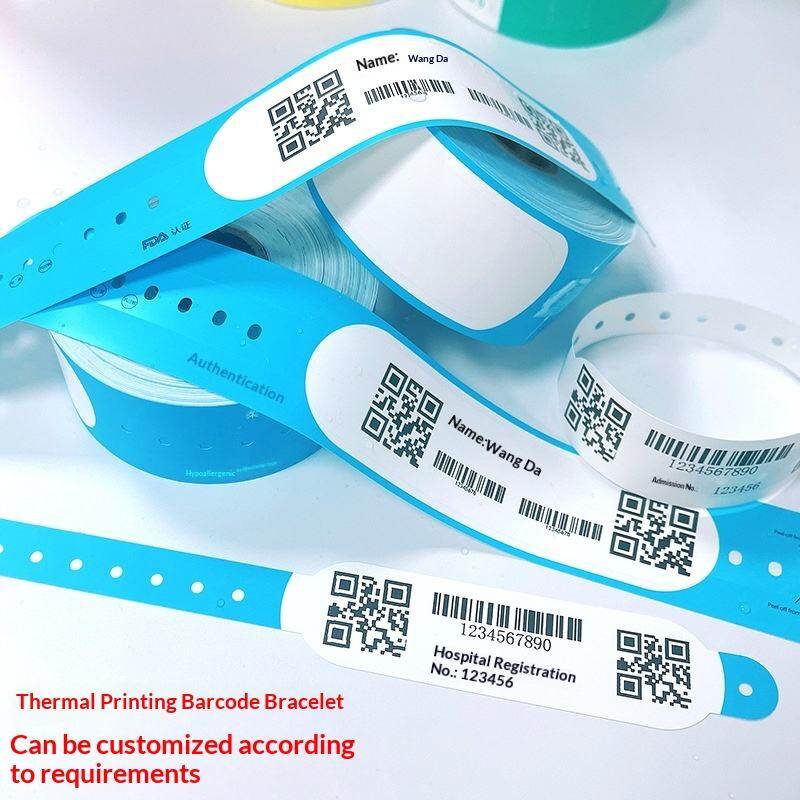
Barcodes on patient wristbands are a cornerstone of modern hospital safety systems. They enable rapid, accurate patient identification at the point of care, supporting everything from medication administration to blood transfusion verification to specimen collection. Yet not all barcodes are created equal, and the choice of symbology—the specific encoding pattern used to represent data—has significant implications for scanning reliability, data capacity, and workflow efficiency.
Three barcode symbologies dominate discussions in healthcare settings: Code 128, QR Code, and Data Matrix. Each has distinct characteristics that make it suitable for different applications. Code 128 is a linear barcode widely used for patient identification. QR codes offer high data capacity and smartphone readability. Data Matrix codes provide compact, high-density encoding ideal for small surfaces and automated scanning.
This article provides a comprehensive comparison of these three symbologies for hospital wristband applications. It examines their technical characteristics, clinical suitability, and practical considerations for healthcare facilities seeking to optimize their patient identification systems.
Understanding Barcode Symbologies
What Is a Barcode Symbology?
A barcode symbology is a specific method of encoding information into a visual pattern that can be read by a machine. It defines the rules for translating characters into bars and spaces (for linear barcodes) or into patterns of black and white modules (for two-dimensional barcodes).
Different symbologies offer different trade-offs between data capacity, physical size, error tolerance, and scanning requirements. Choosing the right symbology depends on the specific application, the scanning environment, and the amount of data that needs to be encoded.
Linear vs. 2D Barcodes
Linear (1D) Barcodes: These barcodes encode data in a single line of varying-width bars and spaces. Code 128 is a prominent example. Linear barcodes are simple, widely supported, and easy to print. However, they have limited data capacity and are vulnerable to damage—a single scratch or smudge can render the entire code unreadable.
Two-Dimensional (2D) Barcodes: These barcodes encode data in both horizontal and vertical dimensions, allowing much higher data density. QR codes and Data Matrix are the most common 2D symbologies. They can store significantly more information than linear barcodes and include error correction that allows them to remain readable even when partially damaged.
Code 128: The Linear Standard for Patient Identification
Technical Characteristics
Code 128 is a high-density linear barcode that can encode the entire ASCII character set, including numbers, letters, and special characters. This flexibility makes it suitable for encoding patient identifiers that may include both numeric and alphanumeric data.
One of Code 128's key features is its built-in validation characters. These characters allow the scanner to verify that the barcode has been read correctly, reducing the risk of data errors. The symbology also supports multiple code sets, allowing it to switch between different character types within a single barcode to optimize space efficiency.
Advantages for Patient Wristbands
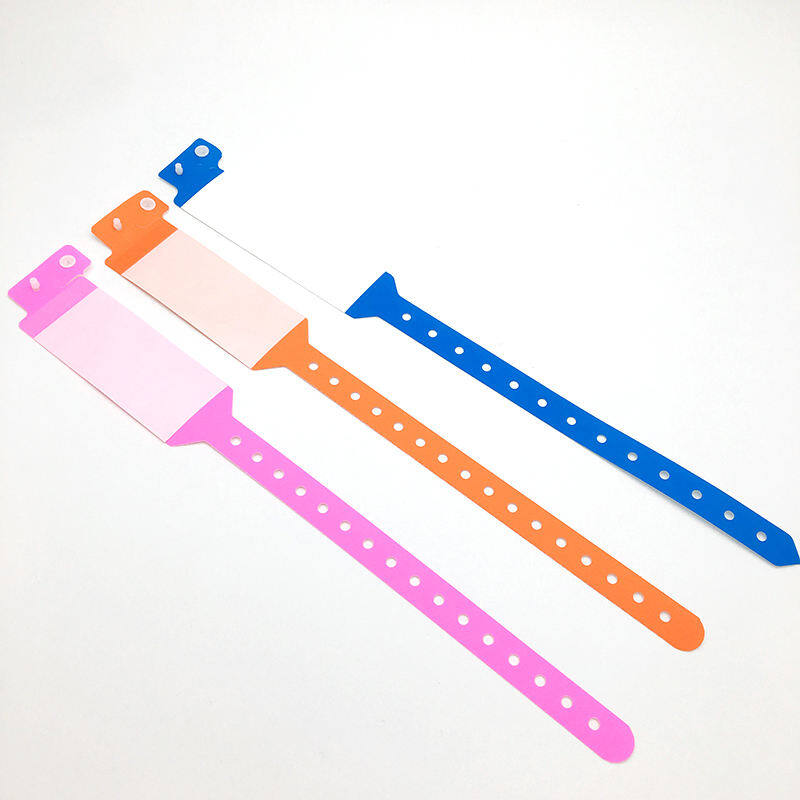
Code 128 has been widely adopted in healthcare for patient wristband applications. In one notable implementation, seven hospitals within St. John Health selected Code 128 for their patient wristbands, encoding a unique number for each patient visit. This approach provided efficient tracking and billing capabilities while enabling fast, accurate data entry into clinical systems.
The symbology's advantages for wristbands include:
Wide Scanner Compatibility: Most laser and imager scanners used in hospitals can read Code 128, making it a practical choice for facilities with existing scanning infrastructure.
Human-Readable Text: Code 128 barcodes can be printed with human-readable characters below the bars, allowing staff to verify patient information visually if needed.
Proven Reliability: Code 128 is a mature, well-established symbology with extensive testing and standardization.
Limitations
Code 128 has limitations that become apparent in certain wristband applications:
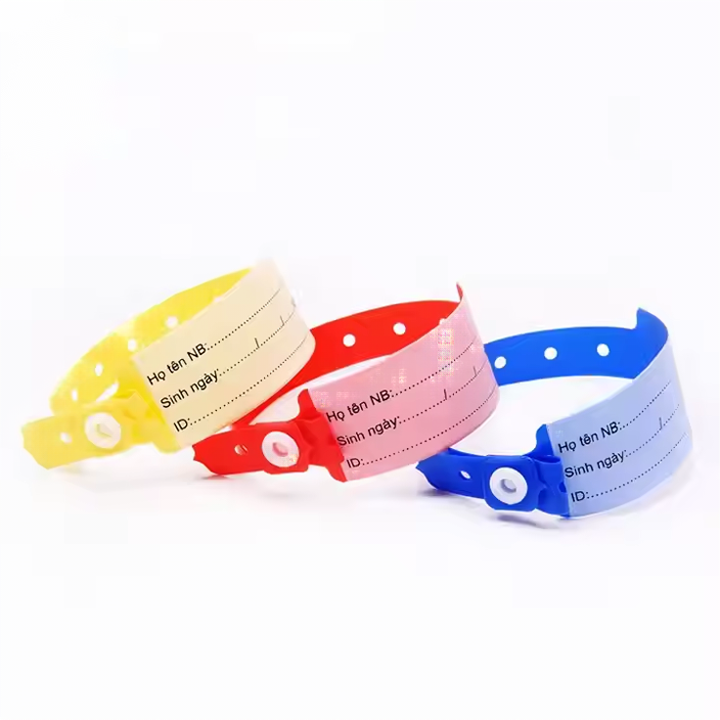
Space Requirements: Linear barcodes require significant horizontal space. On small wristbands, particularly those for neonatal or pediatric patients, fitting a Code 128 barcode with sufficient data can be challenging.
Curvature Sensitivity: When printed on curved surfaces like cylindrical wristbands, Code 128 barcodes may be difficult to scan if the curvature distorts the bar spacing.
No Error Correction: Unlike 2D barcodes, Code 128 has no built-in error correction. Damage to any part of the barcode can make it unreadable.
QR Code: High Capacity and Smartphone Accessibility
Technical Characteristics
QR (Quick Response) codes are 2D barcodes that can store large amounts of data in a compact square pattern. The symbology is specified in ISO/IEC 18004, which defines the QR code's characteristics, encoding methods, error correction rules, and decoding algorithms.
QR codes use Reed-Solomon error correction, which allows the code to remain readable even when up to 30% of the symbol is damaged. The error correction level can be selected by the user, with higher levels providing more redundancy at the cost of reduced data capacity.
Advantages for Healthcare Applications
QR codes offer several advantages in healthcare settings:
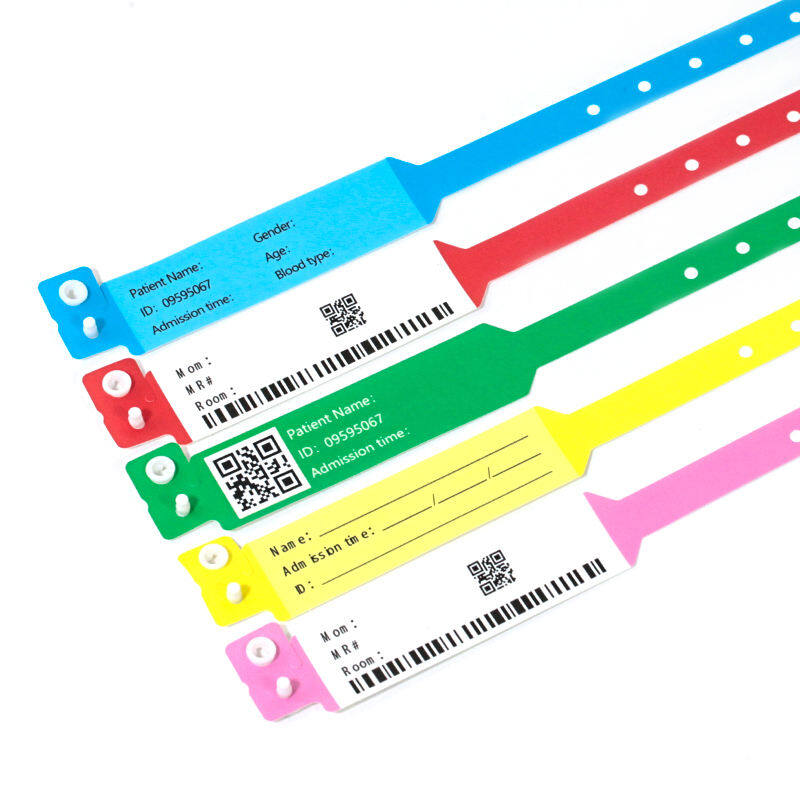
High Data Capacity: QR codes can encode significantly more information than linear barcodes, making them suitable for applications that require encoding of multiple data elements.
Smartphone Readability: QR codes can be read by smartphones and tablets, enabling patients and families to access digital content by scanning the code.
Digital Linkage: QR codes are ideal for linking to web-based resources such as patient education materials, medication instructions, or safety data sheets.
Limitations for Wristband Applications
Despite their popularity in consumer applications, QR codes have limitations for patient wristband use:
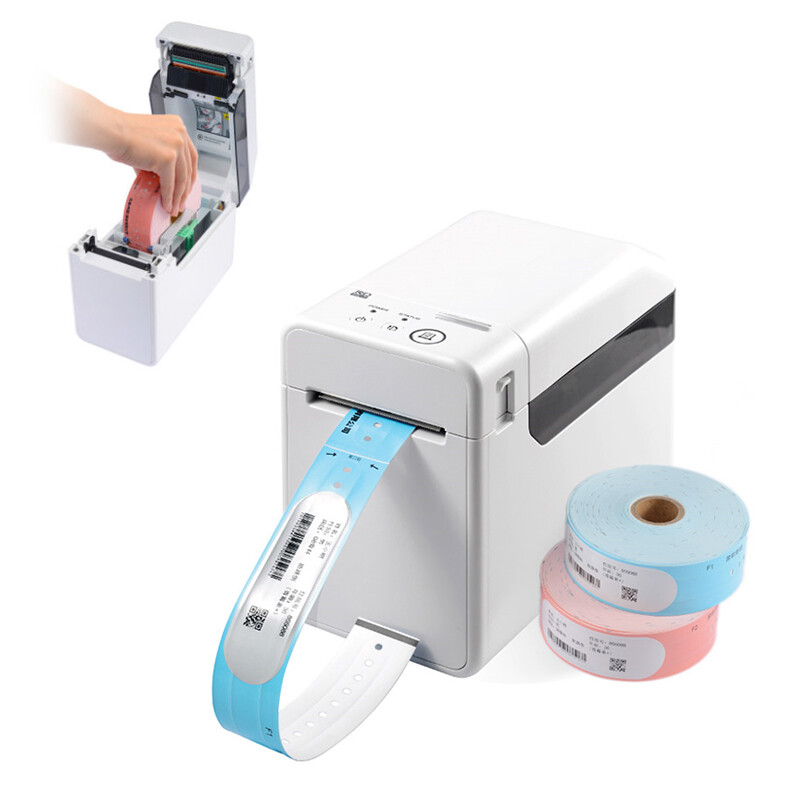
Size Requirements: QR codes require relatively large printing areas. If the encoded content is extensive, the code becomes denser and requires higher printing precision.
Not Recommended for UDI: GS1, the organization that maintains global barcode standards, explicitly states that QR codes should never be used to encode Unique Device Identifiers (UDIs) for medical devices. This guidance reflects the healthcare industry's preference for Data Matrix in regulated applications.
Scanner Compatibility: While smartphone readability is an advantage, not all hospital scanners are optimized for QR code reading. Facilities may need to upgrade scanning equipment to support QR code workflows.
Data Matrix: The Compact Powerhouse for Healthcare
Technical Characteristics
Data Matrix is a 2D barcode symbology that excels in applications requiring high data density in a small space. The code consists of a pattern of black and white modules arranged in a square or rectangular grid, with a finder pattern (the "L" shape) on two sides that allows scanners to locate and orient the code.
Data Matrix codes use error correction that is automatically determined by the remaining storage capacity, providing robust protection against damage. For a comparable code size, Data Matrix offers significantly better storage capacity than QR codes.
Advantages for Patient Wristbands
Data Matrix has become the preferred symbology for many healthcare applications:
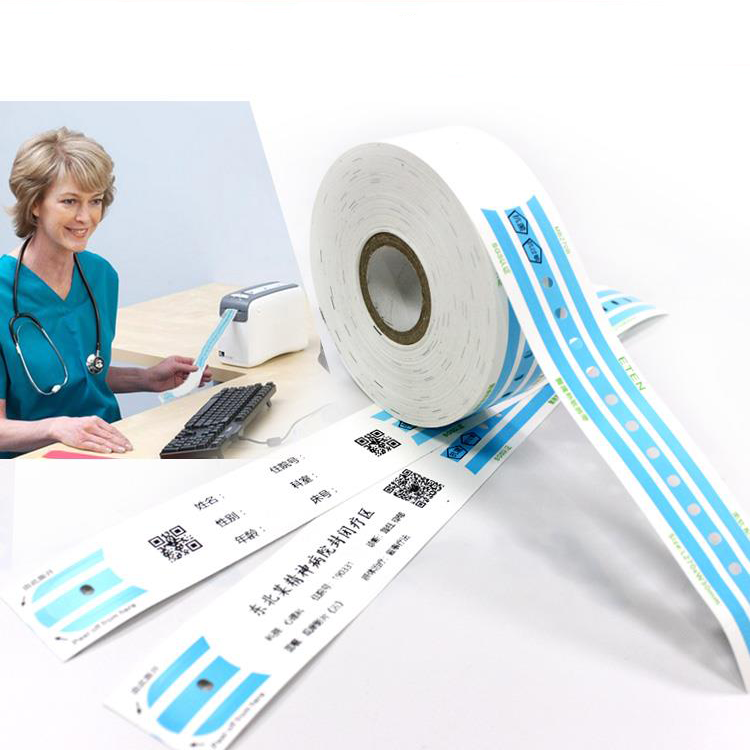
Compact Size: Data Matrix codes can be printed in very small areas, making them ideal for wristbands where space is limited. This is particularly important for neonatal and pediatric wristbands.
Industry Standard for UDI: GS1 DataMatrix has become the symbol of choice for regulated healthcare products. The healthcare industry is moving away from linear barcodes to GS1 DataMatrix because they hold more data, take up less space, and can withstand up to 30% damage through built-in error correction.
HIBC Recommendation: The Health Industry Business Communications Council (HIBCC) recommends Data Matrix ECC 200 for patient identification and drug identification applications.
Automation-Friendly: Data Matrix codes are well-suited for automated scanning systems, including robotic sample handling and high-throughput identification workflows.
Limitations
Data Matrix codes have some limitations to consider:
Scanner Requirements: Data Matrix requires image-based scanners, which are more expensive than traditional laser scanners. Facilities may need to invest in new scanning equipment.
Less Familiar to Consumers: Unlike QR codes, Data Matrix codes are not commonly recognized by consumers, which may limit their use for patient-facing digital content.
Comparison Table: Code 128 vs QR vs Data Matrix
| Feature | Code 128 | QR Code | Data Matrix |
|---|---|---|---|
| Type | Linear (1D) | 2D Matrix | 2D Matrix |
| Data Capacity | Up to 103 symbols | Up to 3,057 alphanumeric | Up to 3,116 alphanumeric |
| Error Correction | Check characters only | Up to 30% (selectable) | Up to 30% (automatic) |
| Minimum Size | Requires horizontal space | Moderate space required | Very compact |
| Scanner Type | Laser or imager | Imager/smartphone | Imager |
| Curved Surface Suitability | Limited | Moderate | Good |
| Healthcare Standard | HIBC primary data | Not for UDI | GS1 standard for UDI |
| Best Application | Patient ID, specimen labels | Patient education links | Small wristbands, UDI |
Practical Considerations for Hospital Implementation
Scanning Infrastructure
The choice of symbology must align with the hospital's scanning infrastructure. Code 128 can be read by most existing laser scanners, making it a low-barrier option for facilities with legacy equipment. Data Matrix requires image-based scanners, which are becoming standard in healthcare but may require investment.
Wristband Size and Patient Population
For adult patients with standard-sized wristbands, all three symbologies can be accommodated. However, for neonatal and pediatric wristbands where space is at a premium, Data Matrix offers the best solution due to its compact size.
Data Requirements
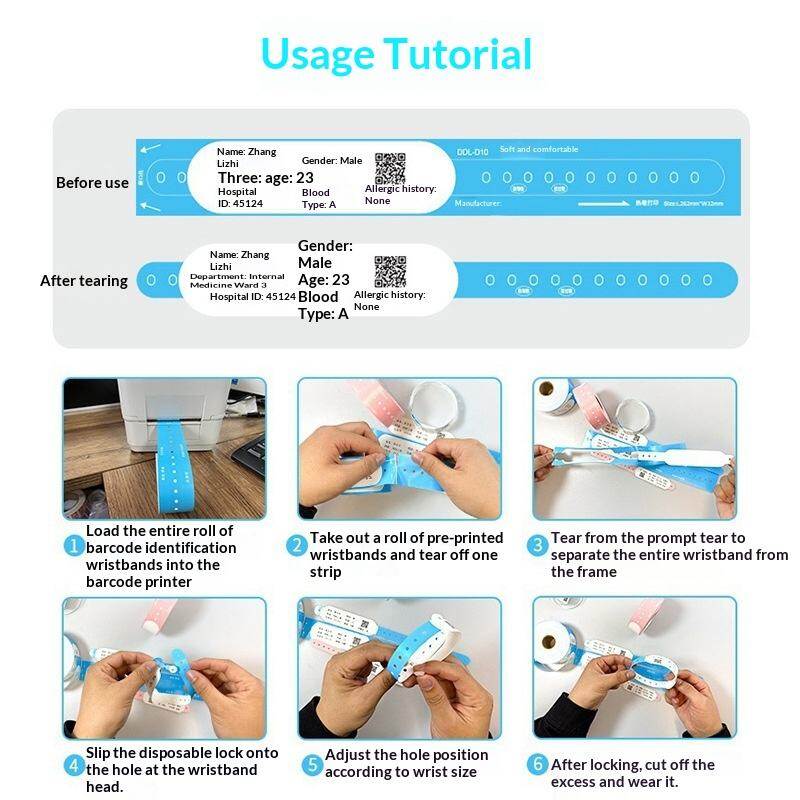
The amount of data that needs to be encoded affects symbology choice. If the wristband only needs to carry a unique patient identifier, Code 128 may be sufficient. If additional data such as visit numbers, dates, or facility codes must be encoded, a 2D symbology provides more capacity.
Integration with Existing Systems
Hospitals should consider how the chosen symbology integrates with existing electronic health records, medication administration systems, and laboratory information systems. Code 128 has the longest track record in healthcare and is widely supported.
Future-Proofing
As healthcare moves toward higher data density and more sophisticated identification systems, 2D symbologies offer greater flexibility for future needs. Data Matrix is particularly well-positioned as the healthcare industry standard for UDI and regulated products.
Recommendations by Application
General Patient Identification
For standard adult patient wristbands used in general wards and outpatient settings, Code 128 remains a practical and widely supported choice. It balances data capacity, scanner compatibility, and ease of implementation.
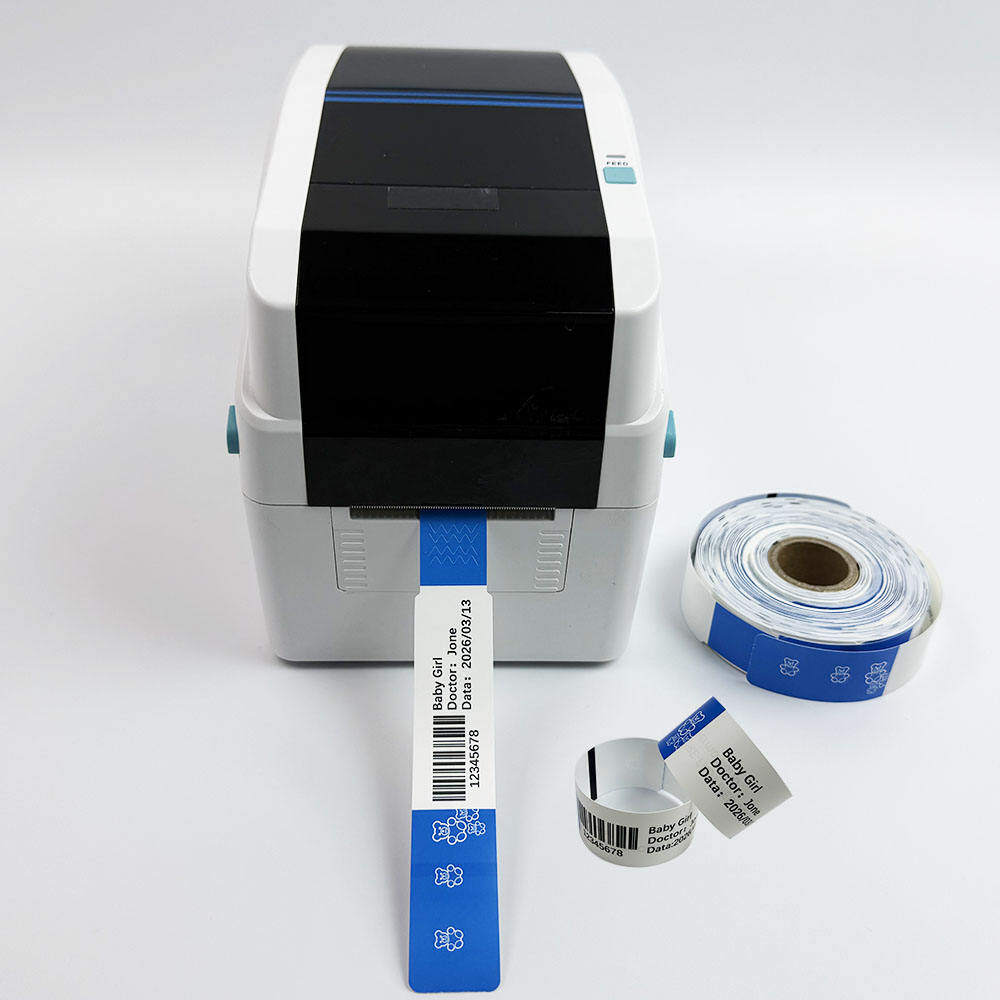
Neonatal and Pediatric Wristbands
For small wristbands where space is limited, Data Matrix is the preferred choice. Its compact size and high data density make it ideal for these applications.
Long-Term Care and Extended Stay
For patients with extended stays, a 2D symbology with robust error correction provides better durability. Data Matrix or QR Code can maintain readability even when partially damaged.
Patient Education and Digital Linkage
For wristbands that need to link to digital content, QR Code offers the advantage of smartphone readability. This can be useful for providing patients and families with access to educational materials or medication information.
Regulatory Compliance
For applications requiring Unique Device Identification (UDI) compliance, GS1 DataMatrix is the standard. Hospitals should not use QR codes for UDI applications.
Conclusion
The choice between Code 128, QR Code, and Data Matrix for patient wristbands depends on a careful evaluation of clinical needs, scanning infrastructure, data requirements, and patient population. Code 128 remains a reliable, widely supported option for general patient identification. QR codes offer high data capacity and smartphone accessibility but are not recommended for regulated healthcare applications. Data Matrix provides the best combination of compact size, data density, and healthcare industry alignment, making it the preferred choice for small wristbands and UDI compliance.
For hospitals, the key is to align symbology choice with existing workflows and future needs. Investing in image-based scanners that can read both linear and 2D barcodes provides flexibility to adapt as standards evolve. As the healthcare industry continues to move toward higher data density and more sophisticated identification systems, 2D symbologies will play an increasingly important role in patient safety and care delivery.
Continue Reading
Have Questions About Wristbands?
Our team is ready to help you find the perfect wristband solution for your needs. Contact us directly on WhatsApp for quick responses.
Contact on WhatsApp